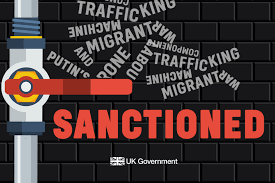
The United Kingdom has announced a sweeping new package of sanctions targeting Russian drone production networks and transnational groups accused of exploiting vulnerable migrants to support Moscow’s war effort in Ukraine.
The measures, unveiled on May 6, 2026, affect 35 individuals and entities allegedly involved in human trafficking operations and the supply of critical components for Russia’s military drone programme. British authorities said the action is intended to disrupt both battlefield logistics and what they described as a “callous” system of recruiting foreign nationals into the conflict.
According to the UK government, the sanctioned networks have been luring migrants from regions including Africa and the Middle East with false promises of employment and improved living conditions. Victims are reportedly deployed to frontline operations with little training or coerced into labour within weapons manufacturing facilities. One such initiative, the Alabuga Start programme, has been linked to the recruitment of foreign workers for drone production associated with previously sanctioned entities.
The latest action follows a surge in Russia’s aerial operations. In March 2026, Moscow reportedly launched more than 200 drones daily against Ukrainian targets—the highest sustained rate since the war began—heightening concerns over civilian casualties and damage to critical infrastructure.
UK Sanctions Minister Stephen Doughty condemned the exploitation of migrants as “barbaric,” stating that the new measures are designed to expose trafficking networks and intensify pressure on Russia’s war economy.
Among those listed is Pavel Nikitin, whose firm manufactures the VT-40 drone, a low-cost attack platform widely used in strikes across Ukraine. The sanctions also extend to individuals operating from third countries, including Thailand and China, accused of supplying essential drone components and technical expertise.
Another prominent figure named is Polina Alexandrovna Azarnykh, who is alleged to have coordinated the movement of recruits from countries such as Nigeria, Egypt, Iraq, Ivory Coast, Morocco, Syria and Yemen into Russia, where they were subsequently deployed to Ukraine under harsh conditions.
In Abuja, British Deputy High Commissioner Gill Lever confirmed that some Nigerians had been misled into joining the conflict, warning that such schemes expose individuals to significant risks. She added that Nigeria’s Ministry of Foreign Affairs has issued advisories cautioning citizens against engaging with suspicious recruitment channels.
The sanctions were imposed under the UK’s Global Irregular Migration and Trafficking in Persons sanctions regime, marking its first use against networks accused of leveraging migration to sustain armed conflict.
Reaffirming its position, the UK government said it would continue to apply “maximum economic pressure” on Russia while supporting Ukraine’s defence, signalling the possibility of further measures as the conflict evolves.