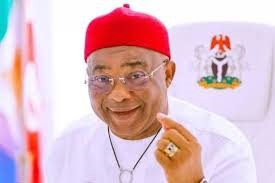
Governor of Hope Uzodimma has defended the economic reforms introduced by President Bola Tinubu, describing them as painful but necessary measures aimed at repositioning Nigeria for long-term fiscal stability, economic recovery and institutional renewal.
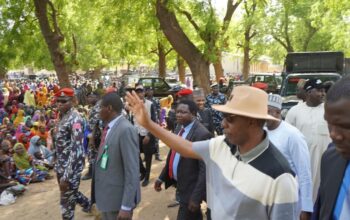
Uzodimma, who is Chairman of the Progressive Governors’ Forum and Director-General of the Renewed Hope Ambassadors, made the remarks on Monday while addressing members of the diplomatic corps in Abuja.
The governor said the Tinubu administration had dismantled entrenched corruption networks through key reforms, particularly the removal of fuel subsidy and the liberalisation of the foreign exchange market.
He urged foreign governments, investors and development institutions to strengthen support for Nigeria, insisting that the country was now better positioned for long-term investment partnerships.
“In the past two and a half years, the tone of the periodic reports sent to your capitals and headquarters by a good number of you must have gradually but unmistakably shifted from concern to cautious optimism, and, more recently, to genuine confidence,” he told the diplomats.
Uzodimma described the former fuel subsidy regime as “the single largest organised corruption pipeline” in Nigeria’s public finance system, alleging that trillions of naira were lost yearly through inflated import claims, fictitious allocations and fuel smuggling.
According to him, previous administrations avoided subsidy removal because of the political consequences, but President Tinubu took the decision immediately after assuming office in May 2023.
“Some leaders stop at giving speeches about fighting corruption, but President Tinubu shut down the biggest corruption avenue with the announcement of just one policy,” he said.
The governor maintained that the reforms had significantly increased revenues available to the federation, enabling both federal and state governments to embark on major infrastructure and social investment projects.
He disclosed that monthly allocations from the Federation Account Allocation Committee had risen to between N1.8 trillion and N2.6 trillion, compared to previous years when many states relied on bailouts and borrowing to meet salary obligations.
“As Chairman of the Progressive Governors’ Forum, I can say states have not experienced this level of fiscal health in living memory,” he added.
Uzodimma cited projects such as the Lagos-Calabar Coastal Highway and the Sokoto-Badagry Superhighway as evidence of what he termed “foundational repair” under the current administration.
He said more than 440 road projects and over 2,700 kilometres of highway construction were ongoing nationwide, while abandoned projects, including the East-West Road, were nearing completion.
Defending the decision to unify the exchange rate system, the governor argued that the previous multiple-rate regime encouraged arbitrage and corruption.
Although he acknowledged that the policy initially triggered inflation and naira depreciation, he said the economy had begun to stabilise, with external reserves reportedly rising from about $32 billion in 2024 to nearly $50 billion by March 2026.
“The chaos that used to make Nigeria’s macroeconomic indicators effectively fictitious has been retired. That is the gift of the float. It is the prerequisite for serious capital, and Nigeria is now ready for serious capital,” he stated.
Uzodimma also pointed to improvements in diaspora remittances, foreign exchange liquidity and investor confidence, noting that international rating agencies had upgraded Nigeria’s outlook.
On security, he revealed that the Federal Government was pursuing constitutional amendments to establish state police, while also strengthening intelligence collaboration and recruitment into security agencies.
“This work is not finished, and I will not pretend otherwise. But the direction is correct, and it is being pursued with sustained seriousness,” he said.
Responding on behalf of the diplomatic community, Gautier Mignot said international partners continued to view Nigeria as a country of significant opportunity.
Mignot acknowledged the growing role of state governments in tackling insecurity, poverty, unemployment and humanitarian challenges, while also driving economic development.
“As far as the EU is concerned, you can count on us to be a reliable and constant partner,” he said.
Also speaking, Atiku Bagudu said the engagement underscored Nigeria’s commitment to strengthening cooperation with development partners and the diplomatic community.
Bagudu said the administration’s Renewed Hope agenda remained focused on economic recovery, inclusive growth, institutional reforms and sustainable development, while highlighting opportunities in infrastructure financing, renewable energy, agriculture, innovation and climate action.