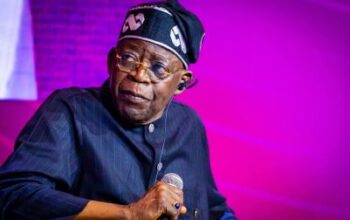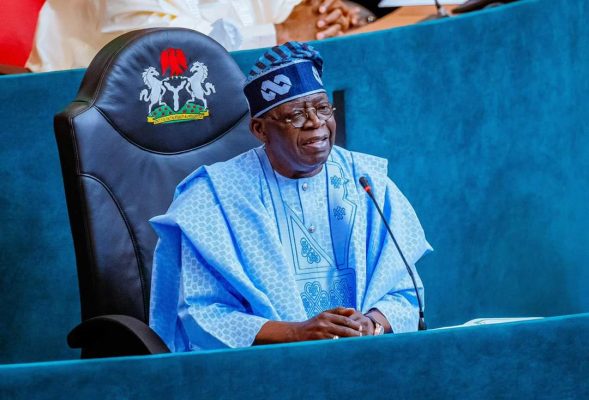
President Bola Ahmed Tinubu has declared that Nigeria is gradually overcoming its economic and structural challenges following a series of far-reaching reforms introduced by his administration over the past three years.
In a nationwide address on Thursday to mark the third anniversary of his administration, the President acknowledged the hardship experienced by Nigerians since the removal of fuel subsidies and the unification of the foreign exchange market but maintained that the decisions were necessary to avert a deeper national crisis.
Tinubu said his government inherited mounting fiscal pressures, unsustainable subsidy payments, rising debt-servicing obligations, insecurity, declining revenues, exchange-rate distortions, and weakening public confidence in state institutions when it assumed office in 2023.
According to him, Nigeria had spent as much as ₦18.4 billion daily on petrol subsidies at the peak of the regime, amounting to over ₦4 trillion in 2022 alone. He also stated that multiple foreign exchange windows and arbitrage practices cost the country more than ₦8 trillion within three years.
“The situation demanded urgent and courageous action,” the President said. “We chose reform over ruin and long-term national recovery over short-term comfort.”
Tinubu admitted that the reforms triggered a sharp rise in the cost of living and placed significant pressure on households and businesses but assured Nigerians that the sacrifices were beginning to yield results.
“I can say with confidence that Nigeria has stabilised and is moving forward again,” he stated.
Highlighting the administration’s achievements, the President said the economy had become more competitive, while public finances and investor confidence had improved significantly. He pointed to the performance of the Nigerian stock market, noting that the All Share Index had risen from 53,000 in 2023 to 250,000 in 2026, while market capitalisation increased from ₦30 trillion to ₦160 trillion.
Tinubu also outlined major infrastructure projects currently underway across the country, including the Lagos-Calabar Coastal Highway, Sokoto-Badagry Super Highway, Abuja-Kaduna-Zaria-Kano Road, and the East-West Road. He said over 2,700 kilometres of highways and roads were under construction, reconstruction, or rehabilitation.
In the energy sector, the President said reforms had attracted fresh investments into the oil and gas industry, while domestic refining capacity had expanded, reducing Nigeria’s dependence on imported petroleum products.
He added that the government was investing heavily in the power sector through transmission expansion, renewable energy development, and efforts to strengthen the national grid.
On agriculture, Tinubu said millions of farmers had benefited from interventions involving fertilisers, improved seedlings, mechanisation, irrigation, and access to financing. He also disclosed that the Nigerian Education Loan Fund had supported over 1.5 million students with more than ₦282 billion in loans.
The President further highlighted progress in housing, healthcare, telecommunications, and youth empowerment programmes, noting that the Renewed Hope Housing Programme was delivering over 10,000 housing units across 14 states and the Federal Capital Territory.
Addressing security concerns, Tinubu said the Armed Forces and security agencies had intensified operations against terrorists, kidnappers, bandits, and oil thieves, adding that many communities and highways were becoming safer.
While admitting that significant challenges remain, the President expressed optimism about Nigeria’s future and urged citizens to remain united and hopeful.
“We have not solved every problem, and we are not yet where we want to be. But the foundation for recovery has been laid,” he said.
Tinubu also reiterated his administration’s commitment to reducing transportation costs through the adoption of compressed natural gas (CNG) and electric vehicles, while creating more opportunities for employment and enterprise growth.
Calling for national unity and collective sacrifice, the President urged Nigerians to reject division and work together toward building a secure, prosperous, and inclusive nation.
“History tests nations before it elevates them,” he said. “Nigeria is passing through such a test, but I believe we shall emerge stronger, fairer, more united, and more prosperous than ever before.”
The President concluded by reaffirming Nigeria’s commitment to democratic governance, economic reform, and responsible leadership, while assuring citizens that his administration would continue pursuing policies aimed at national renewal and long-term development.