The Economic Community of West African States (ECOWAS) has intensified efforts to strengthen regional economic integration and enhance private sector participation with renewed moves to operationalise the ECOWAS Business Council (EBC), a key platform designed to drive investment, trade and industrial development across West Africa.
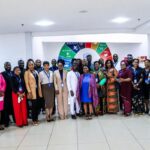
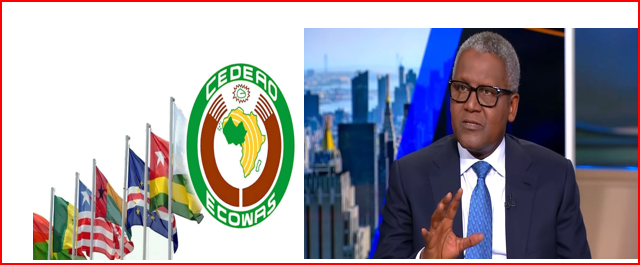
The commitment was reaffirmed during a high-level working visit by senior officials of the ECOWAS Commission to the Chairman of the ECOWAS Business Council, Aliko Dangote, at the Dangote Group headquarters in Lagos.
The delegation was led by the ECOWAS Commissioner for Economic Affairs and Agriculture, Dr. Kalilou Sylla, and the Commissioner for Internal Services, Dr. Habib Yaya Bappah. Also in attendance were Gerard Amoi Amangoua, Technical President of the Technical Working Group (TWG) for the ECOWAS Business Council, and other members of the working group.
Discussions centred on accelerating the operationalisation of the ECOWAS Business Council, a private-sector-led platform established to foster stronger collaboration between governments and businesses in advancing the ECOWAS regional market agenda.
ECOWAS officials described the initiative as a significant milestone in the bloc’s efforts to position the private sector at the forefront of economic transformation, industrialisation, job creation and sustainable development.
Speaking during the engagement, the commissioners underscored the importance of private sector leadership in unlocking the vast economic potential of the West African region, particularly as member states seek to improve competitiveness, increase intra-regional trade and attract greater investment inflows.
The ECOWAS Business Council is expected to serve as a strategic bridge between policymakers and the business community, providing practical solutions to persistent challenges affecting trade, investment and industrial growth across the 15-member regional bloc.
The council’s operationalisation comes against the backdrop of concerns that trade among West African countries remains significantly below its potential despite decades of regional integration initiatives. Industry experts have linked the situation to infrastructure deficits, multiple border checkpoints, non-tariff barriers, policy inconsistencies and limited private sector involvement in regional policymaking.
Analysts believe a fully functional ECOWAS Business Council could help address many of these constraints by creating a structured platform for dialogue between governments and businesses while advocating reforms aimed at improving the ease of doing business across the region.
Dangote’s appointment as Chairman of the council is widely regarded as a strategic decision by ECOWAS to leverage the experience, influence and extensive investment footprint of one of Africa’s leading industrialists.
With business interests spanning several African countries and sectors, including cement, fertiliser, petrochemicals, sugar and logistics, Dangote has consistently championed regional trade, industrialisation and economic integration.
The latest engagement also reflects ECOWAS’ determination to align its regional economic agenda with the opportunities presented by the African Continental Free Trade Area (AfCFTA), which aims to create the world’s largest free trade area by connecting more than 1.4 billion people across the continent.
For decades, ECOWAS has pursued the vision of a borderless regional market characterised by the free movement of goods, services, capital and people. However, progress has often been hampered by economic disparities among member states, infrastructure challenges and implementation gaps.
Officials expressed confidence that stronger private sector participation through the ECOWAS Business Council would inject fresh momentum into the integration process, helping transform the region from a collection of fragmented national markets into a more competitive, resilient and prosperous economic community.
The Lagos meeting is therefore seen as a major step towards the full operationalisation of the council and a broader effort to reposition the private sector as a critical driver of economic growth, regional prosperity and sustainable development across West Africa.