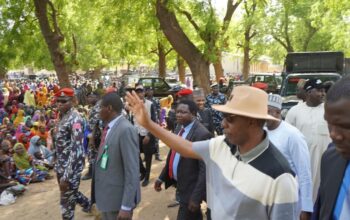
A high-level delegation of European Union (EU) Heads of Mission and international development partners has concluded a multi-day visit to Kano State, reinforcing development cooperation in Northern Nigeria amid rising concerns over youth unemployment, rapid urbanisation, and multidimensional poverty.
The delegation, led by EU Ambassador to Nigeria and ECOWAS, Gautier Mignot, included representatives from UNICEF, GIZ, Plan International Nigeria, UN-Habitat and other partners. The mission engaged with government officials, academic institutions, civil society organisations, and media stakeholders as part of what was described as a strategic engagement aimed at strengthening subnational partnerships.
Central to the discussions were Kano’s expanding demographic pressures, infrastructural deficits, and persistent poverty indices, which continue to strain governance systems in the state and the wider North West region.
During meetings with the Kano State Government, represented by Deputy Governor Murtala Sule Garo on behalf of Governor Abba Kabir Yusuf, both parties explored areas of cooperation in urban development, youth empowerment, and social inclusion strategies.
The state presented its Urban Development Strategy, a long-term framework designed to guide infrastructure expansion, improve urban planning, enhance resilience, and expand economic opportunities across Kano metropolis, with technical support from UN-Habitat.
The delegation’s visit also reflected a broader European Union policy shift toward deeper engagement beyond the federal capital, with increased attention on regional development challenges, including insecurity, unemployment, and educational gaps across Northern Nigeria.
Speaking during the visit, Ambassador Mignot said the engagement underscored the EU’s commitment to grassroots partnerships and inclusive development.
“This visit underlines the European Union’s commitment to being visibly present and engaged in Northern Nigeria. By connecting directly with communities, young people, and local institutions, we are strengthening partnerships that support inclusive growth, stability, and opportunity for all,” he said.
At Bayero University Kano, the delegation interacted with students on issues relating to employment prospects, governance participation, and access to economic opportunities, reflecting growing youth concerns across the region.
Development partners used the mission to highlight ongoing interventions targeting education, health, nutrition, and economic empowerment.
GIZ Country Director, Dr. Markus Wagner, emphasised the importance of investing in skills development and entrepreneurship to strengthen economic resilience among young people and women in Northern Nigeria.
Plan International Nigeria Country Director, Dr. Charles Usie, noted that improved access to education must be matched with measurable learning outcomes and sustained support, particularly for girls facing structural barriers.
UNICEF Nigeria Representative, Wafaa Saeed, stressed that child survival, protection, and education must remain central to development planning, especially in vulnerable communities.
The delegation also visited several project sites, including an accelerated education programme, a Qur’anic education integration centre supported by UNICEF, and a facility producing ready-to-use therapeutic food for malnourished children, highlighting ongoing efforts to address acute nutrition challenges.
Beyond programme engagements, the mission included interactions with media stakeholders in the Kannywood creative industry, recognising the role of local storytelling in shaping public awareness and social change.
The visit concluded with the North-West Governors’ Forum Policy Dialogue on Reducing Multidimensional Poverty, where stakeholders reaffirmed commitments to stronger collaboration between international partners and subnational governments in tackling structural poverty and inequality.
Analysts say the visit reflects a growing shift in international development strategy in Nigeria, with increased focus on state-level engagement where population growth and economic vulnerability are most pronounced.
The EU and its partners emphasised that future efforts will prioritise sustained programme delivery aimed at expanding youth opportunities, strengthening education systems, and improving urban infrastructure to meet the demands of Northern Nigeria’s rapid development trajectory.