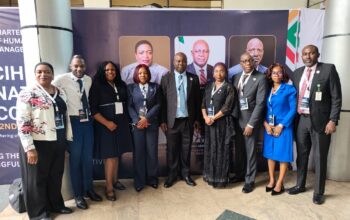
Nigeria has taken a significant step towards becoming a continental leader in the governance of artificial intelligence (AI) following the unveiling of the country’s Artificial Intelligence Readiness Assessment (RAM) Report by the United Nations Educational, Scientific and Cultural Organisation (UNESCO).
The report, launched in Abuja on Monday, offers the first comprehensive evaluation of Nigeria’s preparedness to develop, deploy and regulate AI technologies in a manner that is ethical, inclusive and centred on human values.
Speaking at the unveiling, UNESCO Abuja Office Officer-in-Charge, Dimitri Sanga, described artificial intelligence as the most transformative technology of the modern era, while cautioning that its immense capabilities also present complex challenges that require strong governance frameworks.
According to Sanga, AI has become deeply integrated into virtually every aspect of society, reshaping governance, education, security, communication, innovation and economic activities.
“The world is witnessing the transformative impact of artificial intelligence in all spheres of our civilisation. For the first time, humanity is said to have created a tool that could challenge its own existence if not effectively regulated,” he said.
He stressed that while AI presents enormous opportunities for economic and social development, its advancement must be guided by principles of human rights, fairness, inclusion and sustainability.
Sanga noted that the readiness assessment should serve not merely as a report but as a strategic roadmap for evidence-based policymaking and coordinated action towards building a responsible AI ecosystem in Nigeria.
He disclosed that UNESCO, with support from the European Union, has been collaborating with Nigeria since 2024 to strengthen the digital infrastructure, policy frameworks and institutional capacity required for ethical AI development across five key areas.
The UNESCO official further revealed that the organisation had launched capacity-building initiatives that have trained more than 400 civil servants across six Nigerian states using AI literacy modules aimed at improving public-sector understanding of emerging technologies.
Sanga commended Nigeria for demonstrating leadership in integrating UNESCO’s Recommendation on the Ethics of Artificial Intelligence into its broader digital transformation agenda.
“With the support of relevant ministries, departments and agencies, I am confident that this report will strengthen Nigeria’s leadership role in leveraging ethical AI for development in Africa,” he stated.
The assessment comes amid a global race among governments to harness artificial intelligence for economic growth, innovation and public service delivery, while addressing concerns related to privacy, misinformation, job displacement, algorithmic bias and the potential misuse of advanced technologies.
In November 2021, UNESCO’s 193 member states unanimously adopted the Recommendation on the Ethics of Artificial Intelligence, the world’s first global normative framework for ensuring that AI technologies are developed and deployed in ways that are human-centred, rights-based and sustainable.
Nigeria’s AI readiness assessment is expected to guide policymakers in strengthening governance structures, expanding research and innovation capacity, improving AI education and establishing safeguards that will enable the country to maximise the benefits of artificial intelligence while mitigating associated risks.
Stakeholders at the event expressed optimism that effective implementation of the report’s recommendations would position Nigeria not only as one of Africa’s leading digital economies but also as a model for responsible and ethical AI governance across the continent.