Nigeria’s drive to align industrial development with clean energy gained a major boost at the weekend as the Federal Government and the Niger State Government commenced construction of what is projected to be the country’s largest solar-powered industrial park and the biggest embedded renewable energy project in Sub-Saharan Africa.
The project, being developed by Abuja Steel Mills Limited, a subsidiary of the African Industries Group, will be powered by a dedicated 200-megawatt solar mini-grid designed to supply electricity to a large-scale industrial park and integrated steel manufacturing complex in Niger State.
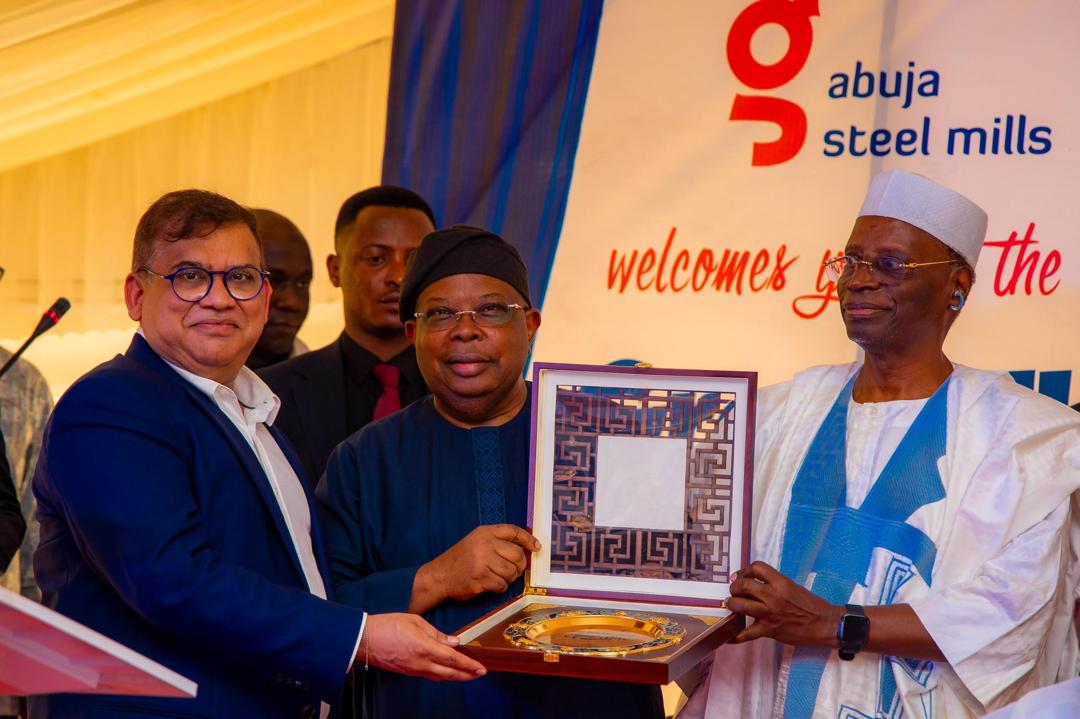
The groundbreaking ceremony attracted key government officials, including the Minister of Power, Adebayo Adelabu; Minister of Steel Development, Prince Shuaibu Audu; Minister of State for Industry, Senator John Owan Enoh; Niger State Governor Mohammed Umaru Bago; and senior executives of the African Industries Group.
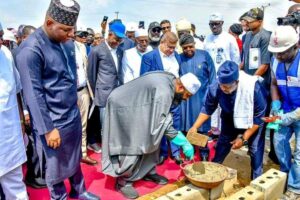
As part of its commitment to the initiative, the Niger State Government officially allocated 500 hectares of land for the development of the industrial park and related infrastructure.
Unlike conventional manufacturing facilities that depend on the national electricity grid, the Abuja Steel Mills complex is designed to operate entirely on self-generated renewable energy. The project is being described as one of Africa’s most ambitious clean-energy-powered industrial developments.
Officials said the off-grid model is intended to provide reliable electricity, lower production costs and shield industrial operations from persistent power supply challenges that have long hindered Nigeria’s manufacturing sector.
The project is also being presented as a practical expression of the administration’s economic and energy reform agenda, aimed at expanding electricity access, encouraging private investment in power infrastructure and accelerating industrial growth through innovative energy solutions.

Speaking at the event, government representatives noted that the initiative demonstrates the growing potential of renewable energy to support heavy industries such as steel production, moving beyond its traditional application in residential and small-scale commercial use.
They highlighted embedded power generation as a strategic solution that enables manufacturers to secure predictable electricity supply, improve operational efficiency and reduce long-term energy costs while easing pressure on the national grid.
The development comes amid ongoing efforts to address challenges within Nigeria’s power sector. Although the country has an installed generation capacity exceeding 13,000 megawatts, actual power output has frequently fallen short of demand due to transmission limitations, infrastructure gaps and gas supply constraints.
The resulting electricity shortages have increased operating costs for many industries, forcing manufacturers to rely heavily on diesel-powered generators to sustain production.

In response, successive governments have promoted renewable energy, mini-grids and decentralised power systems as part of broader strategies to improve electricity access and stimulate economic growth.
Nigeria’s energy transition framework aims to achieve net-zero carbon emissions by 2060 while increasing the contribution of renewable energy to the national power mix. Embedded generation and private sector participation have been identified as key drivers of this transition.
Industry analysts believe the Abuja Steel Mills project could serve as a model for future industrial developments across the country, demonstrating the viability of large-scale renewable energy systems for manufacturing operations.
Beyond its significance for the steel sector, the project is expected to generate employment opportunities, attract supporting industries, stimulate economic activity in Niger State and strengthen Nigeria’s appeal as a destination for sustainable industrial investment.
Stakeholders say the initiative represents an emerging development model that combines industrial expansion with clean energy deployment, offering a potential solution to the country’s longstanding energy and manufacturing challenges.
With construction now underway, the solar-powered industrial park is widely viewed as a landmark project that could redefine how future factories in Nigeria are powered, placing renewable energy at the centre of industrial growth and economic transformation.