The Nigerian Content Development and Monitoring Board (NCDMB) has launched a nationwide Emergency Preparedness and Fire Prevention Awareness Campaign aimed at equipping Nigerians with practical skills to respond effectively to fire outbreaks, building collapses, workplace accidents and other emergencies.
The Board said the initiative was designed to reduce avoidable deaths and property losses by strengthening public safety awareness and ensuring that individuals, businesses and communities know the appropriate steps to take during the critical first minutes of an emergency.
Speaking at the Lagos edition of the training held at Lekki Grandview Hotel, Lagos, Managing Director of Matosi Nigeria Limited, Mr Tosan Bolorunfe, described emergency preparedness as an increasingly important national priority requiring sustained commitment from government, businesses and communities.
Bolorunfe, whose company is the consultant for the programme, said the rising incidence of fire outbreaks, workplace accidents, building collapses, panic and poor emergency-response coordination had exposed significant gaps in public safety awareness.
“Fire incidents, workplace accidents, panic during emergencies, poor response coordination and lack of basic safety awareness continue to cause avoidable losses across homes, offices, hotels, markets, public facilities and industrial sites,” he said.
He stressed that the first few minutes after an emergency could determine whether lives and property were saved or lost.
“A society that waits for disaster before discussing safety is already late,” Bolorunfe said, noting that many fatalities occur because people lack the knowledge to take appropriate action before professional responders arrive.
According to him, emergency preparedness should be regarded not merely as a safety requirement but as an investment in human lives, business continuity and national productivity.
“When people are safer, businesses are stronger. When workplaces are prepared, productivity is protected. When communities understand emergency response, lives are preserved,” he said.
Bolorunfe also cautioned against the tendency to panic during emergencies, saying fear and confusion could worsen already dangerous situations.
He acknowledged that some Nigerians resort to prayer during emergencies because they are uncertain about what practical steps to take, but stressed that faith should be complemented by preparedness and appropriate response skills.
“Prayer is important, but preparedness is also responsibility,” he said, urging Nigerians to understand who should act, what equipment or utilities should be switched off, where to evacuate and whom to contact during emergencies.
The consultant further called for a shift from largely theoretical safety training to practical exercises and simulations capable of preparing participants for real-life emergencies.
“Training adults, especially on emergency subjects, requires more than reading slides. It requires experience, clarity, discipline and the ability to connect knowledge to real-life situations,” he said.

He commended the NCDMB for supporting the campaign, describing it as a practical human-capital development initiative capable of strengthening safety consciousness in workplaces and communities.
Bolorunfe urged government agencies, private-sector operators, institutions and community leaders to make emergency preparedness a continuous process rather than an activity undertaken only after disasters.
“To government agencies, private sector operators and community leaders, safety training should not be optional. It should be deliberate, repeated and practical,” he said.
He called on stakeholders to regard emergency preparedness as a national productivity concern, a community protection responsibility and a fundamental human obligation.
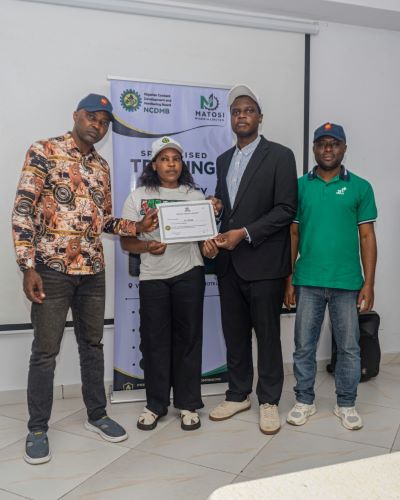
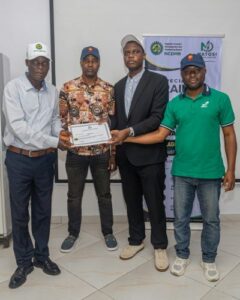
The Lagos training featured classroom sessions, interactive discussions and practical demonstrations on appropriate emergency-response procedures.
Participants also underwent controlled fire-response exercises, fire-extinguisher handling, first-aid awareness and emergency-response sensitisation.
The campaign comes amid recurring fire incidents, building collapses and other emergencies across Nigeria, highlighting the need for stronger preventive measures, sustained public safety education and improved emergency-response capacity.