The Federal Government, in partnership with the European Union (EU) and the International Institute for Democracy and Electoral Assistance (International IDEA), has launched a new initiative aimed at strengthening access to justice for children affected by school-related gender-based violence amid growing concerns over the safety of learning environments across Nigeria.
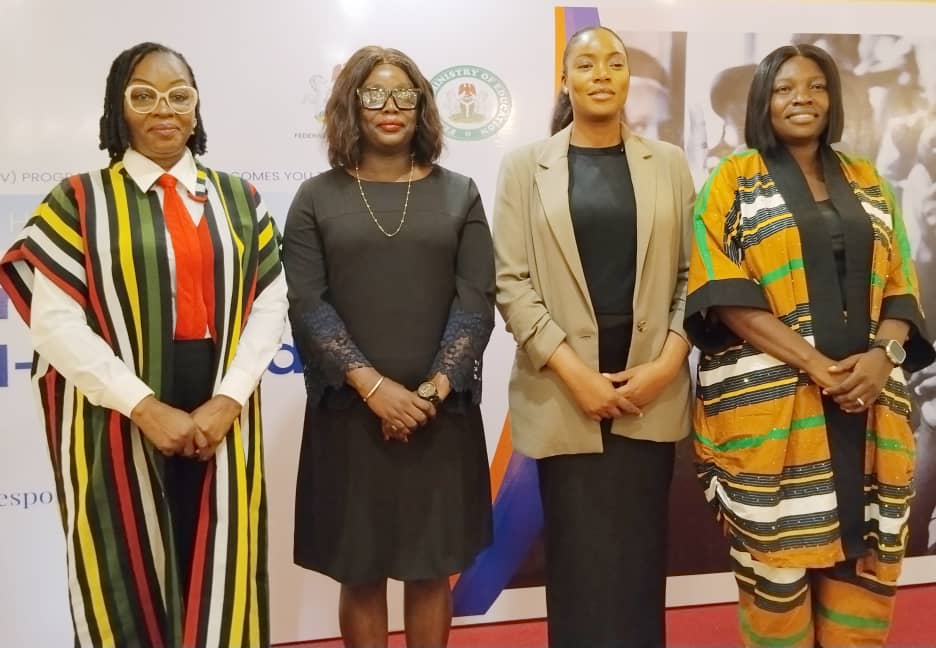
The initiative was unveiled on Tuesday in Abuja during a three-day capacity-building workshop focused on improving the implementation of the Standard Operating Procedure (SOP) on the Legal Pathway for the Prosecution of Perpetrators of School-Related Gender-Based Violence, developed in 2024.
The programme is being implemented under the EU-supported End Sexual and Gender-Based Violence in Nigeria (ESGBV) project in collaboration with the Federal Ministry of Justice through its Sexual and Gender-Based Violence (SGBV) Response Unit, with support from the Federal Ministry of Education and the United Nations Educational, Scientific and Cultural Organization (UNESCO).
Speaking at the workshop, Head of the SGBV Response Unit at the Federal Ministry of Justice, Mrs. Yewande Gbola-Awopetu, disclosed that gender-based violence remains a major challenge within Nigeria’s educational system.
According to her, a systematic review found that 42.3 per cent of female students experience some form of gender-based violence during their educational journey.
She further cited a 2025 study published in PLOS Global Public Health, which revealed that 69.4 per cent of adolescents in South-West Nigeria had experienced some form of sexual violence.
“These are not just statistics. They are lives disrupted, futures threatened and opportunities denied,” she said.
Gbola-Awopetu noted that violence in schools contributes significantly to Nigeria’s growing out-of-school population, particularly among girls.
“Girls account for 60 per cent of out-of-school children in Nigeria. Every girl who leaves school because she was assaulted, harassed or felt unsafe represents not only a personal tragedy but a permanent loss to Nigeria’s human capital,” she stated.
She expressed concern that many incidents of abuse remain unreported or poorly documented, allowing perpetrators to evade justice while survivors are left without adequate support.
According to her, the SOP serves as a coordinated accountability framework designed to strengthen reporting mechanisms, preserve evidence and improve prosecution outcomes in cases of school-related gender-based violence.

Also speaking, the Gender-Based Violence Policy and Strategy Development Specialist and Component One Lead of the ESGBV Programme at International IDEA, Ms. Melissa Omene, said violence in schools manifests in various forms, including sexual abuse, harassment, exploitation, bullying, corporal punishment, technology-facilitated violence and harmful traditional practices.
She revealed that recent studies indicate that 18 per cent of sexual violence incidents occur within schools, while 25 per cent of children report experiencing corporal punishment from teachers.
“These are not just statistics; they reflect the lived experiences of children,” she said.
Omene warned that children who experience violence are more likely to drop out of school, perform poorly academically and suffer long-term psychosocial challenges, with girls and other vulnerable groups bearing a disproportionate burden.
She emphasised the critical role of teachers, counsellors, law enforcement personnel and other frontline actors in identifying abuse and ensuring victims receive protection and justice.
“Your actions, or inaction, can determine whether a child receives protection, support and justice, or remains silent,” she said.
The initiative comes amid heightened concerns over child safety in Nigeria’s schools. The country is estimated to have more than 18 million out-of-school children, with insecurity, poverty, early marriage and violence identified as major drivers of school exclusion, particularly among girls.
At the workshop, Head of the Gender Unit at the Federal Ministry of Education, Mrs. Augustina Apakasa, called on participants to apply the knowledge gained during the training to strengthen child protection systems within their institutions.
“Every child in Nigeria deserves to learn in an environment free from fear, discrimination and violence. Together, we can build schools where every child is valued, protected and supported,” she said.
Executive Director of Protect the Child Foundation, Mrs. Elizabeth Ebulejonu Achimugu, described teachers as critical first responders because of their daily interactions with children and their ability to identify warning signs of abuse.
She stressed that securing justice for victims requires coordinated action among educators, law enforcement agencies, social workers and other stakeholders.
“The aim is to ensure that perpetrators do not go unpunished, whether the perpetrator is another child, a teacher or an adult,” she said.
Participants are expected to replicate the training within their respective institutions and strengthen school-based response mechanisms as part of wider efforts to improve child protection, enhance access to justice for survivors and reduce impunity for perpetrators of violence against children in Nigerian schools.