President Bola Ahmed Tinubu on Tuesday in Abuja said Nigeria’s large youth population remains the country’s strongest economic asset, assuring global investors that the nation’s workforce is increasingly tech-savvy, adaptable and ready to integrate into the global digital economy.
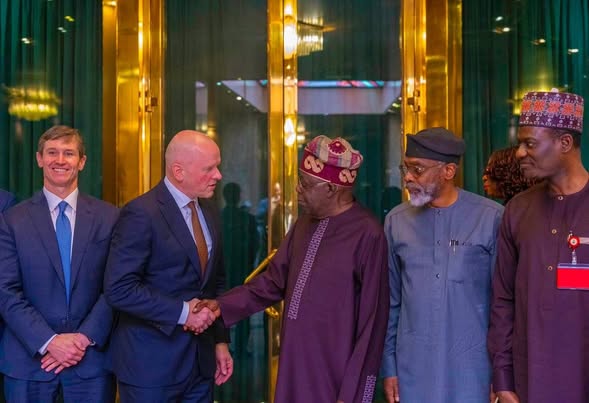
According to Special Adviser to the President on Information and Strategy Bayo Onanuga, the President made the remarks while receiving a delegation from Mastercard led by its Global Chief Executive Officer, Michael Miebach, at the State House. He welcomed the company’s proposal to train five million businesses in Nigeria and expand access to digital skills and tools.
Tinubu said ongoing economic reforms had repositioned and stabilised the Nigerian economy to compete more effectively in the global market, noting that government priorities include youth empowerment, small business development and digital transformation.
He also highlighted the ongoing formalisation of Nigeria’s largely informal small-business sector, saying it would expand opportunities for investment, job creation and digital inclusion.
“I am glad that you are very familiar with the terrain. I can classify you as a Nigerian. MasterCard has a very big reputation in financial management, and opportunities are spreading in Nigeria,” the President said.
Tinubu added that more small businesses were beginning to register and adopt technology, stressing that government would continue to support initiatives aimed at building digital capacity among young Nigerians.
He also underscored the role of institutions such as the Bank of Industry (BoI) in expanding access to data on micro, small and medium enterprises, noting the importance of payment platforms in driving financial inclusion.
“The most important asset is our youth… What you have been doing with our young population is commendable, and we will continue to support that in every form,” he said.
Minister of Finance and Coordinating Minister of the Economy, Wale Edun, said ongoing reforms were already creating stronger linkages in credit, payments and digital systems, adding that Nigeria’s policy direction aligns with Mastercard’s investments in small businesses and the informal sector.
He said the administration was targeting the empowerment of at least three million youths through digital economy initiatives, while noting that fiscal and tax reforms were accelerating formal business registration, with thousands of informal enterprises registering daily.
Edun also pointed to opportunities in Nigeria’s expanding credit economy, including mortgages, consumer credit, student loans and small business financing, as well as innovations in local currency-based payment systems.
He further noted that Nigeria remains a leading hub for fintech innovation, with five of Africa’s nine fintech unicorns operating in the country.

In his remarks, Mastercard CEO Michael Miebach reaffirmed the company’s commitment to Nigeria’s economic transformation, describing the country as a long-standing strategic partner since 2011.
He said Mastercard had helped prevent an estimated $200 million in fraud while facilitating about $2 billion in foreign exchange inflows, adding that its operations continue to support small and medium-sized enterprises across the country.
Miebach said the company had engaged with key financial stakeholders, including the Central Bank of Nigeria and leading commercial banks, to explore opportunities for expanding digital finance and unlocking the potential of Nigeria’s estimated 40 million small businesses.
According to him, Mastercard has developed a structured three-year programme aimed at equipping small businesses with digital capabilities, cybersecurity awareness and tools to enable participation in the digital economy.
He also announced plans for a Cyber Centre of Excellence focused on threat intelligence, incident response and emerging risks such as artificial intelligence-related vulnerabilities.
“We recognise the moment that we are in… the opportunity here is to unlock the power of 40 million SMEs in Nigeria,” Miebach said.
The visit underscored growing collaboration between the Federal Government and global technology and financial institutions aimed at deepening digital inclusion, strengthening payment systems and accelerating Nigeria’s transition into a more technology-driven economy.