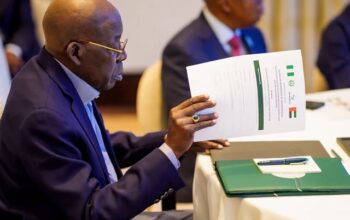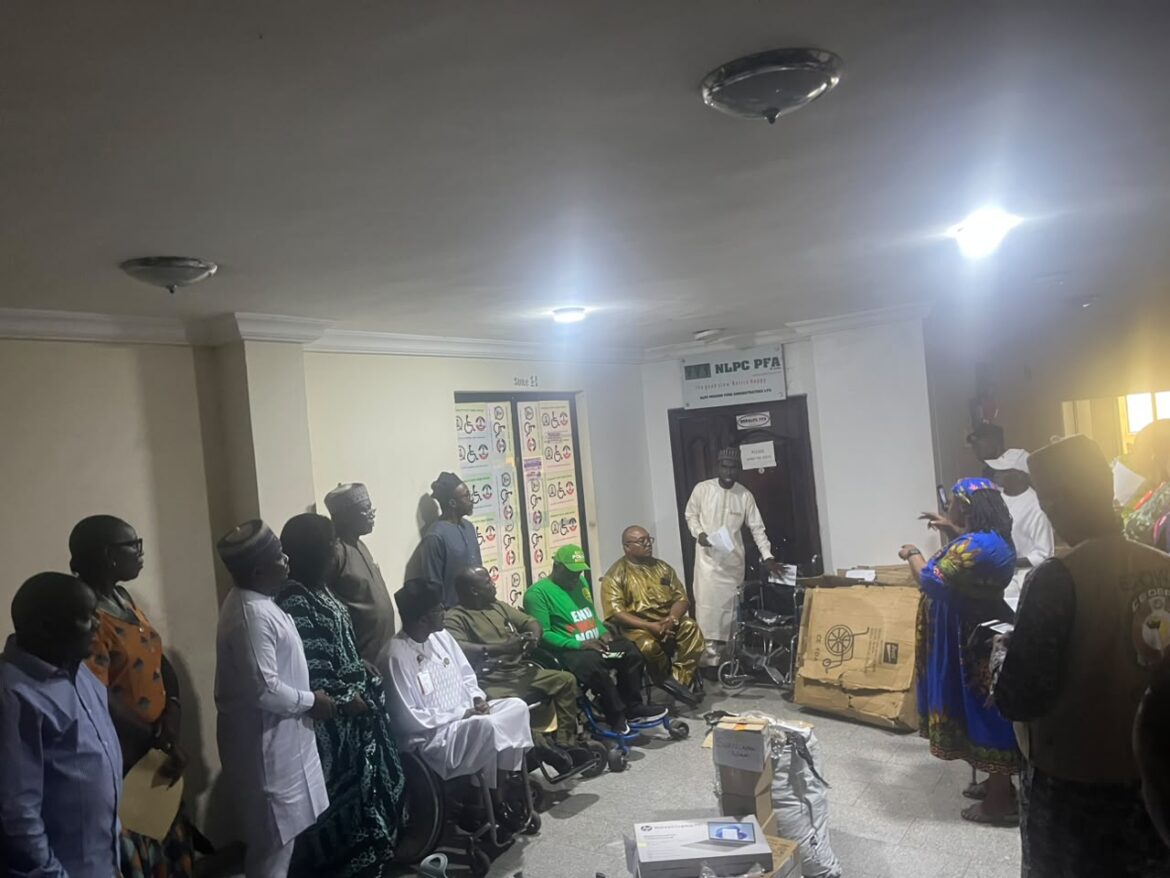
The Economic Community of West African States (ECOWAS) has strengthened its commitment to disability inclusion with the presentation of assistive devices to children with disabilities in Nigeria, while unveiling an ambitious regional strategy to expand access to assistive technology, promote local manufacturing and reinforce national disability support systems across West Africa.
The intervention, implemented under the ECOWAS Regional Programme for the Provision of Assistive Devices to Children with Disabilities in West Africa, marks Nigeria’s participation in the first phase of the initiative alongside Togo after nearly two years of planning and implementation.
Speaking at the handover ceremony in Abuja, Executive Secretary of the National Commission for Persons with Disabilities (NCPWD), Chief Ayuba Gufwan, described the event as a landmark in Nigeria’s journey towards inclusive development, stressing that the initiative represents far more than the distribution of mobility aids and other equipment.
According to him, assistive technology restores dignity, independence and opportunity by enabling persons with disabilities to participate fully in education, employment and community life.
“There is ability in disability,” Gufwan declared. “No matter the severity of a person’s disability, with the right environment and appropriate assistive devices, everyone can contribute meaningfully to humanity.”
He painted a sobering picture of the country’s unmet needs, revealing that while an estimated nine out of every 10 persons with disabilities require some form of assistive technology, most remain without access, leaving millions excluded from education, healthcare, employment and independent living.
Nigeria, he said, has more than 26 million persons with disabilities requiring assistive technology, with demand for quality, affordable and appropriate devices far exceeding available supply.
“Behind these statistics are children who cannot attend school because they lack mobility devices, adults excluded from employment because they do not have access to appropriate technology, and families struggling to access rehabilitation services,” he said.
To address the challenge, Gufwan announced that the Commission has established a dedicated Assistive Devices and Technology Unit to coordinate national efforts, improve service delivery and strengthen collaboration with development partners.
He further disclosed that, in partnership with the Federal Ministry of Health and Social Welfare and international stakeholders, the Commission has developed key policy frameworks, including the Nigerian Priority Assistive Products List, an investment case for assistive technology and a National Assistive Technology Scale-up Plan aimed at expanding access nationwide.
The NCPWD boss stressed that assistive devices only achieve their intended purpose when properly matched to the functional needs of individual users, noting that the new framework would ensure coordinated assessment, procurement and delivery.
Commending ECOWAS for selecting Nigeria as one of the pioneer beneficiaries of the regional programme, Gufwan called on governments, development partners, healthcare professionals, civil society organisations and the private sector to deepen collaboration to guarantee sustainable access to assistive technology.
He also advocated the establishment of local manufacturing and assembly plants for assistive devices, arguing that domestic production would reduce import dependence, lower costs, improve availability, stimulate innovation and create employment opportunities.
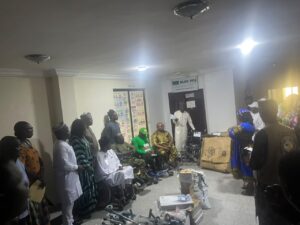
Representing the Minister of Humanitarian Affairs and Poverty Reduction, Senior Technical Adviser on Humanitarian Affairs, Dr. Barnard Doro, reaffirmed the Federal Government’s commitment to protecting the rights and welfare of persons with disabilities.
He described the donation as more than a humanitarian gesture, saying it aligns with the ministry’s integrated strategy of combining humanitarian response with poverty reduction and social protection.
According to him, persons with disabilities often face barriers not because of their physical conditions but because society fails to provide the support and opportunities they deserve.
“This ceremony is more than a formal exchange of items. These assistive devices represent dignity restored, independence regained and doors reopened,” he said.
He praised ECOWAS for demonstrating regional solidarity through the initiative and urged the National Commission for Persons with Disabilities to ensure transparent and equitable distribution of the devices to those most in need.
The Federal Government’s representative also called on development partners to increase investment in disability inclusion and expand support for assistive technology programmes across Nigeria.
Earlier, ECOWAS Commissioner for Human Development and Social Affairs, Professor Fatou Sow Sarr, represented by officials of the Commission, said the programme was conceived following a regional disability inclusion study conducted in 2024, which exposed critical shortages in access to assistive technology across West Africa.
She explained that the findings showed children with disabilities remain among the region’s most vulnerable populations, prompting ECOWAS to prioritise interventions aimed at improving mobility, communication, learning and social participation.
According to the Commission, approximately 240 million children globally live with disabilities, while about 15 per cent of children aged between zero and 17 years in West and Central Africa have one form of disability.
ECOWAS noted that despite growing global demand for assistive technology, access remains severely limited in many low-income countries due to high costs, inadequate services and weak policy implementation.
Officials said the regional programme aligns with ECOWAS Vision 2050, which seeks to build a fully integrated, peaceful and prosperous West Africa founded on strong institutions, respect for human rights and inclusive sustainable development.
The initiative is also anchored on the United Nations Convention on the Rights of Persons with Disabilities, which recognises accessibility as a fundamental human right.
Providing further insight into the programme, ECOWAS officials explained that Nigeria and Togo were selected as the first beneficiaries after extensive consultations with governments and organisations representing persons with disabilities.
The programme has since expanded to additional member states, although implementation timelines vary because of procurement and logistical requirements.
Looking ahead, the Commission identified key priorities, including strengthening disability data collection for evidence-based policymaking, promoting local production of assistive technology through strategic partnerships and extending the programme to more ECOWAS member states.
Officials noted that disability inclusion has become an increasingly important pillar of ECOWAS’ development agenda, reflecting a broader shift from its traditional emphasis on trade and free movement towards a more people-centred model of regional integration.
They added that expanding access to assistive technology directly supports the Sustainable Development Goals by reducing inequalities and ensuring that no child is left behind.
Beneficiaries and their families were encouraged to make responsible use of the devices, while healthcare professionals, teachers and caregivers were urged to provide continuous support, maintenance and follow-up services to maximise their long-term impact.
For ECOWAS and Nigeria, the ceremony represented not merely the distribution of assistive devices but a significant step towards building a more inclusive West Africa where disability is no longer a barrier to education, employment, participation or opportunity, and where assistive technology is accessible, affordable and available to everyone who needs it.