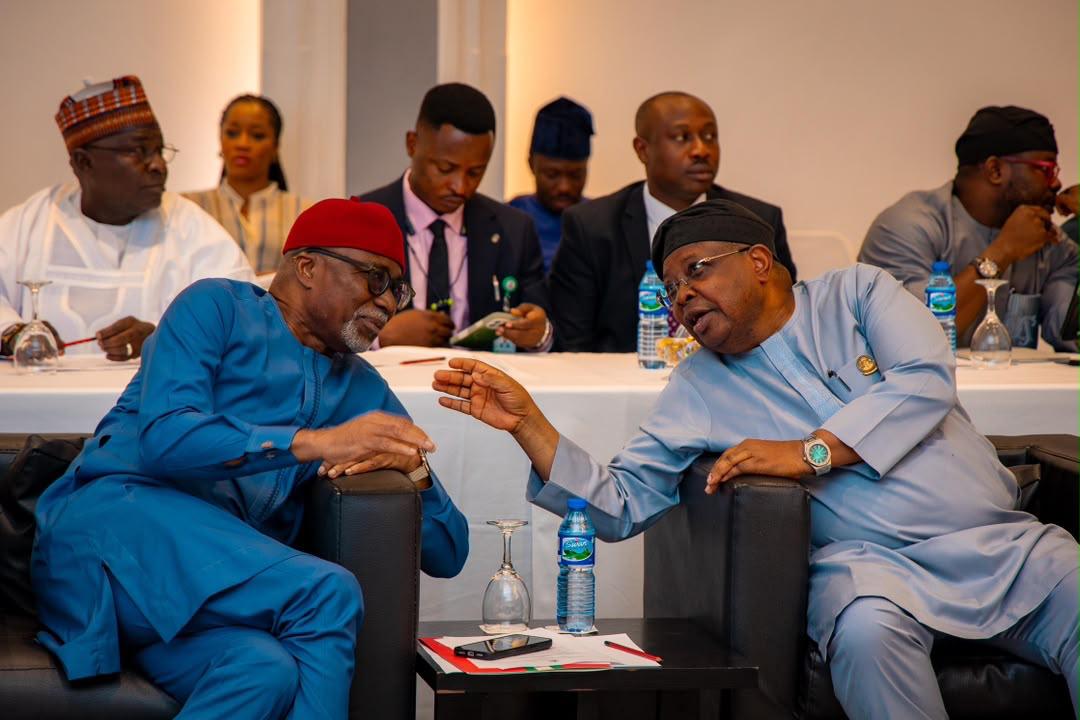
The Federal Government has taken decisive steps to avert a looming regulatory crisis in Nigeria’s electricity sector by forging a new framework for collaboration between the Nigerian Electricity Regulatory Commission (NERC) and State Electricity Regulatory Commissions (SERCs), while inaugurating a nine-member committee to develop a four-week implementation roadmap for the Electricity Act, 2023.
The breakthrough was achieved at a high-level stakeholder engagement convened in Abuja by the Minister of Power, Joseph Tegbe, to address emerging jurisdictional disputes and regulatory overlaps arising from the implementation of the Electricity Act, which introduced a decentralised, multi-market electricity system.
In a major boost to the reform process, the Chairman of the Senate Committee on Power, Senator Enyinnaya Abaribe, agreed to suspend ongoing legislative efforts to amend the Electricity Act, allowing for broader consultations and consensus-building among stakeholders before any further legislative action.
The decision is expected to ease tensions between federal and state electricity regulators and safeguard one of the most significant reforms undertaken in Nigeria’s power sector in decades.
The meeting attracted key stakeholders, including representatives of the National Assembly, the Special Adviser to the President on Power, the Director-General of the Bureau of Public Enterprises (BPE), officials of the Nigeria Governors’ Forum (NGF), heads of federal power agencies, state commissioners responsible for energy, and chief executives of State Electricity Regulatory Commissions.
Deliberations focused on critical issues arising from the transition to a decentralised electricity market, including regulatory jurisdiction, tariff administration, institutional capacity, consumer protection and the need for stronger coordination between federal and state authorities.
Addressing participants, Tegbe described the transition as a landmark reform capable of transforming Nigeria’s electricity industry, stressing that its success would depend on collaboration rather than competition among institutions.
He reaffirmed the Federal Ministry of Power’s commitment to providing regulatory certainty, attracting investments and improving electricity supply and service delivery nationwide.
The minister acknowledged that implementation challenges were inevitable in a reform of such magnitude but insisted they must be resolved collectively without compromising regulatory standards, service quality or consumer protection.
A major outcome of the engagement was the establishment of a nine-member inter-agency committee, chaired by the Minister of Power, to coordinate implementation of the Electricity Act and resolve emerging challenges associated with the transition to the new electricity market structure.

The committee comprises representatives of NERC, State Electricity Regulatory Commissions, the Nigeria Governors’ Forum, the Bureau of Public Enterprises and other relevant institutions.
It has been mandated to sustain stakeholder engagement, identify implementation bottlenecks and submit practical recommendations within four weeks to ensure the seamless operationalisation of the Electricity Act, 2023.
Stakeholders also endorsed the decision by the Senate Committee on Power to defer the proposed amendment of the Act, agreeing that wider consultations were necessary to prevent legislative changes from creating fresh uncertainties in the sector.
Abaribe’s decision was widely welcomed as a critical outcome of the meeting, creating room for regulators, industry operators, federal and state governments, and other stakeholders to resolve contentious issues before any amendment to the law is considered.
The participants reaffirmed their commitment to supporting the power sector reforms being implemented under the administration of President Bola Ahmed Tinubu, noting that sustained cooperation among all tiers of government would be essential to the success of Nigeria’s decentralised electricity market.
The Federal Government said the new coordination mechanism would strengthen institutional collaboration, enhance regulatory certainty and support the development of a modern, competitive and investor-friendly electricity market capable of delivering reliable power to Nigerians.
Closing the engagement, Tegbe reiterated the government’s commitment to deepening electricity sector reforms through dialogue, cooperation and practical solutions, stressing that the ultimate goal remains building an efficient electricity market that attracts long-term investment, expands access to power and drives Nigeria’s economic transformation.