The National Drug Law Enforcement Agency (NDLEA) and the Nigerian Copyright Commission (NCC) have entered into a strategic partnership to combat organised criminal networks involved in drug trafficking, copyright piracy and other transnational crimes.
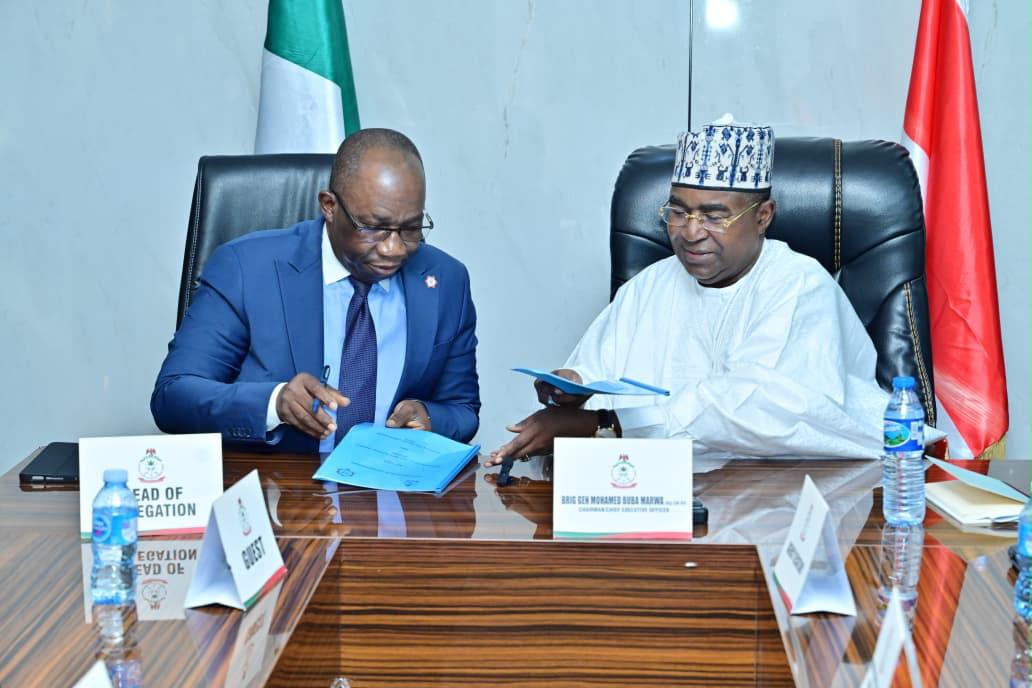
The two agencies formalised the collaboration on Friday with the signing of a Memorandum of Understanding (MoU) at the NDLEA headquarters in Abuja, marking a significant step towards coordinated law enforcement operations against interconnected criminal enterprises.
The agreement provides a framework for intelligence sharing, joint operations, technical cooperation, capacity building and coordinated investigations aimed at dismantling criminal networks operating across multiple sectors.
Speaking at the signing ceremony, NDLEA Chairman and Chief Executive Officer, Brig.-Gen. Buba Marwa (retd.), said the partnership was driven by the growing recognition that organised crime syndicates rarely limit themselves to a single illicit activity.
He noted that drug trafficking organisations increasingly overlap with networks engaged in copyright piracy, including the illegal distribution of music, films, books, software and other intellectual property.
“Criminal networks rarely confine themselves to a single illicit enterprise,” Marwa said, adding that proceeds from one criminal activity are often used to finance others, creating a criminal value chain that requires a coordinated institutional response.
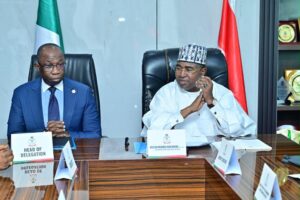
According to him, the MoU provides the structure for such collaboration through intelligence exchange, joint enforcement operations, personnel training and technical support between both agencies.
As part of the agreement, the agencies will establish a Joint Working Committee to oversee implementation, coordinate regular engagements and ensure measurable outcomes.
Marwa described the partnership as one that extends beyond conventional law enforcement, saying it would help protect public health, strengthen national security and safeguard Nigeria’s growing creative economy.
He stressed that musicians, filmmakers, writers and software developers deserved protection from piracy, just as citizens deserved protection from the devastating effects of illicit drug trafficking.
The NDLEA chairman commended the Copyright Commission for recognising the nexus between drug trafficking and intellectual property crimes.
“This is how effective government works—agencies finding the common threads in their missions and pulling together rather than in isolation,” he said.
Director-General of the Nigerian Copyright Commission, Dr. John Asein, described the agreement as a major milestone in strengthening inter-agency collaboration against organised crime.
He said copyright piracy was often wrongly viewed as a minor commercial offence, whereas large-scale piracy had evolved into a sophisticated and highly profitable criminal enterprise.

According to Asein, piracy deprives creators and investors of legitimate earnings, destroys jobs, discourages investment, reduces government revenue and weakens the nation’s creative economy.
He noted that global experience had demonstrated that organised piracy frequently shares logistics, financial channels, transportation routes and distribution networks with drug trafficking, money laundering, smuggling and cyber-enabled crimes.
“The same clandestine routes, storage facilities and financial systems used to move illicit drugs and other prohibited goods can also be exploited for the distribution of pirated books, films, music, software and other copyrighted works,” he said.
Asein added that proceeds from piracy could also be laundered or channelled into financing other criminal activities, making closer collaboration between both agencies both timely and necessary.
He said the partnership would enable the NDLEA and NCC to combine their intelligence capabilities, investigative expertise and enforcement mandates to identify criminal syndicates, trace illicit financial flows, disrupt illegal supply chains and dismantle organised crime structures.
The NCC boss also said the commission would benefit from the NDLEA’s extensive experience in intelligence-led enforcement, forensic investigations, surveillance, financial intelligence, international cooperation and inter-agency coordination.
The collaboration reflects the growing adoption of an integrated law enforcement strategy in Nigeria, as security agencies increasingly recognise that organised criminal groups operate across multiple sectors and jurisdictions.
Under the new framework, both agencies are expected to move beyond isolated enforcement actions to coordinated intelligence sharing, joint investigations and targeted operations aimed at dismantling the financial networks, logistics chains and infrastructure sustaining organised crime.