ActionAid Nigeria has raised fresh concerns over Nigeria’s worsening socio-economic and security situation, warning that rising poverty, mounting public debt, food inflation, insecurity and looming climate-induced disasters are pushing millions of vulnerable citizens deeper into hardship.
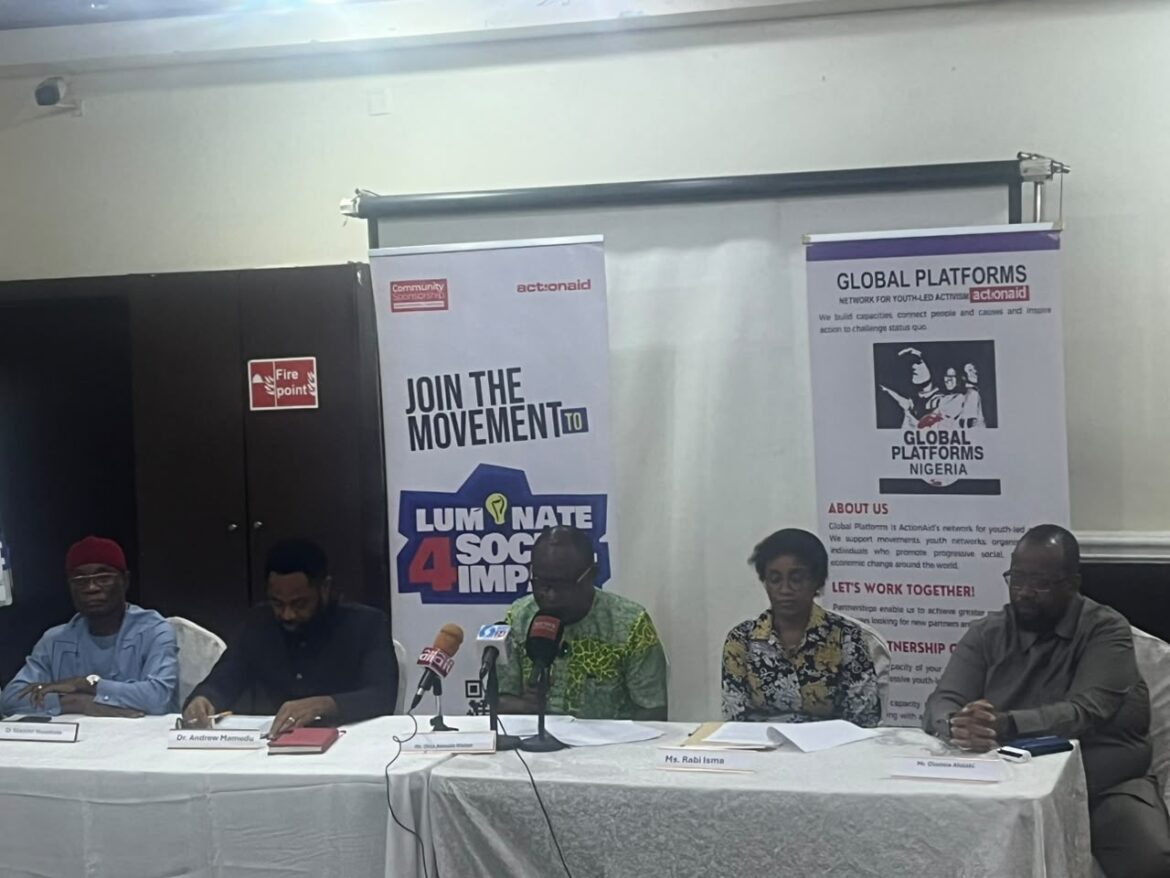
The warning was contained in a communiqué issued by the organisation’s General Assembly and Board of Directors after its Annual General Meeting held in Abuja, where members reviewed the country’s socio-economic outlook and expressed concern over what they described as deteriorating living conditions across the country.
While acknowledging recent government initiatives, including renewed efforts to establish state police, the Federal Executive Council’s approval of reforms to the National Youth Service Corps (NYSC), and the introduction of a community-based flood forecasting system, ActionAid said Nigerians were yet to experience meaningful improvements in security, livelihoods and overall well-being.
The organisation noted that although Nigeria’s external reserves had reportedly risen to about $51.5 billion, the country’s public debt had increased to ₦156.28 trillion, with $11.6 billion projected for debt servicing in 2026.
According to ActionAid, the amount earmarked for debt servicing exceeds the combined federal allocations to education, healthcare and agriculture, raising concerns over the sustainability of public finances and the government’s capacity to invest in critical social sectors.
It also cited the World Bank’s warning that 79 per cent of Nigerians remain poor or vulnerable to poverty, while the National Bureau of Statistics reported a 15.91 per cent headline inflation rate in June.
The organisation blamed soaring food prices, petrol selling above ₦1,100 per litre, rising transportation costs and the ₦70,000 minimum wage, which it said had failed to keep pace with the rising cost of living, for worsening economic hardship among households.
On security, ActionAid expressed alarm over increasing attacks on educational institutions, revealing that at least 124 schoolchildren and students were abducted between May and July 2026 in Oyo, Borno and Zamfara states, with several victims in other parts of the country still being held captive.
It warned that persistent insecurity posed a serious threat to education and urged government at all levels to take urgent action to protect schools and learners.
The organisation also highlighted the country’s flood vulnerability, noting that the Federal Government had placed 33 states and the Federal Capital Territory on high flood alert.
It said more than 14,000 communities, nearly 5,000 health facilities and over 10,000 schools face significant flood risks between July and September.
“Nigeria cannot keep responding to a disaster it predicts every single year,” the organisation stated, urging state and local governments to clear blocked drainage systems, prevent construction on floodplains and adequately equip the National Emergency Management Agency (NEMA) and state emergency agencies ahead of the peak flooding season.
ActionAid called for a comprehensive overhaul of Nigeria’s security architecture, advocating a shift from predominantly military responses to strategies driven by community intelligence, trust and accountability.
It welcomed ongoing constitutional efforts to establish state police but urged the National Assembly to ensure adequate safeguards against political abuse and adopt a sustainable funding model that would prevent poorer states from operating weak security structures.
The organisation further urged the Federal Government to curb revenue leakages, improve transparency in deductions from state and local government allocations, and adopt a sustainable debt management strategy that would reduce debt servicing obligations and free up resources for education, healthcare, agriculture and social protection.
On tax reforms, ActionAid expressed support for the public health objectives of the proposed sugar tax but warned that its current design could negatively affect small retailers, distributors and manufacturers.
It recommended a review of the policy, phased implementation where necessary and transparent utilisation of proceeds to strengthen primary healthcare services in underserved communities.
The organisation also expressed concern over Nigeria’s social protection programmes, alleging that exclusion, leakages and political interference had undermined their effectiveness despite growing humanitarian needs.
With an estimated 35 million Nigerians expected to face acute food insecurity during the 2026 lean season, ActionAid called for an independent audit of social intervention programmes, publication of beneficiary data and reforms to ensure women, youths and rural communities receive priority support.
The group further urged increased investment in primary healthcare to tackle the cholera outbreak in Borno State and the rising burden of non-communicable diseases, including full funding of the Basic Health Care Provision Fund, improved staffing of rural health facilities and timely support for community health workers.
Ahead of the 2027 general elections, ActionAid said lessons from the recent Ekiti State governorship election and other legislative bye-elections should guide electoral reforms.
Although it acknowledged improvements in logistics and the generally peaceful conduct of the Ekiti poll, it expressed concern over allegations of vote-buying, voter intimidation, malfunctioning accreditation equipment and inconsistencies in electoral materials.
The organisation urged the Independent National Electoral Commission (INEC) to strengthen public confidence by addressing the reported irregularities and intensifying voter education in collaboration with the National Orientation Agency, civil society organisations and the media.
ActionAid also criticised the continued high cost of petrol, saying recent reductions in ex-depot prices had not translated into meaningful relief for consumers.
It expressed concern over reports of dollar-denominated pricing of locally refined fuel, warning that continued exchange-rate exposure could further increase transportation and food costs.
The organisation urged the Federal Government, the Nigerian Midstream and Downstream Petroleum Regulatory Authority and the Federal Competition and Consumer Protection Commission to ensure retail fuel prices reflect reductions in ex-depot costs while preventing market manipulation and anti-competitive practices.
Reaffirming its commitment to social justice and gender equality, ActionAid called on civil society organisations, the media, faith-based groups and Nigerians to continue demanding accountability from government while supporting families affected by insecurity.
It stressed that addressing poverty, insecurity, climate risks and economic inequality must remain at the centre of Nigeria’s development agenda to ensure that no citizen is left behind.