The Independent National Electoral Commission (INEC), in partnership with UNESCO and other development partners, has intensified efforts to curb misinformation, disinformation and electoral violence ahead of the 2027 general elections, urging political parties, media organisations, civil society groups and young Nigerians to uphold information integrity as a cornerstone of democratic governance.
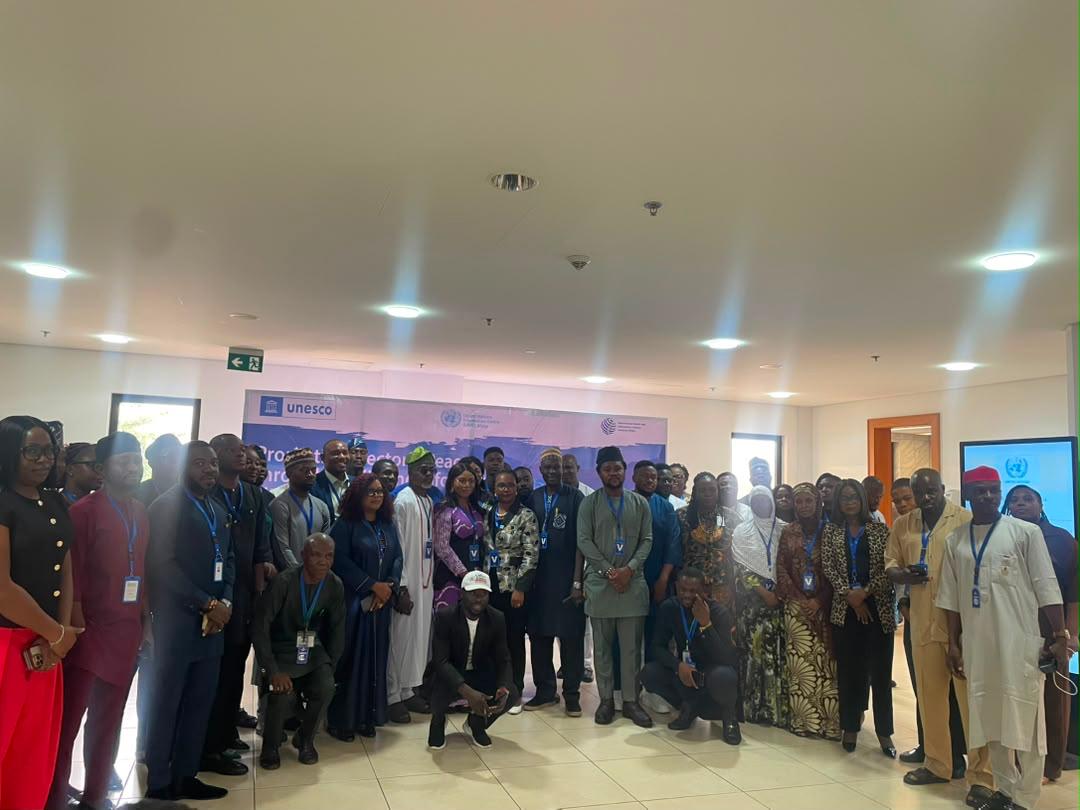
The appeal was made during a stakeholders’ dialogue on Promoting Electoral Peace Through Media and Information Literacy, organised in Abuja by the International Media and Information Literacy Institute (IMILI) with the support of UNESCO and the United Nations Information Centre (UNIC).
Speaking at the event, INEC’s Assistant Director of Information and Publication, Mrs Esther Chibukem, warned that the rapid spread of false information—particularly on social media—poses a growing threat to electoral credibility and public confidence in democratic institutions.
She cited several fabricated reports targeting the Commission, including recurring false claims about the death of the INEC Chairman, describing such narratives as deliberate attempts to erode public trust.
“Today you hear that the INEC Chairman is dead on social media. Tomorrow you hear another false story that did not emanate from the Commission. Because the world has become global, such information spreads rapidly and can do enormous damage if it is not properly addressed,” she said.
Chibukem stressed that rebuilding public confidence remains central to INEC’s preparations for the 2027 elections, noting that the Commission is engaging political parties, the media, youth groups and grassroots communities to ensure an inclusive and transparent electoral process.
She distinguished between misinformation—false information shared without intent to deceive—and disinformation, which she described as deliberately fabricated content designed to manipulate public opinion, incite unrest and weaken democratic institutions.
According to her, electoral violence often begins long before physical attacks, fuelled by fake news, hate speech, deepfakes, vote buying and other forms of information manipulation.
“Violence does not just start with violence. It begins with misinformation, fake news, hate speech, inducement, vote buying and several other triggers that create tension before escalating into violence,” she said.
The INEC official explained that the dialogue was aimed at equipping stakeholders with practical skills to detect early warning signs of electoral violence, counter false information and strengthen collaboration among security agencies, political parties, civil society organisations and the media.
She identified the Inter-Agency Consultative Committee on Election Security (ICCES), peace accords, civil society organisations and media institutions as critical partners in preventing election-related violence.
In an emotional account, Chibukem recounted her ordeal as a presiding officer during an election in Kogi State, where she was abducted by armed political thugs and forced at gunpoint to thumbprint ballot papers in favour of a political party.
“I found myself in a room with about eleven armed men. They told me their party must win. At that point, I had to choose between my life and the ballots before me,” she recalled.
She said the experience underscored the risks faced by electoral officials and highlighted the need for collective action to protect the integrity of elections.
Chibukem also lamented the exploitation of young people by politicians to perpetrate electoral violence for insignificant rewards.
“I asked one of the young men how much he was paid. He told me ₦5,000 and a loaf of bread, while those who sent them had their own children studying abroad. That tells us why every stakeholder must work together to stop electoral violence,” she said.
She identified vote buying, political thuggery, hate speech, weak internal party democracy and impunity as major drivers of electoral conflict, urging political parties to strengthen internal democratic processes and establish credible mechanisms for resolving grievances.
She further emphasised that peacebuilding should begin from voter registration and party primaries through campaigns, voting and post-election dispute resolution, rather than being confined to election day.
Addressing participants, UNESCO Regional Representative for the Sahel, Dimitri Sanga, said Nigeria’s youthful population has become a critical force in shaping democratic discourse, particularly in an era dominated by artificial intelligence and digital communication technologies.
While acknowledging that digital platforms have expanded opportunities for civic engagement, he warned that they have also accelerated the spread of misinformation, hate speech and AI-generated content capable of undermining electoral processes.
Sanga described media and information literacy as an indispensable 21st-century skill that enables citizens to critically evaluate information, identify manipulated content and participate responsibly in democratic processes.
“The integrity of elections depends not only on institutions but also on the quality of information citizens share and consume. When false narratives dominate public discourse, trust in democratic institutions is weakened. But when citizens are equipped with critical thinking skills and ethical communication practices, democracy becomes stronger, more inclusive and more resilient,” he said.
He reaffirmed UNESCO’s commitment to supporting Nigeria in promoting information integrity, strengthening democratic values and empowering young people to become responsible digital citizens through education, collaboration and dialogue.
Earlier, Director of the International Media and Information Literacy Institute (IMILI), Dr Sharon Omotosho, described the dialogue as timely, saying elections remain one of the most sensitive periods requiring responsible communication.
She noted that IMILI, established this year as UNESCO’s first Category 2 International Media and Information Literacy Institute globally, is working to promote ethical communication and responsible use of digital platforms ahead of future elections.
Omotosho said participants drawn from political parties, media organisations, government agencies and civil society groups would be expected to replicate the knowledge acquired during the training within their respective organisations and communities.
“We are not here simply to hold another meeting. Participants are being equipped with practical knowledge and given the responsibility to monitor the information they produce, verify what they share and train others within their spheres of influence,” she said.
She urged journalists, political actors and digital content creators to reject inflammatory narratives and instead use their platforms to promote peaceful, credible and violence-free elections before, during and after the 2027 general polls.