Former Bayelsa State Governor and National Leader of the Nigeria Democratic Congress (NDC), Senator Henry Seriake Dickson, has urged President Bola Ahmed Tinubu to protect Nigeria’s democratic institutions, strengthen the Economic Community of West African States (ECOWAS) and ensure credible elections ahead of the 2027 general elections.
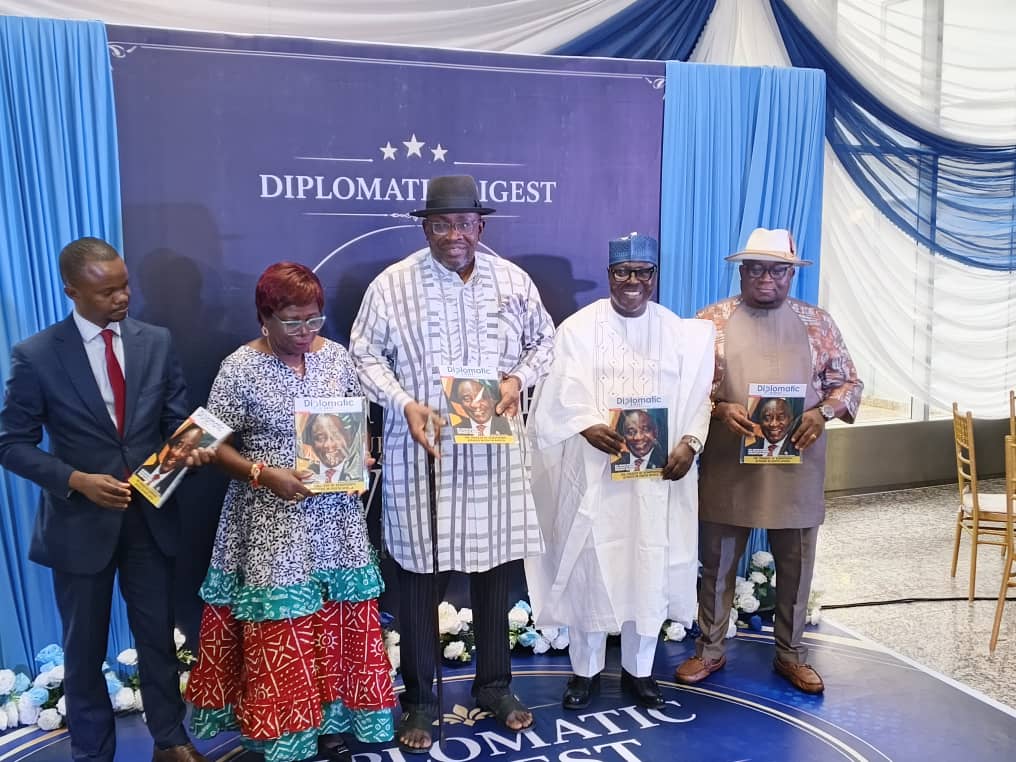
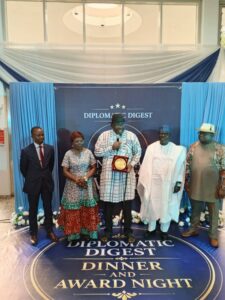
Dickson made the call on Friday in Abuja after receiving the Pillar of Nigeria Democracy Award at the sixth anniversary lecture and awards ceremony of Diplomatic Digest Magazine, organised in collaboration with the Diplomatic Correspondents Chapel.
His remarks came amid growing concerns over democratic backsliding in West Africa, where a series of military coups and constitutional disruptions have weakened regional integration and challenged ECOWAS’ authority.
The event brought together diplomats, senior government officials, policymakers, academics, traditional rulers and media practitioners, while also featuring discussions on China’s expanding global influence and Nigeria’s foreign policy priorities.
Accepting the award, Dickson dedicated the honour to Nigerians who have defended constitutional governance since the country’s return to democratic rule in 1999.
“Democracy is not a sprint; it is a marathon. It is the democratic path to development, but there are no shortcuts on that path,” he said.
The senator stressed that democracy can only thrive where the Constitution is respected, the rule of law upheld, the judiciary remains independent, the media operates freely and the electoral management body enjoys public confidence.
He cautioned against actions capable of undermining democratic institutions, insisting that no government or political party should place itself above the Constitution.
Dickson also expressed concern over the shrinking democratic space in West Africa, lamenting the resurgence of military takeovers across the ECOWAS sub-region.
As Vice Chairman of the Senate Committee on Foreign Relations, he urged President Tinubu to sustain diplomatic engagement with the Alliance of Sahel States while leading efforts to rebuild ECOWAS into a stronger, more cohesive regional bloc.
According to him, Nigeria’s leadership remains central to the success of ECOWAS, warning that any weakening of the regional organisation would diminish Nigeria’s strategic influence and leadership role on the African continent.
With preparations for the 2027 elections gathering pace, Dickson called on the Federal Government, political parties and other stakeholders to protect the independence of the Independent National Electoral Commission (INEC), the judiciary and security agencies to ensure that future elections reflect the genuine will of the people.
He also reaffirmed the commitment of the Nigeria Democratic Congress to constitutional governance, accountability, inclusive leadership and effective service delivery.
The anniversary lecture equally focused on Nigeria’s diplomatic engagement with China and the country’s foreign policy direction.
Delivering the keynote address titled “Chinese Diplomatic Tools and the Redefinition of the Global Governance System,” Provost of the Anti-Corruption Academy of Nigeria (ACAN) and Head of Contemporary China-Africa Research in Nigeria, Professor Sheriff Ghali Ibrahim, urged Nigeria to pursue a more strategic partnership with Beijing.
He said stronger diplomatic engagement with China should be leveraged to accelerate industrialisation, infrastructure development, technology transfer, investment, innovation and human capital development.
Ghali argued that Nigeria must pursue partnerships that advance national interests while ensuring sustainable economic growth, adding that Africa’s engagement with China should be built on mutual benefit, knowledge exchange and long-term development rather than dependency.
Also speaking, the spokesperson of the Ministry of Foreign Affairs, Kimiebi Imomotimi Ebienfa, underscored the critical role of diplomacy in advancing Nigeria’s foreign policy objectives.
He said effective diplomacy remained essential for attracting foreign direct investment, expanding trade, promoting peace and security, protecting Nigerians abroad and reinforcing the country’s leadership position in Africa.
Ebienfa called for stronger collaboration among government institutions, diplomats, academia, the private sector and the media to project a positive image of Nigeria and support the country’s international engagements.
Earlier, Publisher and Editor-in-Chief of Diplomatic Digest, Kennedy Peretei, commended the Minister of State for Foreign Affairs, Ambassador Bianca Odumegwu-Ojukwu, for what he described as her exemplary leadership and expressed appreciation to members of the diplomatic community for supporting the publication over the past six years.
The event concluded with participants calling for stronger democratic institutions, deeper regional cooperation and more strategic international partnerships as critical drivers of Nigeria’s political stability, diplomatic influence and long-term economic development.