The Federal Government and Nestlé Nigeria Plc have launched a nationwide campaign to improve water quality and combat the consumption of unsafe water, taking water safety education directly to communities across the country.
The initiative, implemented in collaboration with the Organised Private Sector in Water, Sanitation and Hygiene (OPS-WASH), seeks to broaden Nigeria’s water agenda beyond access and availability to include quality, safety and sustainability.
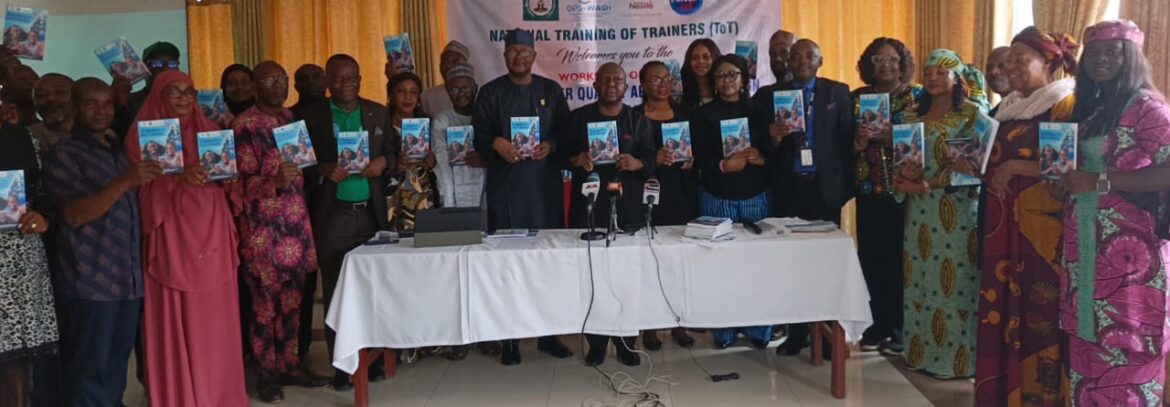
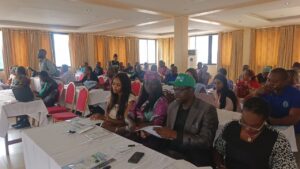
The campaign was unveiled at a National Training of Trainers (ToT) workshop on the Water Quality Handbook, which brought together government officials, technical experts and other stakeholders to establish a network of trainers capable of taking water safety knowledge to states, local government areas and communities.
Representing the Minister of Water Resources and Sanitation, Engr. Prof. Joseph Utsev, Director Habu Jamilu said Nigeria could no longer afford fragmented approaches to water quality management, stressing the need for a coordinated national strategy.
He described the Water Quality Handbook as a comprehensive technical guide designed to establish standard procedures across the water quality value chain.
According to him, the handbook addresses source protection, household water handling, water testing, household water treatment, climate-related water quality challenges and mechanisms for reporting water quality concerns to relevant authorities.
Utsev said the training marked a critical step towards translating the handbook’s technical provisions into practical knowledge that could be replicated nationwide.
He urged participants to take full advantage of the technical sessions and practical exercises, noting that the success of the campaign would depend largely on the ability of trained personnel to transfer the knowledge to communities.
Speaking on the initiative, the National Coordinator and Global Head of OPS-WASH Nigeria, Dr. Nicholas Igwe, who represented Nestlé Nigeria, said the company was deliberately expanding its water stewardship strategy beyond access to encompass quality, governance and sustainability.
Igwe disclosed that under Nestlé Nigeria’s Water Regeneration Project, the company had committed to providing about 270,000 cubic metres of water annually to 16 communities in one catchment area, while another eight communities in a second catchment area were expected to receive about 130,000 cubic metres.
The combined intervention amounts to approximately 400,000 cubic metres of water annually, reflecting the scale of the company’s stated commitment to water regeneration and community development.
He identified four pillars underpinning the project: water access, water quality, governance and sustainability.
Igwe said the objective was to ensure that communities not only had access to water but could also rely on water that met acceptable quality standards.
“People should not only have access to water; they should also understand and benefit from water that meets acceptable quality standards,” he said.
He explained that community participation was central to the project, with residents involved from the design stage through implementation to promote ownership and ensure that benefits were sustained beyond the intervention period.
The initiative also incorporates water harvesting projects to support agricultural activities and contribute to food security.
Igwe said the Water Quality Handbook, launched in April 2026 with the support of the Federal Ministry of Water Resources and Sanitation, was intended to serve as more than a policy document.
He said its impact would ultimately be measured by how effectively its contents reached ordinary Nigerians and equipped them with practical knowledge about the quality of the water they consume.
“The objective is for people to know exactly what they drink and understand how water quality affects their health and even the economy,” he said.
He explained that trainers emerging from the workshop would take the handbook’s guidelines to states, local government areas and communities, where they would educate residents on the health and economic consequences of poor water quality, appropriate household practices and the importance of consuming safe water.
Igwe also challenged private-sector organisations to extend their interventions beyond federal-level initiatives and ensure that investments produce measurable benefits at community level.
He urged state governors and water and sanitation institutions to take ownership of the campaign and support its implementation as it reaches their respective states.
The workshop featured technical sessions focused on practical aspects of water quality management.
A goodwill message was delivered by the President of the Association of Professional Women Engineers in Nigeria (APWEN), Engr. Chinreye Igwegbe, who joined other stakeholders in calling for stronger professional and institutional collaboration in water management.
The partnership between the Federal Ministry of Water Resources and Sanitation, OPS-WASH and Nestlé Nigeria highlights a growing recognition that Nigeria’s water challenge extends beyond the provision of supply infrastructure.
The emerging priority is to ensure that water reaching households is safe, adequately tested, properly handled and sustainably managed.
For millions of Nigerians who depend on vulnerable water sources, the effectiveness of the campaign could ultimately determine whether access to water translates into genuine public-health protection or leaves communities exposed to the risks associated with unsafe water.