West Africa is increasingly treating water as a matter of regional security, economic survival and political cooperation, as climate change, population growth and rising demand intensify pressure on the region’s shared water resources.
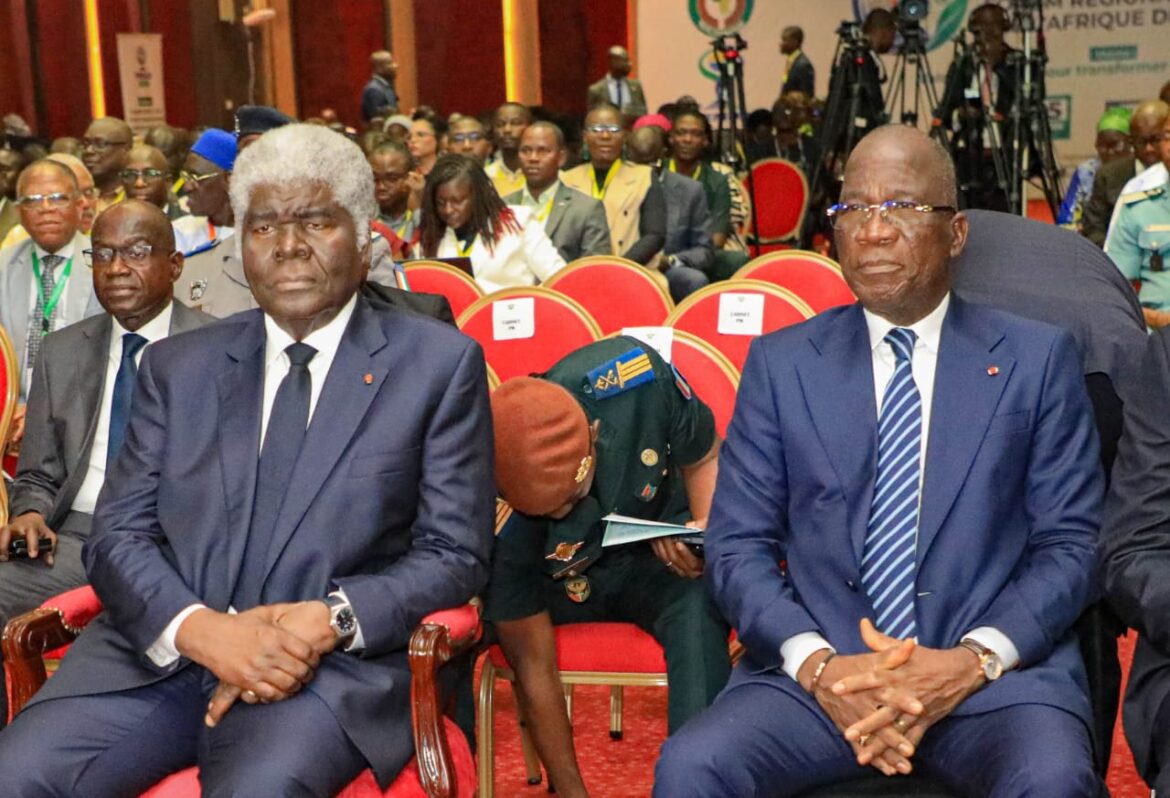
This emerging approach dominated the inaugural West Africa Regional Water Forum (FREAO) in Abidjan, Côte d’Ivoire, where governments and regional institutions adopted a common framework for addressing the region’s growing water challenges.
The forum, convened by the Economic Community of West African States (ECOWAS) in partnership with the West African Economic and Monetary Union (UEMOA) and the Permanent Interstate Committee for Drought Control in the Sahel (CILSS), ended on September 25 with the adoption of the Abidjan Declaration and a regional water roadmap.
Cabo Verde was selected to host the next edition of the forum.
Held under the theme, “Valuing Water to Transform West Africa,” the gathering brought together heads of government, ministers, regional institutions, river-basin organisations, development partners, academics, private-sector representatives and civil society groups.
At the centre of the discussions was the need to prevent growing competition over a finite and increasingly vulnerable resource from undermining regional development and stability.
Water knows no borders
Unlike national infrastructure and budgets, rivers and other water systems do not recognise political boundaries.
Water originating in one country can determine the livelihoods of communities hundreds of kilometres away, while dams, irrigation projects, industrial activities and environmental disasters upstream can have significant consequences downstream.
The challenge is particularly important in West Africa, where several countries share major river basins.
For Nigeria, the issue is critical given its position within the Niger and Benue river systems and its dependence on transboundary water resources. Developments upstream can affect agriculture, fisheries, ecosystems, flood patterns and livelihoods downstream.
Opening the forum on behalf of the Ivorian government, Prime Minister Robert Beugré Mambé called for stronger cooperation in the management of shared water resources, describing water governance as a strategic political choice and a pillar of regional stability.
Climate pressure intensifies
Climate change is further complicating the region’s water equation, with countries simultaneously confronting drought, erratic rainfall, flooding, desertification and environmental degradation.
While prolonged dry periods threaten agriculture and livestock in some areas, intense rainfall in others causes destructive floods, damages infrastructure and contaminates water sources.
The challenge, therefore, is not merely water scarcity, but the increasing unpredictability of when and where water becomes available and whether communities have the infrastructure to capture, store and use it effectively.
Climate resilience consequently featured prominently in the Abidjan discussions.
Representing ECOWAS Commission President General Birame Diop, Commissioner Amin Amidu Sulemani described the forum as a call for collective action to strengthen water security and climate resilience.
Participants also examined Integrated Water Resources Management, water diplomacy, sustainable financing and transboundary cooperation.
Water, food and energy linked
The forum recognised that West Africa’s water challenge cannot be separated from its food and energy needs.
Agriculture depends on reliable water supplies, hydropower on river flows, while rapidly growing cities require dependable water infrastructure. Industries also depend on water for production.
At the same time, agriculture, mining, industry and poorly managed waste can contaminate water sources, creating additional pressure on communities and ecosystems.
The regional approach therefore places water management within a broader framework encompassing environmental protection, agriculture, energy, economic development and climate adaptation.
Financing remains critical
Turning the emerging regional water strategy into reality will depend heavily on financing.
Dams, irrigation systems, treatment plants, reservoirs, drainage networks and climate-resilient infrastructure require substantial and sustained investment, at a time when governments face competing demands in health, education, security and other sectors.
Sustainable financing was consequently identified as a central component of the regional agenda.
The challenge now is to move beyond declarations towards financing mechanisms capable of supporting projects, while strengthening regional institutions, mobilising domestic resources and attracting development partners and private-sector investment.
Data crucial to water security
Reliable data is also emerging as a critical component of effective water governance.
Governments need accurate information on water availability, river levels, climate patterns and changing supply conditions to manage shared resources effectively.
Such information can support early warning systems for floods and droughts, improve coordination of dam operations and help governments anticipate threats to food production.
Regional information-sharing is therefore expected to become increasingly important as countries seek to manage transboundary water resources collectively.
Wider African agenda
The Abidjan forum was also linked to the continent’s broader water agenda.
President of the African Ministers’ Council on Water (AMCOW) and Senegalese Minister of Water and Sanitation, Dr Cheikh Tidiane Dièye, connected the meeting with Africa’s preparations for the 2026 United Nations Water