Dear KY Tebo,
I have read your Hausa-language publication on Facebook containing serious allegations against Brigadier General DH Abdulsalam (rtd), PhD, Special Adviser to the Yobe State Government on Security Affairs. Although the publication appears to have been deleted, I retained a screenshot. Having considered its contents alongside the report published by Security Digest on October 8, 2026, concerning the arrest of Alhaji Wakiil Goni Mama, popularly known as Mai Salati, I consider it necessary to address the issues raised and urge you to exercise greater caution, fairness and responsibility in your public commentary.
Serious allegations require credible evidence
My principal concern is that your publication appears to attribute improper motives and misconduct to General Abdulsalam without presenting verifiable evidence sufficient to substantiate the claims.
Allegations involving corruption, oppression, complicity or political manipulation are serious matters. They should not be made casually or presented as established facts without credible supporting evidence. Such claims can damage reputations, undermine public confidence in institutions and aggravate tensions in communities already confronting significant security challenges.
Freedom of expression is fundamental to a democratic society. However, it carries a corresponding responsibility to distinguish verified facts from speculation, suspicion and personal opinion. Public criticism is legitimate, but it is most effective and credible when grounded in evidence.
A fair assessment of General Abdulsalam’s record
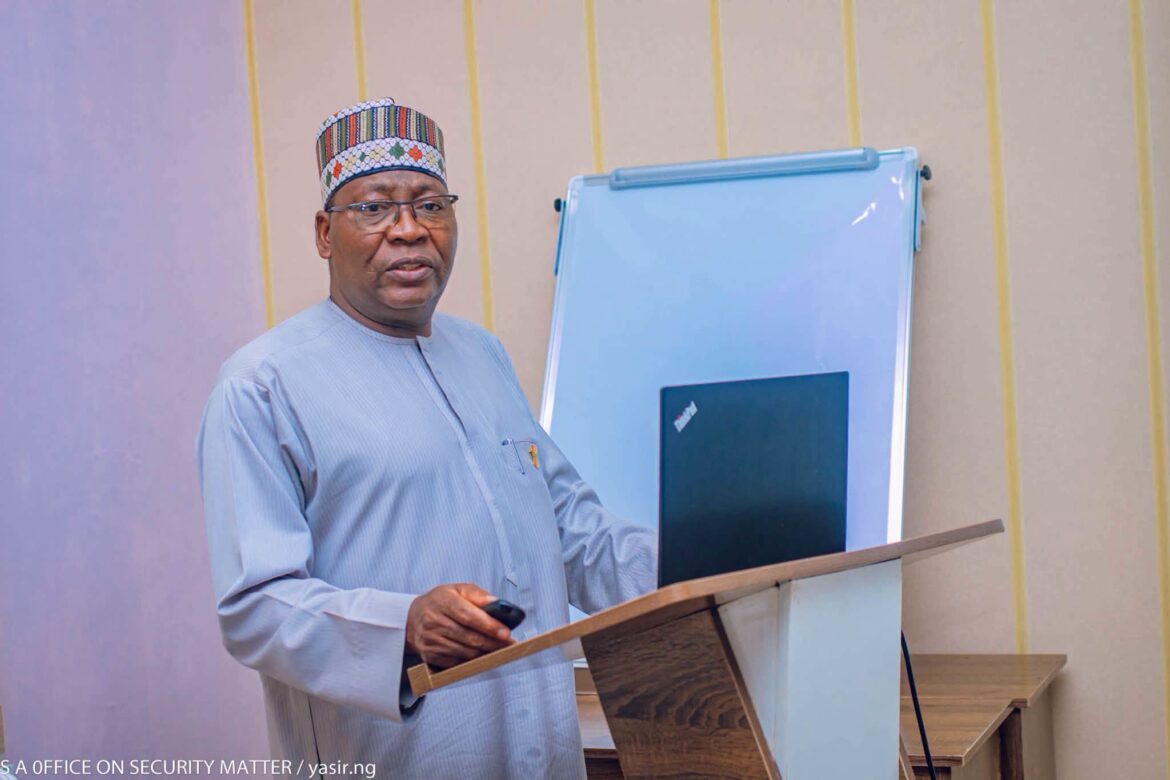
Brigadier General Abdulsalam is a retired senior military officer who served the Nigerian Army in various command, instructional and staff appointments, including as Director of Operations at Army Headquarters. These responsibilities required professional competence, operational judgement and an understanding of complex security challenges.
Following his military career, he assumed the responsibility of Special Adviser to the Yobe State Government on Security Affairs, bringing his experience and professional knowledge to bear on the state’s security concerns.
Having known General Abdulsalam personally, I consider it unfair to make sweeping assertions about his character, motives or professional conduct without credible evidence. My position is not that his public responsibilities should shield him from scrutiny. Rather, he, like every other public official, deserves to be assessed on the basis of verifiable facts and objective consideration.
Disagreement with an official decision does not, in itself, establish wrongdoing by the person responsible for it. Equally, professional credentials do not place anyone above accountability. The appropriate standard must be evidence, fairness and due process.
Yobe’s security situation demands collective responsibility
Yobe State provides an important example of the efforts required to sustain relative peace in a region affected by serious security threats. Whatever progress has been achieved is attributable to the collective efforts of the state government, security agencies, traditional institutions, community leaders and ordinary citizens.
No single individual can reasonably claim exclusive credit for the security situation in the state. Nevertheless, the contributions of those entrusted with security responsibilities should be evaluated objectively rather than dismissed through unsubstantiated allegations.
Sustainable security depends on effective coordination among security agencies, timely intelligence sharing, community participation and public confidence in institutions. Responsible public commentary should support these objectives by encouraging transparency and accountability without unnecessarily undermining the relationships essential to protecting lives and property.
Geidam deserves peace, dignity and responsible representation
I have particular affection for the people of Geidam. I have friends from the community, and one of my teachers during my secondary school days in Kafanchan also hailed from Geidam. These personal connections have strengthened my appreciation for the people and their community.
The people of Geidam deserve peace, security, dignity and development. Their concerns must be heard, their grievances addressed and their interests protected.
However, legitimate community concerns must be distinguished from allegations against specific individuals. Where questions arise concerning security operations or official decisions, they should be investigated objectively and addressed through appropriate channels.
It is neither fair nor constructive to portray a security-related development as a conspiracy against an entire community without establishing the facts. Such narratives risk deepening mistrust between residents and the institutions responsible for their protection.
Advocating for Geidam does not require making unsupported accusations against individuals. On the contrary, the community’s interests are better served by accurate information, constructive engagement and evidence-based demands for accountability.
The arrest of Mai Salati: allegations are not proof of guilt
The Security Digest report of October 8, 2026, stated that Mai Salati was arrested over allegations of providing logistical support to the Islamic State West Africa Province (ISWAP), collaborating with the terrorist group and attempting to bribe military personnel to secure the release of suspects detained in Kanamma, Yobe State. The report also addressed claims that the arrest was politically motivated.
These are serious allegations that must be subjected to proper investigation and due process. An arrest does not establish guilt, just as an allegation of political persecution does not, by itself, establish that an arrest was politically orchestrated.
The facts must be established by competent authorities through credible evidence and lawful procedures. Neither the accused nor those making counter-allegations should be judged solely on the basis of unverified narratives circulating on social media.
This brings me to several straightforward questions about your publication:
- What verifiable evidence directly links General Abdulsalam to the alleged wrongdoing?
- What credible evidence establishes that he personally engineered Mai Salati’s arrest?
- On what factual basis do you attribute malicious intentions to him or suggest that his actions were directed against the people of Geidam?
- Have you independently verified the information on which these allegations are based, and have you sought a response from the person concerned?
These questions are not intended to discourage scrutiny or prevent legitimate criticism. They are necessary questions that any responsible commentator should be prepared to answer before making serious public allegations.
If you possess credible evidence, the appropriate course is to present it through the relevant investigative, administrative or judicial channels and allow the competent authorities to examine it. If the evidence is insufficient, you should reconsider the claims and avoid presenting conjecture as fact.
Exercise caution with artificial intelligence and online information
I also urge you to exercise caution when relying on ChatGPT or any other artificial intelligence tool to establish facts about an individual’s military career, character or conduct.
AI tools can generate inaccurate information, misinterpret available material or present unverified assertions in convincing language. They are useful for research and analysis, but their outputs must be independently checked against reliable sources.
Official records, credible documentary evidence, independently verified reporting and findings from competent authorities should take precedence over unverified online claims. No AI-generated response should be treated as conclusive proof that a person committed an offence or acted with a particular motive.
Public office and traditional standing demand fairness, not immunity
General Abdulsalam is also a recognised traditional title holder in the Damaturu Emirate. His military background, traditional standing and current public responsibilities place him within important networks of public service and community engagement.
These considerations are relevant to understanding his public profile, but they should neither exempt him from legitimate scrutiny nor be used as substitutes for evidence in his defence.
The same standard must apply to everyone: allegations should be investigated, official decisions may be questioned, and individuals should be held accountable where credible evidence establishes wrongdoing. Equally, no one should be subjected to reputational damage through claims that cannot withstand factual scrutiny.
A call for correction, accountability and responsible engagement
KY Tebo, I urge you to review your publication carefully, verify the claims made and withdraw or correct any allegations you cannot substantiate.
If you maintain that your assertions are accurate, provide credible evidence to support them and make that evidence available to the appropriate authorities. Where serious allegations have been published without adequate justification, the affected individual may consider lawful remedies, including redress for defamation, depending on the evidence, the circumstances of publication and applicable law.
This is not a threat against legitimate criticism. It is a reminder that the right to express an opinion does not remove the responsibility to exercise it fairly and lawfully.
Social media is not a court of law, and the repetition of an allegation does not transform it into an established fact. The speed with which information circulates online makes verification more important, not less.
You can question government policies, scrutinise security operations and advocate for the welfare of Geidam without making unsupported personal accusations against General Abdulsalam. Indeed, your arguments will carry greater weight when they are supported by evidence, framed constructively and directed towards solutions.
Let the interests of Yobe State prevail
I appeal to you to place the collective interests of Yobe State above personal disagreements or political considerations. Having known General Abdulsalam personally, I believe his professional record—including his command, instructional and staff appointments, his service as Director of Operations at Army Headquarters, and his current role as Special Adviser on Security Affairs—deserves a fair and objective assessment.
That assessment should neither presume his innocence of every possible allegation nor assume his guilt on the basis of unverified claims. It should be guided by facts, credible evidence and the principles of accountability and due process.
The relative peace achieved in parts of Yobe State is worth protecting. The people of Geidam deserve our respect, and public officials entrusted with security responsibilities deserve to be judged fairly. Where legitimate grievances exist, they should be addressed through constructive dialogue, independent investigation and lawful processes.
KY Tebo, let facts prevail over rumours, evidence over insinuation, and responsible criticism over personal attacks. Let us defend the right of communities to seek answers while respecting the equally important principle that no individual should be condemned without credible evidence.
Yobe State needs peace, unity, accountability and constructive engagement. Our public discourse should strengthen these objectives rather than undermine public confidence through allegations that have not been adequately substantiated.
Brigadier General SK Usman (rtd), mni, PhD