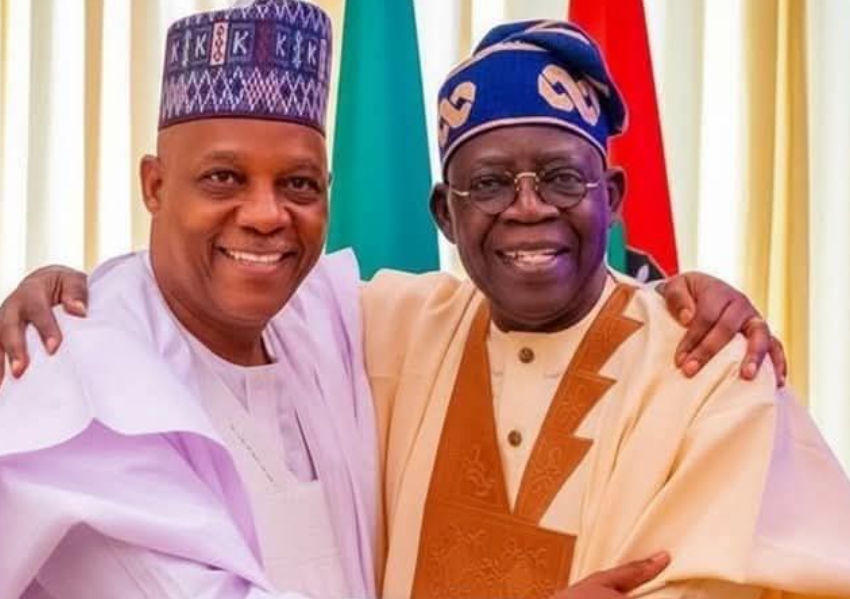
Many Nigerians are still wondering about President Bola Tinubu’s decision to retain Vice President Kashim Shettima as his running mate for the 2027 presidential election. They speak about religious balance and often relate to Atiku Abubakar and the coalition’s ticket. But it never reflects a strategic calculation built on loyalty, competence, electoral strength, and political stability that the Tinubu team put into consideration in their blueprints. Rather than altering a partnership that has remained relatively free of internal conflict, the All Progressives Congress (APC) appears determined to preserve a joint ticket that has already been tested in a competitive election and established a working relationship within the administration. Shettima’s continued presence offers Tinubu a combination of personal trust, administrative capacity, northern political influence, and institutional continuity.
In a political environment where alliances can easily weaken under pressure, the relationship between Tinubu and Shettima has stood out for its apparent cohesion. Since the 2023 campaign, the two leaders have demonstrated strong early loyalty and a willingness to coordinate their political and governmental responsibilities. This absence of public friction is politically significant. Presidential tickets are not merely electoral arrangements; they are partnerships that must survive campaign pressures, policy disagreements, public criticism, and competing political interests. By retaining Shettima, Tinubu is signalling that the existing partnership remains useful, dependable, and capable of supporting the administration’s objectives through the 2027 election.
One of the most important reasons for Shettima’s retention is his loyalty to President Tinubu. Political loyalty is often assessed not just through public declarations but also through the consistent conduct of a political ally during challenging times. Since becoming vice president, Shettima has largely maintained a supportive and coordinated public posture towards the president. He has not attempted to create an independent power centre that competes with the presidency, nor has he publicly challenged the administration’s central direction. Instead, he has played the role of a trusted deputy who reinforces the president’s agenda.
This type of loyalty is particularly valuable in a presidential system. A vice president occupies a position that can either strengthen or destabilise an administration. If the relationship between the president and vice president becomes strained, political disagreements may expand into public controversy, factional competition, and institutional paralysis. Tinubu’s decision to retain Shettima suggests that he values the stability created by a loyal deputy. The president knows the importance of maintaining unity at the highest level of government, especially as he prepares for another demanding national campaign.
Shettima’s loyalty also has political importance beyond his relationship with Tinubu. His continued support helps reassure influential political actors who participated in the formation of the 2023 ticket. Replacing him could create uncertainty among members of the APC, regional stakeholders, and northern political networks that supported the original arrangement. By maintaining the partnership, Tinubu reduces the likelihood of resentment among those who may interpret a change as a rejection of an established alliance.
Competence is another major factor behind Shettima’s retention. As a former governor of Borno State, Shettima brought executive experience to the vice presidency. His background in managing a state affected by serious security and humanitarian challenges gave him practical knowledge of public administration, crisis management, and political negotiation. These experiences have enabled him to operate as more than a ceremonial deputy. He has represented the administration at major national and international events, defended government policies, and participated in efforts to explain the administration’s economic and development goals.
A competent vice president can provide the president with flexibility, as we all have been witnessing recently. The president cannot personally attend every meeting, regional engagement, diplomatic event, or policy discussion. Shettima’s capacity to represent Tinubu and articulate the government’s stance enables the administration to maintain an active and visible presence across various platforms. His experience and public speaking skills have made him a useful political representative for the government.
Adding to this, Shettima’s competence has been important in sustaining public confidence in the administration’s policy direction. The Tinubu government has pursued difficult reforms, including changes to fuel subsidy arrangements, economic management, and efforts to attract investment. Such policies have generated debate and public concern. A vice president who understands the administration’s objectives and can explain them coherently contributes to political reassurance. Retaining Shettima therefore allows Tinubu to preserve an experienced partner who is already familiar with the government’s policy framework.
Shettima’s electoral record in Borno State is also a major asset. His success in maintaining a strong political base in Borno demonstrates his ability to organise support and mobilise voters. Borno is not only politically significant because of its population and location; it is also symbolically important as one of the states at the centre of the North-east geopolitical zone. A vice presidential candidate who commands loyalty in the region can contribute substantially to a national campaign.
The North-east remains an important component of Nigeria’s electoral calculations. The region contains millions of voters and has historically played a decisive role in presidential elections. Tinubu’s choice of Shettima in 2023 helped create a ticket that could appeal to voters across regional and religious lines. Retaining him for 2027 allows the APC to continue benefiting from the political networks already developed in the region. Changing the candidate could require the party to rebuild trust, renegotiate alliances, and persuade influential local actors to support a new arrangement.
Shettima’s electoral success in Borno is also evidence of organisational strength. Political campaigns depend not only on popular appeal but also on structures capable of registering supporters, communicating with voters, coordinating party officials, and ensuring turnout on election day. Shettima’s influence gives the APC an established foundation in the North-east. That foundation may be especially valuable in a close election, where a few percentage points in key states can determine the national outcome.
Beyond Borno, Shettima provides access to a formidable northern political structure. His background, relationships, and experience have connected him to governors, legislators, traditional leaders, party officials, community organisations, and influential political figures across the northern region. Selecting a new running mate cannot easily replace these networks. Political structures are built over years through trust, shared interests, negotiations, and repeated cooperation. Keeping Shettima enables the APC to rely on an existing network instead of beginning again with an unfamiliar candidate.
This northern structure strengthens Tinubu’s national coalition. Nigeria’s political system requires presidential candidates to build broad alliances across regions and communities. A candidate who performs strongly in one part of the country but lacks acceptance elsewhere may struggle to win a nationwide election. Shettima helps Tinubu maintain the regional balance that was central to the 2023 campaign. His presence communicates continuity to northern voters while allowing Tinubu to present the joint ticket as a national partnership rather than a temporary electoral arrangement.
Another reason for retaining Shettima is the absence of significant internal friction between the president and vice president. Political observers have often seen disagreements between presidents and their deputies in Nigeria and elsewhere. Such tensions can weaken public confidence, encourage factionalism, and distract governments from their responsibilities. In contrast, the Tinubu-Shettima relationship has been characterised by public coordination and a shared presentation of the administration’s priorities.
The value of this unity cannot be overstated. An administration facing economic pressures, security concerns, and public criticism needs a leadership team that can communicate with one voice. Internal disagreements are inevitable in any government, but they become dangerous when they are allowed to dominate public discussion. The apparent cooperation between Tinubu and Shettima has helped the administration project a degree of stability. Retaining the ticket preserves that image and assures party members that the leadership remains aligned.
The Presidency and the leadership of the House of Representatives have emphasised that continuity is necessary to strengthen stability and confidence in the administration’s policy direction. This argument is persuasive because governments require time to implement major reforms. Replacing the vice presidential candidate could lead to political speculation about changes in policy, priorities, and internal power relationships. Even if a new running mate were personally capable, the change could create questions about the unity of the administration and the future of its reform agenda.
Continuity does not automatically guarantee good governance, but it can support effective governance when the existing partnership is functional. Tinubu and Shettima have already developed methods of cooperation, understood their respective responsibilities, and established relationships with key officials. A new running mate would need time to develop the same level of coordination. In a political system already facing complex challenges, avoiding unnecessary disruption is a reasonable strategic choice.
The partnership with the First Lady’s Renewed Hope Initiative further reinforces the case for continuity. Shettima’s cooperation with the initiative connects the vice presidency to programmes focused on social development, women, youth, health, and community welfare. This relationship has helped broaden the administration’s public image beyond economic and political issues. It demonstrates that the presidency is working through complementary channels to address the social consequences of national challenges.
Maintaining a coordinated relationship among the president, vice president, and the First Lady’s initiative can help the administration present a unified vision. It also allows programmes to continue without the confusion that might follow a major change in the leadership structure. Political stability is not only about elections and party organisations; it also concerns the continuity of programmes that affect citizens directly.
Also, the decision to retain Shettima reflects the APC’s desire to avoid unnecessary political risks. The submission of nomination forms by the party indicates confidence in the existing ticket and suggests that party strategists believe the partnership remains electorally viable. A change in running mate could produce several risks: disagreements among party leaders, dissatisfaction among northern stakeholders, competition among aspirants, and uncertainty among voters. It might also encourage opponents to portray the change as evidence of instability within the administration.
No political arrangement is without risk, but replacing Shettima would introduce risks that the APC does not need to accept. He is already known to voters, has an established political base, understands the administration’s agenda, and has demonstrated loyalty to Tinubu. As the 2027 campaign councils are set to hit the ground running, the strategies from the blueprints are already speaking success for the APC. The opposition drops in the APC with Nyesome Wike of the People’s Democratic Party (PDP), Governor Charles Soludo of Anambra State and his counterpart from Osun State, Ademola Adeleke, and Tinubu, Shettima, and the APC will surely dance in 2027.
James Bwala, PhD, writes from Abuja