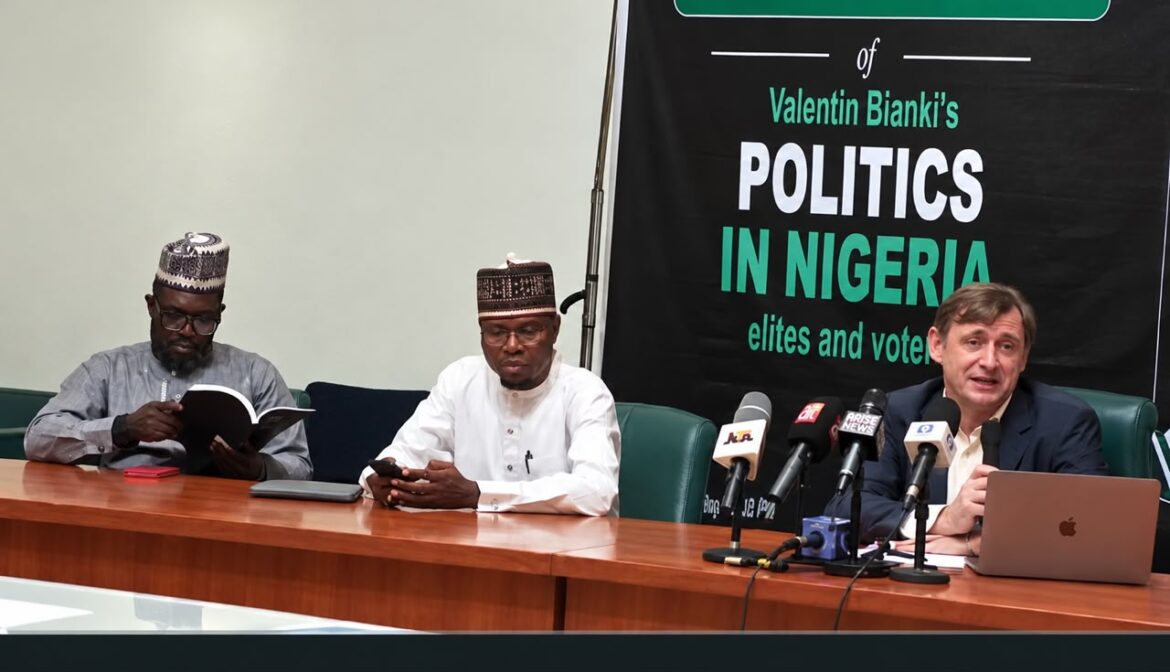
- Bianki examines political elites, voter behaviour, generational divides and social media in new book
A researcher, Valentin Bianki, has said Nigeria’s complex political landscape, institutional challenges and evolving democratic experience offer valuable lessons for understanding political systems and democratic governance across the world.
Bianki, who said he had worked in seven countries and followed Nigeria’s political developments since 2009, described the country as a compelling subject for comparative political research because of the complexity, dynamism and distinctive characteristics of its political environment.
He made the observation during a presentation of his book, Politics in Nigeria: Elites and Voters, which examined the relationship between political institutions, leadership, public attitudes and electoral behaviour.
The researcher acknowledged Nigeria’s numerous governance challenges but argued that the country’s political experience deserved closer academic attention, particularly in understanding how democracies evolve under varying social, economic and institutional conditions.
The presentation compared Nigeria’s political environment with developments in Russia and Western countries, emphasising the need to examine the broader political systems within which leaders and political parties operate rather than focusing exclusively on individual personalities.
Bianki’s analysis explored how political leadership, public perception and electoral behaviour interact, noting that a politician’s image, popularity and personal appeal could shape public expectations without necessarily translating into fundamental changes in governance.
The discussion also raised questions about the effectiveness of political parties and institutional structures in responding to citizens’ demands, as well as whether electoral competition consistently delivers the reforms and policy outcomes voters expect.
Another major theme was the influence of generational differences on political attitudes, leadership preferences and expectations of government.
According to the issues examined during the presentation, citizens shaped by different historical and social experiences may hold contrasting views on leadership, democratic accountability and national development.
Understanding these differences, Bianki suggested, is increasingly important in societies undergoing rapid social, economic and technological transformations.
The researcher also highlighted the growing influence of social media and digital information on political communication, public opinion and perceptions of political leaders.

The expansion of digital platforms has changed how citizens access political information, engage with public officials and assess government performance, making the relationship between information, perception and electoral choices an important area of research.
Bianki stressed the importance of adopting systematic, analytical and evidence-based approaches to studying political developments, arguing that reliable data and rigorous research are essential for identifying patterns and explaining political behaviour that might otherwise be misunderstood.
He also underscored the need to strengthen research capacity and encourage innovation, noting that access to reliable information has become increasingly important in a world where data plays a central role in decision-making and public policy.
The researcher’s comparative approach suggests that Nigeria’s democratic experience should be assessed not only through its immediate political difficulties but also through the broader lessons that can be drawn by examining similarities and differences across national political systems.
Such comparative analysis can help researchers better understand the influence of institutional design, political culture, voter expectations and changing social conditions on democratic outcomes.
Bianki also expressed interest in developing further academic and research partnerships in Nigeria, signalling opportunities for greater collaboration with local scholars and institutions.
His work places Nigeria’s political experience within a wider international debate on democratic development, highlighting the importance of research, institutional performance and informed public participation in understanding the challenges confronting political systems worldwide.