Environmentalists, researchers and civil society organisations have raised concerns over the potential environmental, social and economic consequences of global meat-processing giant JBS’s proposed $2.5 billion investment in Nigeria, calling for independent impact assessments and stronger safeguards to protect rural communities and smallholder farmers.
The concerns were highlighted at a media training organised in Abuja by the Health of Mother Earth Foundation (HOMEF) and Environmental Rights Action (ERA), in collaboration with the Youth in Agroecology and Restoration Network and HEDA Resource Centre.
A presentation by Adesuwa James Jang, Founder and Team Lead of Youth for Environmental Sustainability and Development (YESD), examined the consequences of industrial animal farming, drawing on documented experiences in Lagos, Abia and Benue states.
The proposed JBS investment, covered by a five-year agreement signed with the Federal Government in November 2024, involves six major facilities comprising three poultry processing plants, two beef processing plants and a port facility. Ogun State is expected to serve as a major operational hub, while Niger State has reportedly committed about 1.2 million hectares of land to the project.
Although the investment is projected to create more than 50,000 direct and indirect jobs, stimulate food processing and strengthen Nigeria’s livestock industry, environmental advocates warned that its implementation could threaten existing agricultural livelihoods if adequate safeguards were not established.
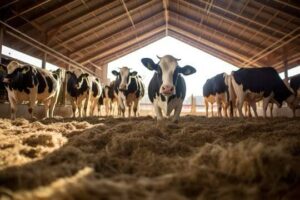
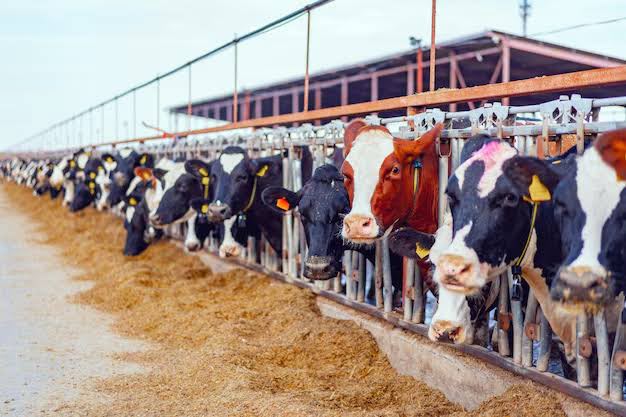
They noted that Nigeria’s livestock industry contributes approximately $32 billion annually to the economy, while the poultry sector supports about 25 million livelihoods directly and indirectly.
Smallholder farmers reportedly account for more than 60 per cent of poultry farming in the country but continue to face challenges, including rising feed prices, expensive day-old chicks and limited access to credit.
The campaigners questioned whether the anticipated economic benefits of large-scale industrial livestock production would outweigh the potential displacement of smallholder farmers, increased dependence on industrial feed and loss of indigenous livestock breeds.
According to findings from a study coordinated by HEDA Resource Centre and its partners, 60 per cent of respondents reported losing farmland to industrial agricultural projects, while 76.7 per cent experienced air pollution and 63.3 per cent reported contamination of nearby water sources.
The presentation, however, cautioned that the figures were based on self-reported experiences from selected communities and should not be generalised without examining the study’s sample size and methodology.
The environmental implications of industrial slaughterhouse operations were also highlighted, particularly around the Kara abattoir, a major meat-processing facility serving Lagos and neighbouring communities.
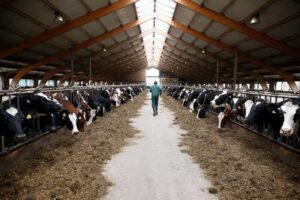
Studies cited during the training reportedly found that blood and wastewater from slaughtering and cattle-washing activities were discharged into the Ogun River without adequate treatment.
The river is used for washing cattle and providing drinking water for livestock, while some surrounding residents depend on it for domestic purposes, raising concerns about potential public health risks.
The presentation further noted that Lagos slaughters approximately 8,000 cattle daily but has only seven approved abattoirs, underscoring the pressure on existing meat-processing infrastructure.
Similar environmental challenges were identified in other parts of the country. In Ubakala, Abia State, a 2025 study reportedly found that abattoirs were predominantly located close to rivers and streams, with 60 per cent of respondents indicating that slaughterhouse waste was burnt.
In Makurdi, Benue State, researchers investigated possible heavy-metal contamination of the River Benue around the Wurukum abattoir, focusing on pollution associated with untreated slaughterhouse effluent.
Beyond water and air pollution, environmentalists warned that large-scale livestock expansion could contribute to deforestation, land degradation, methane emissions and poor waste management.
The presentation identified cattle as the largest contributor to livestock-related methane emissions, accounting for approximately 74 per cent of the emissions discussed, while sheep, goats and other ruminants contributed about 22 per cent.
It also highlighted the environmental challenges associated with poultry waste, particularly its potential contribution to water pollution and greenhouse gas emissions when improperly managed.
Public health concerns were equally raised, with campaigners calling for scientific investigations into potential zoonotic disease risks associated with poorly regulated livestock operations and the proximity of industrial facilities to residential communities.
They stressed that such concerns should be subjected to rigorous scientific assessment rather than presented as established medical findings.
The environmental advocates called on the Federal Government to ensure transparency in the proposed JBS investment, insisting that host communities must be adequately consulted and their rights to land, livelihoods and a healthy environment protected.
They demanded independent environmental and social impact assessments, public disclosure of project details, fair compensation for acquired land and enforceable measures to prevent pollution, displacement and other adverse consequences.
They also urged journalists and policymakers to investigate whether affected communities were properly consulted, how industrial animal waste and wastewater would be managed, and who would ultimately benefit economically from the investment.
The campaigners maintained that Nigeria’s livestock sector requires investment, improved technology, modern processing facilities and increased production capacity, but warned against pursuing economic growth at the expense of environmental sustainability and existing agricultural livelihoods.
With the Federal Government targeting an increase in livestock’s contribution to the country’s Gross Domestic Product from approximately five per cent to 10 per cent by 2030, they called for a development approach that balances industrial expansion with environmental protection, food security and social justice.
They warned that without transparency, effective regulation and accountability, the proposed investment could transform an opportunity for economic growth into a major environmental and livelihood crisis.