ActionAid Nigeria (AAN) has called on Nigerians—particularly young innovators and entrepreneurs—to harness the untapped economic potential of the country’s plastic waste sector, valued in billions of dollars.
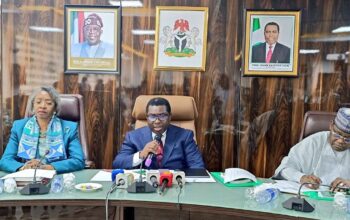
The call was made in Abuja by the Country Director of ActionAid Nigeria, Andrew Mamedu, during the “Beat Plastic Pollution Innovation Day,” held to mark World Environment Day. Mamedu, represented by Favour Ikpe, Chair of the ActionAid Nigeria Young People’s Forum, highlighted the urgency of transforming Nigeria’s plastic waste challenge into a sustainable economic opportunity.
He noted that Nigeria currently generates an estimated 2.5 million tonnes of plastic waste annually, yet less than 10% of this is recycled. The remainder, he warned, contributes significantly to environmental degradation, public health risks, and economic loss. “We must invest in recycling infrastructure and support the brilliant young minds who are already creating grassroots solutions. Cutting down on single-use plastics and enabling recycling is not only an environmental imperative—it is an economic one,” Mamedu stated.
He underscored the importance of shifting the narrative around plastic waste from pollution to potential, citing Nigeria’s youthful demographic—where nearly 70% of the population is under 30—as a powerful force for innovation and change. “Young people across Nigeria are transforming plastic waste into economic opportunities by building startups, developing sustainable alternatives, and championing circular economy practices,” he said.
Globally, the recycled plastics market is projected to surpass $107 billion by 2032, and Nigeria’s circular economy is already valued at over $10 billion, with enormous room for growth. According to the African Development Bank, a continent-wide transition to a circular economy could unlock up to $350 billion in new economic opportunities by 2030.
Yet despite these prospects, systemic challenges remain. Mamedu pointed to Lagos State, where the recycling economy was worth approximately ₦18 billion in 2021, but where over 80% of the city’s waste is still not formally collected—resulting in an estimated $2.5 billion in lost value each year. “We need to reward innovation, fund community-driven initiatives, and enact policies that empower local recyclers and scale sustainable practices. Plastic is a part of the problem—but with the right approach, it can also be part of the solution,” he said.
Mamedu emphasized the need to reimagine plastic—not as waste, but as a resource. “Today is not just about raising awareness; it’s about celebrating action. From live demonstrations to creative exhibitions, this event showcases how young Nigerians are redefining the future of sustainability,” he concluded.
ActionAid Nigeria continues to champion youth-led innovation and policy engagement as part of its broader strategy to address climate change, promote environmental justice, and accelerate inclusive development.