Nigeria’s correctional reform programme has won high-level continental acclaim, with Heads of Correctional Services from 11 African countries endorsing the nation’s technology-driven inmate management and rehabilitation initiatives as a model for prison reforms across Africa.
The endorsement came during an inspection tour of the Medium Security Custodial Centre (MSCC), Kuje, by delegates attending the African Correctional Services Association (ACSA) Regional Conference in Abuja. The officials praised Nigeria’s transition from a punitive prison system to a modern correctional framework centred on rehabilitation, vocational training and digital inmate management.
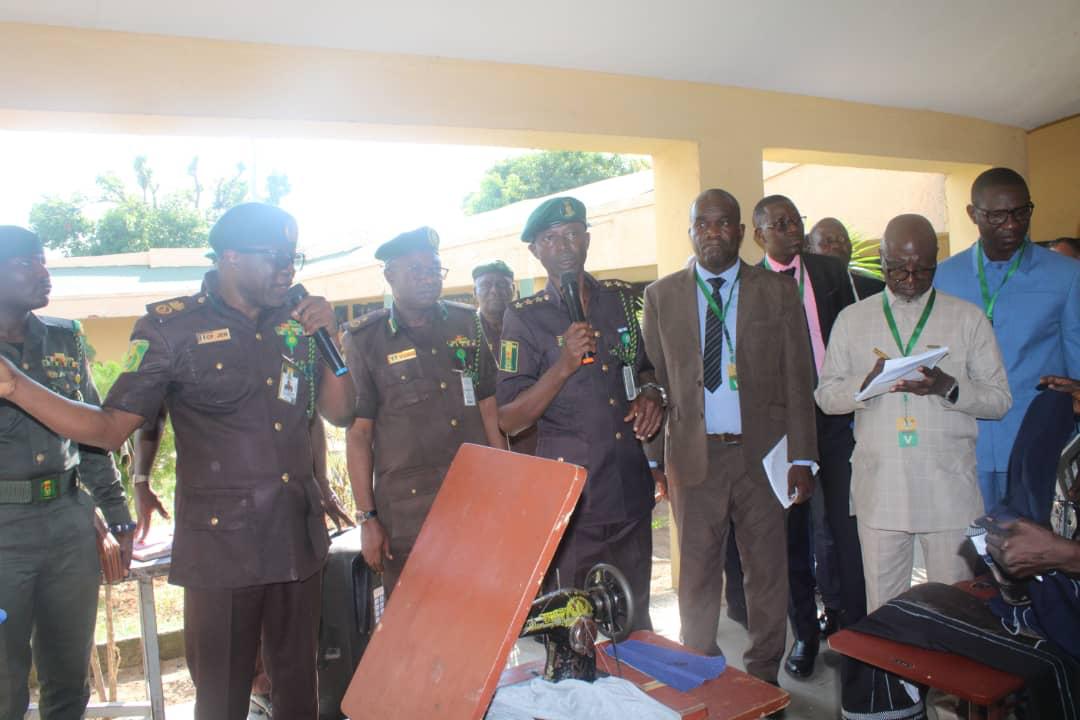
Led by the Deputy Chairman of ACSA’s West African Region, Mr. Sabila Sawadogo, the delegation toured the facility’s inmate admission unit, where they observed biometric registration through the Correctional Information Management System (CIMS), inspected the control room and visited vocational and educational centres offering training in tailoring, carpentry, ICT, building technology, solar installation, bag making, shoe and cap production.
Speaking after the tour, Sawadogo described the Kuje custodial centre as a practical demonstration of international best practices in offender management, noting that the integration of digital technology with structured rehabilitation programmes represents a significant step towards reducing recidivism and improving public safety across the continent.
He commended the Minister of Interior, Hon. Olubunmi Tunji-Ojo, and the Controller-General of the Nigerian Correctional Service (NCoS), Sylvester Ndidi Nwakuche, for providing the leadership driving the transformation of Nigeria’s correctional system.

According to him, the reforms mark a decisive shift from the traditional prison model to a correctional philosophy focused on reformation, rehabilitation and successful reintegration of inmates into society.
Welcoming the delegates, the Controller of Corrections, Federal Capital Territory Command, Peter Jen, reaffirmed the Nigerian Correctional Service’s commitment to innovation, professional excellence and international collaboration.
He said the Service has prioritised education and vocational empowerment to ensure inmates acquire practical and employable skills before leaving custody, enabling them to become productive members of society.
The visit formed part of the practical sessions of the ACSA Regional Conference, providing correctional leaders from across Africa the opportunity to examine Nigeria’s reform initiatives firsthand and exchange ideas on strengthening correctional administration across the continent.
Nigeria’s reforms are being implemented under the Nigerian Correctional Service Act 2019, which replaced the former Nigerian Prisons Service and introduced a new correctional philosophy emphasising rehabilitation, non-custodial measures, vocational development and reintegration in line with the United Nations Standard Minimum Rules for the Treatment of Prisoners, also known as the Nelson Mandela Rules.
The Nigerian Correctional Service has also expanded the deployment of digital technologies, including the Correctional Information Management System, to enhance inmate documentation, strengthen security and improve custodial administration, while scaling up educational and skills acquisition programmes aimed at reducing repeat offending.
The Kuje Medium Security Custodial Centre, despite the security setback following the 2022 terrorist attack, has emerged as one of Nigeria’s flagship correctional facilities after significant investments in security infrastructure, operational systems and inmate rehabilitation programmes.
Observers say the endorsement by African correctional chiefs reinforces Nigeria’s growing leadership in correctional reforms, with the country’s experience increasingly serving as a reference point for other African nations seeking to modernise their prison systems through technology, institutional reforms and human-centred rehabilitation.
The visit also highlighted the commitment of African correctional institutions to deepen regional cooperation, promote knowledge sharing and develop correctional systems that enhance public safety while providing offenders with meaningful opportunities for rehabilitation and successful reintegration into society.