The Afro-Caribbean Investment Summit marked a significant milestone in strengthening the economic and cultural ties between Africa and the Caribbean, focusing on sustainability, economic diversification, and strategic collaboration for mutual prosperity.
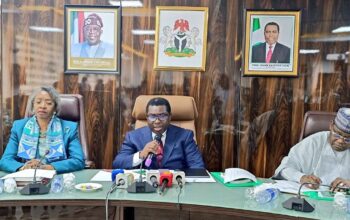
The landmark event, held in Abuja, Nigeria, was organized by Aquarian Consult in partnership with the government of Saint Kitts and Nevis under the theme “Bridging Continents: Africa and the Caribbean, a Partnership for Prosperity.” It brought together political, business, and academic leaders from both regions to explore opportunities for deeper economic integration and long-term development.
In his keynote address, Dr. Terrence Michael Drew, Prime Minister of Saint Kitts and Nevis, underscored the historical and cultural connections between Africa and the Caribbean. He described Africa not merely as a distant relative but as the “mother” of the Caribbean, emphasizing the need to move from sporadic engagements to structured and sustained collaboration across economic, cultural, political, and spiritual domains.
Dr. Drew highlighted the shared challenges of climate change, noting that both Africa and the Caribbean have already experienced its devastating effects. He presented the geothermal energy project in Nevis as a model for sustainable energy development, aiming to reduce reliance on fossil fuels and promote renewable energy solutions. He proposed that this initiative could serve as a blueprint for African nations and small island developing states worldwide.
Addressing food security, Drew referenced the vulnerabilities exposed by the COVID-19 pandemic, particularly in global supply chains. He stressed the importance of agricultural modernization in St. Kitts and Nevis, with a focus on climate-resilient crops and sustainable farming. He called on African agricultural experts to collaborate through joint research, farm exchanges, and technology partnerships to strengthen food production systems in both regions.
On financial reform, Drew advocated for innovative financial instruments, such as diaspora bonds and microfinance programs, to support young entrepreneurs, women, and small businesses. He stressed that improved access to capital would foster economic independence and growth within the Afro-Caribbean bloc.
Dr. Ameenah Gurib-Fakim, former President of Mauritius, addressed the structural challenges facing Africa’s economic development. She noted that despite its vast natural resources and a growing youthful population, Africa accounts for a disproportionately small share of global trade and GDP.
Gurib-Fakim highlighted the Africa Continental Free Trade Area (AfCFTA) as a pivotal initiative for creating a unified market capable of unlocking Africa’s manufacturing potential. However, she cautioned that Africa’s economic transformation would require strategic investments in science and technology, alongside closing the skills gap to meet the demands of a modern, knowledge-based economy.
She also underscored the need for education reform, criticizing African educational systems for limiting the development of critical thinking and problem-solving skills. Gurib-Fakim argued that a modernized education system would be essential for fostering innovation and entrepreneurship.
Ms. Aisha Maina, Managing Director of Aquarian Consult, introduced the concept of a “Global Africa”—a shared identity and common heritage uniting people of African descent worldwide. She urged the Global South to reject externally imposed development standards and to establish its own benchmarks for progress and success.
Maina emphasized that greater collaboration between Africa and the Caribbean should extend beyond trade to include joint innovation and entrepreneurship. She called for both regions to leverage their collective strengths to overcome historical divisions and build a more unified and prosperous future.
Prof. Benedict Okechukwu Oramah, President of the African Export-Import Bank (Afreximbank), stressed the need for institutionalized cooperation between Africa and the Caribbean. He highlighted their shared history of colonization and displacement, noting that these experiences provide a foundation for mutual understanding and strategic partnership.
Oramah outlined Afreximbank’s role in facilitating trade and investment, urging both regions to harness their natural resources and intellectual capital to establish globally competitive industries. He envisioned a future where a united Afro-Caribbean bloc could emerge as a significant political and economic force on the global stage.
“The unity of Africa and the Caribbean,” Oramah stated, “could create one of the world’s most influential political and economic alliances, capable of shaping global affairs.” He concluded that the summit represented a pivotal step toward creating a structured framework for Afro-Caribbean collaboration, with the goal of increasing trade, innovation, and sustainable development.
The Afro-Caribbean Investment Summit set the foundation for a new era of cooperation, underscoring the shared heritage and economic potential of Africa and the Caribbean. The event’s outcomes emphasized the importance of long-term strategic partnerships in driving economic resilience, technological innovation, and social progress.