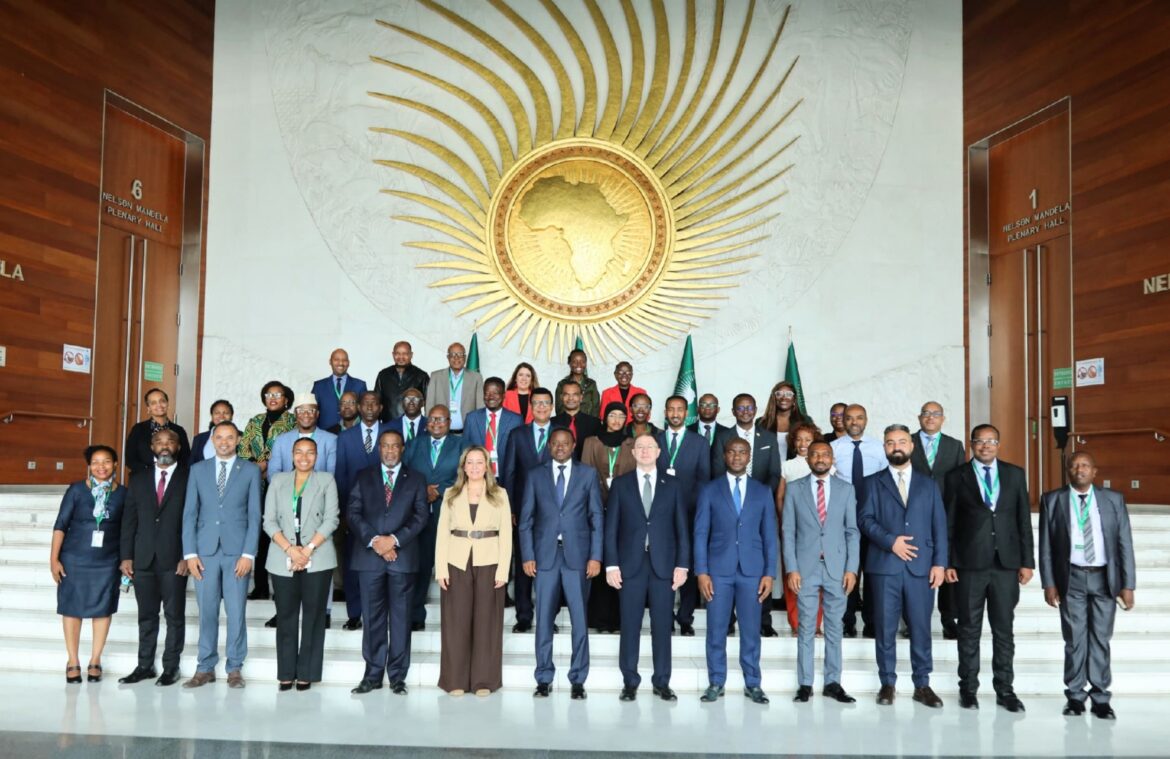
The African Union (AU) and the African Capacity Building Foundation (ACBF) have launched a major initiative to strengthen Africa’s position in the rapidly expanding global carbon market, training more than 80 ambassadors, senior diplomats and policy experts to negotiate better climate finance deals and secure a larger share of global carbon trading revenues.
The high-level capacity-building programme, held at the AU Headquarters in Addis Ababa, Ethiopia, forms part of the implementation of the Africa Action Plan on Carbon Markets, adopted by the AU Assembly in 2025 to position African countries as key beneficiaries of international carbon finance under the Paris Agreement.
The initiative comes at a pivotal time as decisions reached under Article 6 of the Paris Agreement during the COP29 climate summit in Baku, Azerbaijan, are expected to significantly expand international carbon markets, opening new opportunities for developing countries to access billions of dollars in climate finance.
In a statement issued by the Head of Communications and Influencing at the ACBF, Fatou Diouf, the Foundation said the seminar was designed to strengthen the technical expertise and negotiating capacity of African diplomats ahead of increasingly complex global climate negotiations.
Addressing participants, AU Commissioner for Agriculture, Rural Development, Blue Economy and Sustainable Environment, Moses Vilakati, underscored the importance of a united continental approach to carbon market governance.
“Our collective approach must continue to be guided by our continental frameworks,” Vilakati said.
He stressed that effective governance, transparency, free, prior and informed consent, as well as legally enforceable benefit-sharing mechanisms, are essential to ensuring carbon market investments deliver tangible economic and environmental gains to African nations and local communities rather than disproportionately benefiting external investors.
The training programme examined African-led carbon credit projects, explored the distinction between compliance and voluntary carbon markets, and reviewed international regulatory frameworks, including the European Union’s Emissions Trading System, with a view to identifying best practices adaptable to African realities.
Participants also deliberated on strategies to safeguard community rights, uphold environmental integrity, and channel carbon revenues into climate adaptation, sustainable development, biodiversity conservation and local economic transformation.
Special Adviser to the ACBF Executive Secretary and Head of the Foundation’s AU Liaison Office, Ambassador Laho Bangoura, said building institutional and human capacity would be crucial if Africa is to maximise emerging opportunities in global climate finance.
“As climate finance becomes increasingly central to Africa’s development agenda, capacity development must remain at the heart of our response,” Bangoura stated.
According to the organisers, strengthening the capacity of African diplomats will enable the continent to negotiate from a common position, secure fairer agreements and improve its competitiveness as international demand for high-quality carbon credits continues to grow.
The programme received financial support from the Government of Azerbaijan through the Azerbaijan International Development Agency (AIDA), reflecting expanding international partnerships aimed at advancing climate action and sustainable development.
Carbon markets enable governments and businesses to trade carbon credits generated through projects that reduce or remove greenhouse gas emissions, including forest conservation, renewable energy deployment and sustainable land management. Although Africa possesses some of the world’s richest carbon sequestration assets—including vast forests, wetlands and renewable energy resources—the continent currently captures only a small share of the global carbon market.
Climate experts believe that with stronger governance frameworks, robust regulatory systems and enhanced negotiating capacity, Africa could unlock billions of dollars annually in carbon finance, creating jobs, accelerating climate resilience and driving sustainable economic growth. The AU’s Carbon Markets Action Plan is designed to ensure the continent moves beyond being merely a supplier of carbon credits to becoming a major beneficiary of the fast-growing global carbon economy.