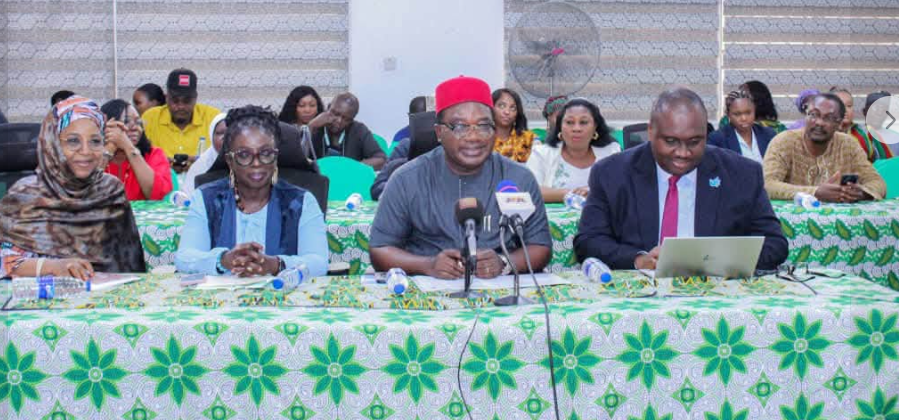
Nigeria’s worsening human rights and security challenges have reached a disturbing new level, with the National Human Rights Commission (NHRC) revealing that it received 326,113 complaints of human rights violations in June 2026 alone, while warning that killings and sexual violence against children are escalating across the country.
The figure, which translates to more than 10,800 complaints daily, has heightened concerns over the nation’s ability to safeguard lives and protect citizens’ constitutional rights amid persistent insecurity.
Presenting the Commission’s June 2026 Human Rights Situation Dashboard, the Executive Secretary of the NHRC, Dr. Tony Ojukwu, described the statistics as a stark indication of the country’s mounting human rights challenges, stressing that Nigeria cannot afford to normalize widespread violence and abuse.
“For the month of June 2026, the Commission received a total of 326,113 complaints, a figure that underscores the ongoing and urgent challenge of securing human rights for all Nigerians,” Ojukwu stated.
According to the report, the right to life remained the most frequently violated fundamental right during the month, with armed violence accounting for a significant share of reported abuses across the country.
The Commission also expressed grave concern over the rising incidence of sexual violence against children, noting that its Human Rights Observatory documented multiple cases during the reporting period. Ojukwu described the trend as one of the most serious threats confronting the nation and called for urgent intervention.
“The pattern of sustained, unresolved violence demands urgent, coordinated intervention,” he said.
The NHRC report comes against the backdrop of Nigeria’s protracted security crises, including insurgency in the North-East, banditry and mass kidnappings in the North-West and North-Central, communal clashes, farmer-herder conflicts, separatist violence in the South-East, and recurring attacks on rural communities. Human rights organisations have consistently warned that civilians continue to bear the greatest burden of the country’s insecurity.
The Commission also referenced the findings of the United Nations Special Rapporteur on Freedom of Religion or Belief, Nazila Ghanea, whose recent fact-finding mission concluded that insecurity, kidnappings, displacement and attacks on communities continue to erode fundamental freedoms and intensify religious tensions across Nigeria.
Commenting on ongoing constitutional reforms aimed at establishing state police, Ojukwu urged policymakers to ensure that decentralised policing is accompanied by robust accountability mechanisms. He cautioned that political interference, inadequate training and weak institutional safeguards could expose citizens to further human rights violations if not properly addressed.
The Commission also renewed its demand for justice for victims of the Yelewata massacre in Benue State, lamenting that one year after more than 100 people were reportedly killed, many survivors remain displaced and without adequate humanitarian assistance.
Ojukwu called on the Federal Government and security agencies to strengthen civilian protection, ensure the prosecution of perpetrators of human rights abuses, expand child protection programmes, improve school security and provide psychosocial support for victims of violence.
The report received the endorsement of the Police Service Commission, which described the Human Rights Situation Dashboard as an important instrument for promoting transparency, accountability and evidence-based policing reforms. The Commission pledged continued collaboration with the NHRC to strengthen the protection and promotion of fundamental human rights across the country.