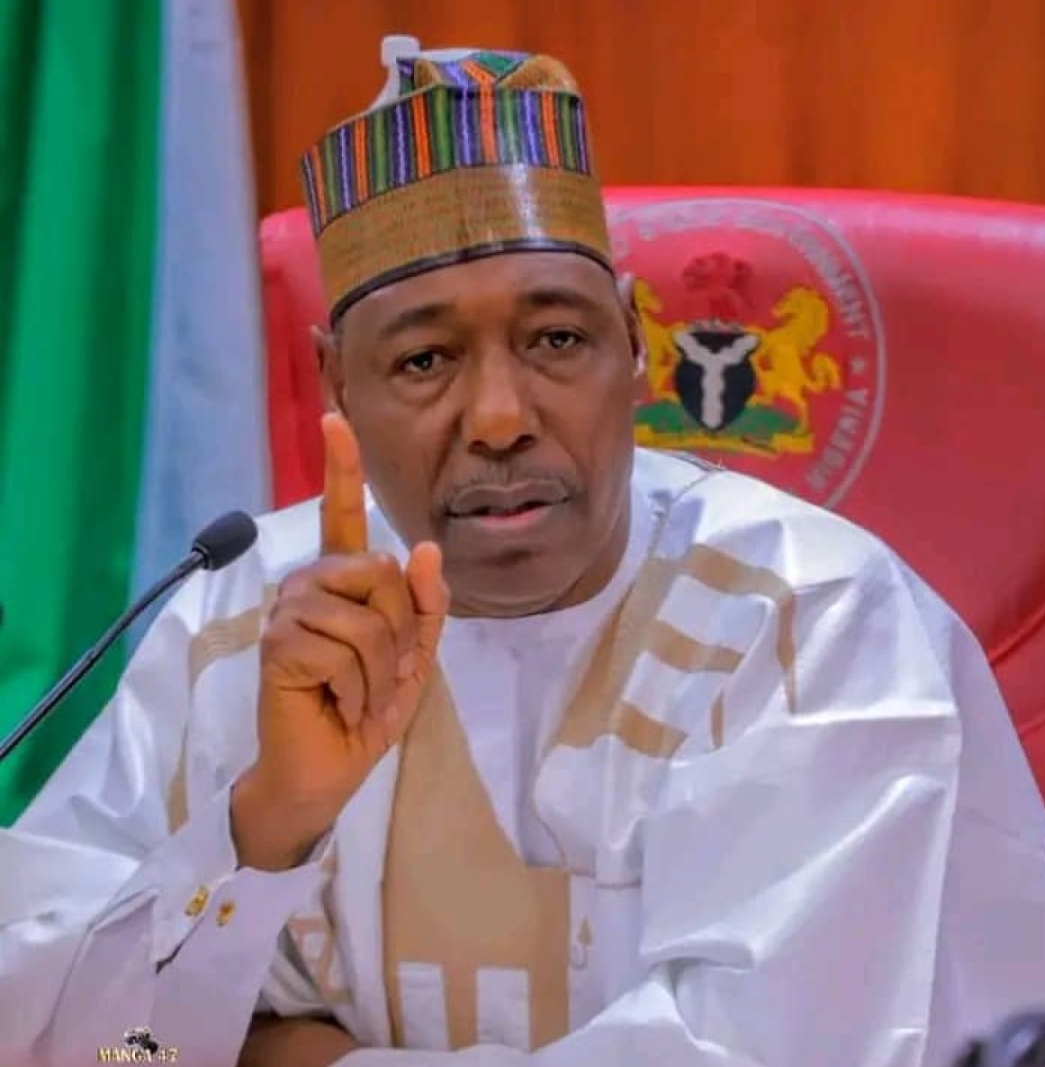
The Borno State Government has urged investors, financial institutions and corporate organisations to partner with the state in rebuilding its economy, unveiling a 90-day framework to convert investment interests into bankable projects.
The government said the next phase of the state’s recovery would focus on private sector-led growth, agricultural and livestock value addition, industrial development, renewable energy, housing, logistics and sustainable employment.
Chief of Staff to Governor Babagana Zulum, Dr Babagana Malumbe, who represented the governor at a Private Sector Engagement and Investment Roundtable in Abuja on Thursday, called on investors to explore the state’s economic opportunities.
Malumbe said Borno was transitioning from emergency humanitarian dependence to private sector-led economic growth, job creation and market-driven development.
He attributed progress in restoring stability and rebuilding the economy to the efforts of the Armed Forces, security agencies and government investments in peacebuilding.
According to him, the state’s development priorities include institutional reforms, economic revival and creating an enabling environment for private investment.
He identified agriculture, livestock, fisheries, manufacturing, finance, trade, micro, small and medium enterprises, services and urban infrastructure as key investment sectors.
Malumbe said the government was strengthening investment promotion through the Borno State Investment Promotion Agency (BOSIPA), streamlining administrative procedures and improving the ease of doing business.
He added that land administration processes, public-private partnership arrangements and fiscal incentives were being strengthened to protect investments and provide a predictable business environment.
The chief of staff also announced plans for sector-specific Investment Clinics to connect investors with government officials and technical teams to examine opportunities, structure projects and secure investment commitments.
Also speaking, Chief Adviser and Coordinator of Sustainable Development, Partnership and Humanitarian Response, Dr Mairo Mandara, urged investors, financial institutions and Borno indigenes in the diaspora to move beyond expressions of interest and commit to establishing sustainable businesses and industries.
Mandara said the success of the roundtable should be measured by partnerships established, projects advanced, capital mobilised and jobs created rather than speeches and expressions of interest.
She said the next phase of Borno’s recovery required a transition from humanitarian assistance to a productive economy capable of sustaining livelihoods and creating opportunities.
“Government has invested significantly in reconstruction, infrastructure, education, healthcare and agriculture. This is not the destination. It is the foundation for businesses,” she said.
Mandara identified agriculture as one of the state’s strongest investment opportunities, noting that more than 60 per cent of its population depended on the sector.
She listed rice, cowpeas, groundnuts, onions, vegetables and other agricultural produce as areas with significant potential, urging investors to focus on processing, packaging, storage, transportation and export rather than primary production alone.
According to her, integrated agricultural value chains would create opportunities for farmers, aggregators, processors, transporters, equipment suppliers, buyers and financial institutions.
She also highlighted opportunities in livestock development, including animal feed production, veterinary services, dairy production, meat processing, cold storage, leather processing and insurance.
Mandara said Borno’s proximity to Chad, Cameroon and Niger positioned it to become a regional trade and logistics hub connecting Nigeria with neighbouring markets.
She identified opportunities in warehousing, commodity aggregation, cold-chain facilities, transport services, trade finance, digital payments and insurance.
On housing and hospitality, she said ongoing reconstruction and resettlement were generating demand for residential properties, shops, workshops, schools and other commercial services.
She called on developers and financial institutions to explore affordable housing, mixed-income developments and building materials production.
Mandara also identified renewable energy, particularly decentralised solar power, as an opportunity to support agricultural processing, irrigation, cold storage, commercial activities and industrial development.
Addressing financing challenges, she urged financial institutions to develop innovative credit arrangements, including guarantees, insurance and risk-sharing mechanisms, to improve access to finance for small businesses and agricultural value chains.
“We are not asking financial institutions to lend blindly. We are asking you to help make our businesses bankable,” she said.
She acknowledged security challenges, infrastructure deficits and project viability concerns but urged investors to adopt a risk-based approach, beginning with relatively stable locations and expanding as conditions improved.
Mandara also appealed to Borno indigenes in the diaspora to contribute their expertise, networks and financial resources to the state’s recovery.
She urged them to support vocational training, mentorship, skills transfer and enterprise development, stressing that their contributions should extend beyond financial assistance to relatives.
On corporate social responsibility, she called for a shift from conventional humanitarian donations to programmes that promote skills development, local employment, technology transfer and sustainable businesses.
“We must measure CSR not only by what companies give, but by what communities can continue to achieve after the support ends,” she said.
To ensure tangible outcomes from the roundtable, Mandara proposed a 90-day investment follow-up framework.
Under the plan, the first 30 days would focus on identifying investment opportunities, available assets and potential partners.
The second 30 days would involve commercial, technical, security and social assessments of identified projects, while the final 30 days would be dedicated to developing decision-ready proposals for investors.
She said the process should deliver concrete investment decisions rather than allow the engagement to end with unfulfilled expressions of interest.
Mandara urged investors to approach Borno’s opportunities with commercial discipline and social responsibility, stressing that economic returns and positive development impact could be achieved simultaneously.
The roundtable featured sector-specific Investment Clinics aimed at connecting investors with government officials and technical teams to develop projects and secure investment commitments.