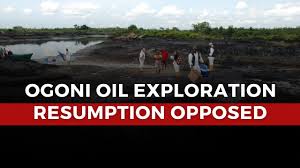
A coalition of more than 50 Nigerian and international environmental organisations has called on the Federal Government to halt plans to resume oil production in Ogoniland, warning that reopening the Yorla South oil field would worsen decades of environmental degradation, undermine ongoing clean-up efforts and fuel fresh tensions in the Niger Delta.
In a joint statement titled “Don’t Reopen the Wells — Decommission, Clean Up and Restore Ogoniland,” the coalition condemned the reported award of the Yorla South oil field in Khana Local Government Area of Rivers State to Dutchford Exploration and Production Company Limited, insisting that environmental restoration—not renewed crude oil extraction—should remain the government’s priority.
The organisations described the proposed resumption of oil production as “another chapter in the Niger Delta’s long history of environmental destruction and human rights violations,” urging the government to permanently decommission the ageing wells rather than reactivate them. “Do not reopen the wells. Decommission them. Clean them up. Restore the land. Protect the people. Ogoniland has suffered enough,” the coalition declared.
The statement was jointly endorsed by Oilwatch International, Health of Mother Earth Foundation, Environmental Rights Action/Friends of the Earth Nigeria, Corporate Accountability and Public Participation Africa, Amazon Watch, Oilwatch Africa, Policy Alert and dozens of other environmental and civil society groups across Africa and beyond.
The coalition argued that reopening the oil field would directly contradict the recommendations of the 2011 United Nations Environment Programme Environmental Assessment of Ogoniland, which documented extensive contamination of soil, groundwater and ecosystems after decades of oil exploration and recommended one of the world’s largest environmental remediation programmes.
Although the Federal Government established the Hydrocarbon Pollution Remediation Project to implement the UNEP recommendations, the groups said large parts of Ogoniland remain heavily polluted, with many communities still relying on contaminated water sources, while farmlands and fishing grounds remain degraded and public health concerns persist.
According to the coalition, it is inconceivable that fresh oil production is being considered when the environmental liabilities from previous operations have yet to be fully addressed.
“The answer to this history is not to reopen old wells and begin another cycle of extraction. The answer must be restoration,” the statement said.
The organisations also invoked the legacy of Ken Saro-Wiwa and the eight other Ogoni activists executed in 1995 after campaigning against environmental degradation and demanding greater control over the region’s natural resources.
They argued that resuming production at the Yorla South field without resolving decades of pollution would disregard the sacrifices made during the Ogoni struggle for environmental justice.
As evidence of the continuing environmental risks, the coalition pointed to the unresolved oil spill in Kpean, the host community for 14 Yorla oil wells. It alleged that crude oil leaked from a dormant wellhead in August 2025, contaminating farmlands, streams and drinking water sources, while another spill months later further devastated the community.
The groups said residents continue to report polluted water, destruction of livelihoods, illnesses and livestock deaths, alleging that no meaningful clean-up or remediation has taken place.
They warned that restarting production using ageing infrastructure weakened by decades of corrosion would significantly heighten the risk of fresh oil spills and environmental disasters.
The coalition also cautioned against creating “another Ororo-1,” referencing the prolonged environmental pollution associated with the offshore Ororo-1 well blowout, while warning of renewed gas flaring and pollution similar to what communities in Okrika and Bille have experienced for years.
The organisations demanded an immediate moratorium on plans to restart production at the Yorla South field pending an independent environmental assessment, full remediation of the Kpean spill, compensation and healthcare for affected residents, public disclosure of the field’s licence and ownership structure, transparent environmental and social impact assessments, meaningful consultation with Ogoni communities, integrity testing of existing infrastructure and a legally enforceable framework assigning responsibility for both historical and future environmental liabilities.
They stressed that consultations with host communities must be substantive and allow residents to play a decisive role in determining the future of their ancestral lands.
The coalition further renewed support for the global campaign to “Ogonize and Yasunize,” drawing parallels between the Ogoni people’s successful resistance that halted oil production in 1993 and Ecuador’s 2023 referendum that endorsed keeping oil reserves beneath Yasuni National Park untouched.
According to the groups, reopening the Yorla South field would reverse more than three decades of Ogoni resistance while weakening the growing international movement advocating protection of ecologically sensitive areas from fossil fuel extraction.
The intervention comes as the Federal Government pursues measures to increase Nigeria’s crude oil output as part of broader economic recovery efforts. However, the coalition insisted that economic considerations must not come at the expense of environmental justice and the wellbeing of already polluted communities.
“The future of Ogoniland must not be another oil boom,” the statement concluded. “It must be a restoration boom. Ogoniland does not need another barrel of crude. Ogoniland needs justice.”