As political activities gather momentum ahead of the 2027 general elections, the Centre for Social Justice (CSJ) has challenged political parties and aspirants to move beyond campaign rhetoric by presenting credible and measurable economic recovery plans capable of addressing poverty, unemployment and the rising cost of living.
The advocacy organisation warned that Nigerians can no longer afford elections dominated by slogans, personalities and vague promises, insisting that the next electoral cycle should be driven by robust debates on economic transformation, job creation and improved living standards.
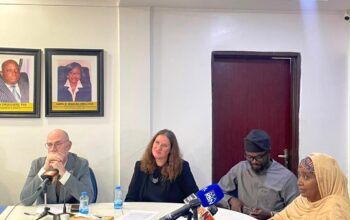
The call was made in Abuja during a high-level political and governance dialogue on the economy organised by CSJ with support from the Friedrich-Ebert-Stiftung (FES) Nigeria.
The forum brought together representatives of political parties, civil society organisations, policy experts, professional bodies and the media to examine how economic development can become the central focus of political campaigns ahead of the 2027 polls.
Speaking at the event, CSJ Executive Director, Eze Onyekpere, said elections should be contests of ideas rather than personalities, urging political parties to subject their policy proposals to public scrutiny and clearly explain how they intend to finance and implement campaign promises.
“It should not only be during election debates that candidates explain how they intend to solve Nigeria’s problems. Political parties must continuously engage Nigerians on their vision and policy direction because there are usually no consequences when candidates refuse to discuss critical national issues,” he said.
Onyekpere blamed Nigeria’s economic challenges on years of inconsistent policy choices that have fuelled widespread poverty, unemployment, food insecurity, inflation and declining purchasing power.
He argued that while the country has recorded economic growth in recent years, the benefits have failed to improve the lives of many citizens because population growth has continued to erode the gains.
“If the economy grows by about four per cent while the population is expanding at almost the same rate, the growth is effectively cancelled out. Nigeria requires sustained annual growth of between seven and 10 per cent over at least a decade to begin making significant progress in reducing poverty,” he said.
He noted that with a population exceeding 230 million, Nigeria faces the dual challenge of harnessing its demographic potential while confronting the reality that more than 145 million citizens are estimated to be living in multidimensional poverty.
According to him, the country must create at least four million jobs within the next three years to make meaningful progress in tackling unemployment and underemployment.
Onyekpere stressed that economic transformation would require coordinated reforms across fiscal and monetary policy, industrialisation, agriculture, education, healthcare and infrastructure.
He criticised policy inconsistencies, particularly in agriculture, questioning the rationale behind reducing import tariffs while borrowing heavily to support local agricultural production.
According to him, such contradictory policies risk undermining domestic farmers by exposing them to cheaper imported products instead of strengthening local productivity through mechanisation, improved inputs, fertiliser support and better market access.
He also urged Nigerians to hold political parties accountable by demanding campaign promises that are specific, measurable, achievable, realistic and time-bound.
To promote evidence-based political debates, Onyekpere disclosed that CSJ had developed a governance handbook covering more than 20 key economic sectors, including budgeting, taxation, debt management, employment, agriculture, trade, investment and poverty reduction.
He said the handbook would be made available to political parties and other stakeholders to encourage policy-driven campaigns ahead of the elections.
Earlier, Friedrich-Ebert-Stiftung Nigeria representative, Juliana Anusike, said the dialogue was designed to place economic development at the heart of political discourse ahead of the 2027 elections.
She maintained that Nigerians deserve practical and implementable solutions from those seeking public office, especially on issues affecting daily life, including food prices, unemployment, electricity supply, healthcare, education and access to basic services.
“The aim of this initiative is straightforward—to move economic development from the margins of political conversation to its centre,” she said.
Anusike urged political parties and candidates to actively participate in debates, town hall meetings and policy engagements, describing such platforms as clear indicators of preparedness and respect for the electorate.
Also speaking at the event, Labour Party presidential aspirant, Chibuzor Okereke, dismissed concerns about Nigeria’s democratic future, expressing confidence in the country’s political process.
“I am running to win this election not against anybody but for the Nigerian people,” he said.
Okereke pledged to prioritise youth and women empowerment, innovation, accountability and governance reforms aimed at strengthening citizens’ participation in democracy.
The CSJ’s intervention comes amid mounting public concern over Nigeria’s economic conditions, with millions of households grappling with soaring food prices, inflation, unemployment and declining purchasing power despite ongoing economic reforms.
Since the removal of fuel subsidy in 2023 and subsequent fiscal reforms, key macroeconomic indicators have shown signs of adjustment, but many Nigerians say the impact has yet to translate into tangible improvements in their standard of living.
Development partners, including the World Bank, have consistently urged Nigeria to accelerate job creation, boost productivity, strengthen social protection and invest in human capital to ensure economic growth delivers broad-based benefits.
Political analysts believe economic issues will dominate the 2027 elections as voters increasingly demand concrete solutions to unemployment, poverty and the rising cost of living.
For CSJ, the message is clear: the 2027 elections must be defined by credible economic blueprints and accountability—not another cycle of unfulfilled campaign promises.