The Economic Community of West African States (ECOWAS) and the African Union (AU) have intensified efforts to accelerate Africa’s transition to sustainable maritime systems, convening a high-level continental workshop to harmonise strategies on green port development and maritime decarbonisation.
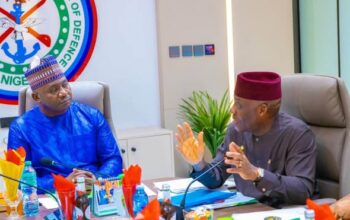
The two-day Continental Validation Workshop on Green Ports Guidelines and Maritime Greenhouse Gas Emissions Reduction, held in Abuja, brought together policymakers, maritime institutions and technical experts from across the continent. The meeting focused on advancing implementation of the Revised African Maritime Transport Charter and strengthening Africa’s response to climate challenges in the maritime sector.
Opening the session, ECOWAS Director of Transport, Chris Appiah, underscored the need to balance sustainability with trade efficiency. Speaking on behalf of the President of the ECOWAS Commission, Omar Alieu Touray, he stressed that operational efficiency and trade facilitation must remain central as the region adopts greener maritime practices.
Appiah reaffirmed ECOWAS’ commitment to strengthening maritime governance, modernising port infrastructure and supporting member states in building resilient and competitive transport systems.
From the AU Commission, Raissa‑Julie Ada Allogo called for greater coordination among African countries to ensure a unified voice in global maritime negotiations. She emphasised that the continent’s transition to decarbonisation must remain inclusive and aligned with the varying capacities of member states.
Regional maritime bodies also highlighted the strategic value of green ports. Secretary-General of the Maritime Organisation of West and Central Africa, Paul Adalikwu, described green port development as both an environmental imperative and an opportunity to enhance efficiency and competitiveness.

Similarly, Kassim Kaziba Mpaata of the Maritime Organisation for Eastern Southern and Northern Africa urged African nations to strengthen maritime capacity to reduce dependence on external systems and improve resilience against global disruptions.
Providing a regulatory perspective, Sunday M. Umoren of the Abuja Memorandum of Understanding on Port State Control stressed that compliance with international maritime standards is essential for maintaining Africa’s competitiveness in global shipping and avoiding increased operational costs.
Development partners reiterated support for the initiative. Representing the German Agency for International Cooperation (GIZ), Bekele Essete Abebe highlighted the critical role of ports in global supply chains and the importance of investing in sustainable and resilient infrastructure for Africa’s economic transformation.
Technical sessions focused on validating a draft Handbook and Guidelines on Green Ports in Africa, developed through extensive consultations with member states. The framework outlines priority actions including renewable energy integration, electrification of port operations, digitalisation, emissions monitoring, climate resilience and adoption of cleaner fuels.
Experts at the forum emphasised that green port development represents not only an environmental obligation but also a pathway to improved efficiency, enhanced trade competitiveness and stronger resilience across African maritime systems.
The workshop continues with working sessions aimed at consolidating member states’ inputs and developing a coordinated roadmap for implementation. Outcomes from the meeting are expected to strengthen Africa’s maritime governance framework, improve port performance and position the continent as an active player in the global transition to sustainable maritime transport.