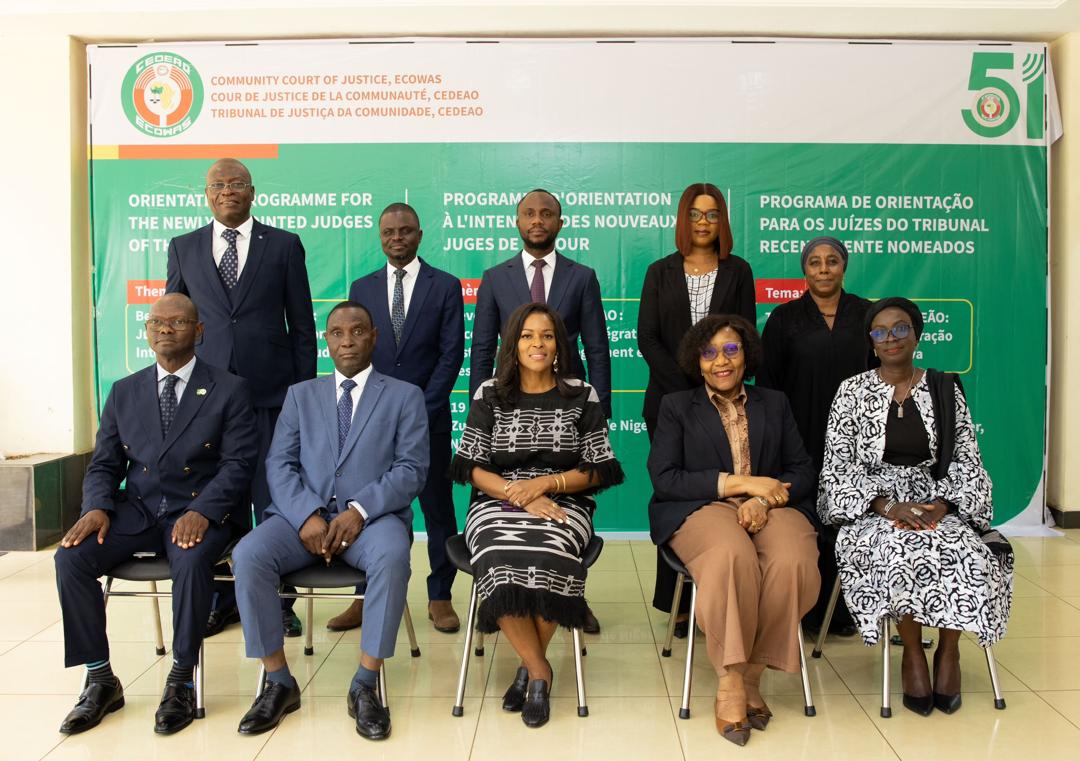
- New judicial college pledges independence, integrity and faster justice delivery across West Africa
The newly appointed judges of the ECOWAS Community Court of Justice have pledged to tackle delays in adjudication, uphold judicial independence and integrity, and strengthen compliance with the Court’s judgments as part of renewed efforts to improve justice delivery across West Africa.
The commitment was made on Monday as the judges commenced a five-day orientation programme designed to prepare them for their judicial responsibilities and familiarise them with the legal, administrative and institutional framework of the regional court.
The programme comes amid growing calls for timely justice, impartial adjudication and effective enforcement of judicial decisions across the Economic Community of West African States (ECOWAS).
Speaking at the opening ceremony, President of the Court, Justice Charlyne Brumskine, identified judicial independence and integrity, collegiality, and effectiveness as the three fundamental priorities that must guide the new judicial college.
She urged the judges to make judicial excellence, mutual respect and effective adjudication the defining features of their tenure, stressing that their responsibilities went beyond resolving disputes to strengthening public confidence in the Court as a credible regional judicial institution.
Brumskine maintained that the legitimacy of the Court depended on the fairness, impartiality and integrity demonstrated in the handling of cases, calling for rigorous deliberations and consistency in judicial decisions.
She also underscored the need to address delays in the administration of justice, insisting that cases must be determined within reasonable timeframes in line with the Court’s Strategic Plan for 2026–2030.
According to her, timely adjudication remains critical to ensuring that litigants have confidence in the regional judicial system and that the Court effectively fulfils its mandate.
A key concern highlighted by the Court president was the implementation of its judgments by ECOWAS member states.
She called for sustained engagement with member states to improve compliance with judicial decisions, noting the importance of ensuring that judgments translate into practical outcomes for individuals and institutions seeking justice.
The issue of enforcement remains central to the effectiveness of regional justice, as the authority and credibility of a court depend not only on the decisions it delivers but also on whether those decisions are implemented.
Congratulating the judges on their assumption of office on October 13, Brumskine said their new responsibilities required a comprehensive understanding of the ECOWAS legal order, the Court’s jurisdiction and procedures, and its jurisprudence developed over more than two decades.
The five-day orientation, themed “Becoming an ECOWAS Judge: Judicial Excellence, Institutional Integration and Effective Adjudication,” is intended to equip the judges with the knowledge and institutional understanding required to discharge their duties effectively.
In his welcome address, the Acting Chief Registrar, Dr Ousmane Diallo, said the programme was designed to facilitate the smooth integration of the judges and their executive assistants into the Court’s institutional and administrative systems.
Diallo explained that participants would be introduced to the Court’s organisational structure, departmental responsibilities, administrative procedures and coordination mechanisms.
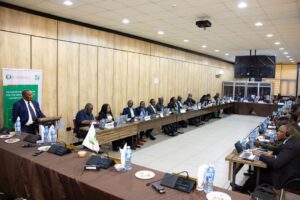
He said the sessions would also provide a clearer understanding of the roles played by judicial, legal, administrative and other support services in ensuring the efficient operation of the Court.
According to him, the programme would strengthen communication and collaboration among judges, executive assistants, heads of departments and other staff, thereby promoting institutional continuity and operational efficiency.
The expected outcomes include improved understanding of the Court’s support systems, stronger professional relationships and enhanced preparedness among staff to support the new judicial college in carrying out its mandate.
Other judges participating in the orientation are the Vice-President of the Court, Justice Désire Henri Aihou; Justice Henrietta Uzoamaka Didigu; Justice Yaouza Ouro-Sama; and Justice Awa Bah.
Brumskine acknowledged the contributions of Diallo, the programme facilitator and former Vice-President of the Court, Professor Friday C. Nwoke, as well as other members of staff whose efforts supported the organisation of the orientation.
The programme marks a significant step in integrating the new judicial college into the Court’s institutional framework, with independence, integrity, timely adjudication and compliance with judgments emerging as key priorities.
The success of the judges’ tenure will ultimately be measured not only by the quality and impartiality of their decisions but also by the Court’s ability to deliver justice without undue delay and ensure that its judgments are respected and implemented across the West African regional community.