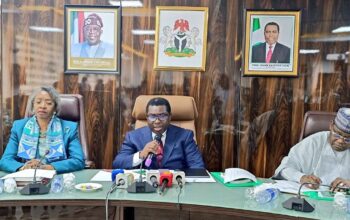
Disaster management leaders from ECOWAS Member States are meeting in Accra, Ghana, for the 16th Consultative Session of the Regional Committee for Disaster Management in West Africa (GECEAO). The three-day meeting, organized by the ECOWAS Directorate of Humanitarian and Social Affairs (DHSA), focuses on strengthening recovery strategies and improving regional resilience to disasters.
Speaking at the opening, Dr. Mohammed Ibrahim, Head of the ECOWAS Disaster Risk Management Unit, emphasized the devastating impact of disasters across West Africa over the past 25 years, citing losses exceeding one billion dollars. He attributed the rising frequency of disasters to environmental degradation, climate change, and rapid urbanization, urging Member States to invest in resilience-building and enhance humanitarian response mechanisms.
As part of its 2025 Humanitarian Response Initiative, ECOWAS aims to assist over 600,000 people through programs targeting food security, healthcare, displacement, WASH (Water, Sanitation and Hygiene), and early recovery. The initiative also promotes the use of technology and improved emergency coordination to deliver effective, dignified aid.

Representing Nigeria’s National Emergency Management Agency (NEMA), Alhaji Idris Mohammed highlighted the region’s growing vulnerability to natural and human-induced disasters, calling for deeper cooperation. “Now is the time to strengthen partnerships and build a resilient and united sub-region,” he said.
He also shared Nigeria’s efforts in building regional disaster response expertise through academic partnerships, with six federal universities offering disaster and development studies.
Chairman of GECEAO and Director General of Ghana’s National Disaster Management Organization (NADMO), Major (Rtd.) Dr. Joseph Bikanyi Kuyon, praised Ghana’s legislative reforms and announced plans for a National Disaster Risk Financing Strategy. He stressed the importance of translating early warning systems into actionable preparedness and integrating disaster risk reduction into national development plans.
The consultative meeting serves as a critical forum for strategic dialogue, experience sharing, and unified action as West Africa confronts rising disaster risks and seeks to protect its most vulnerable communities.