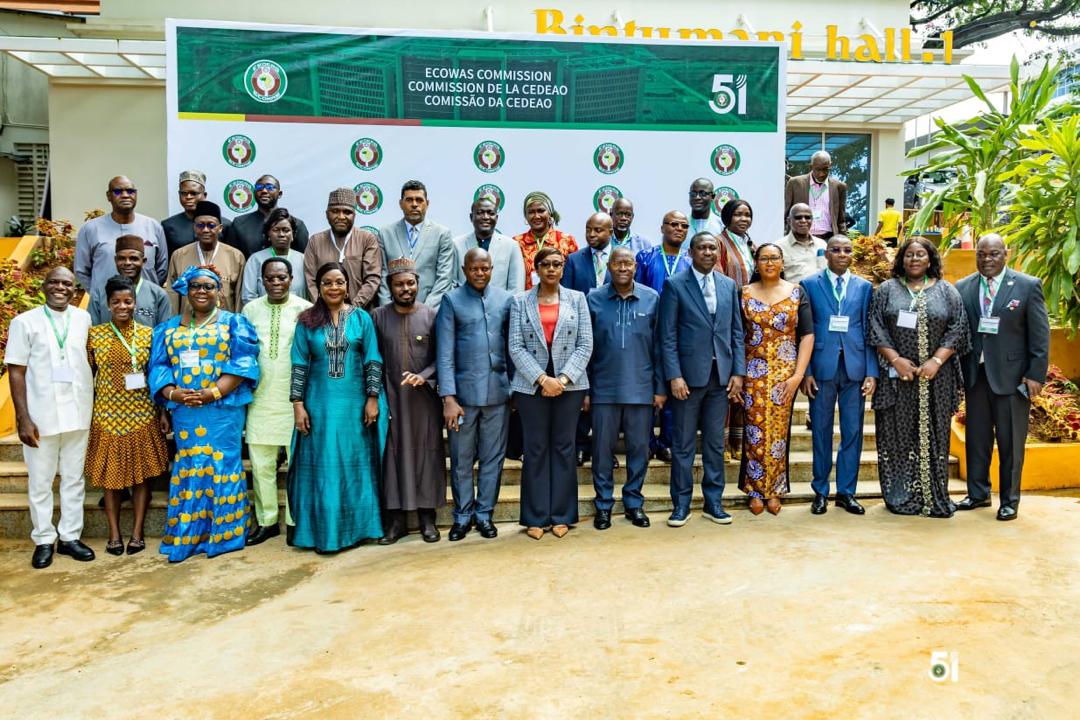
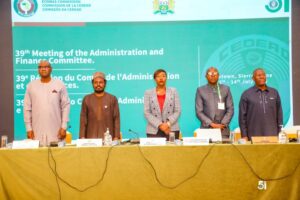
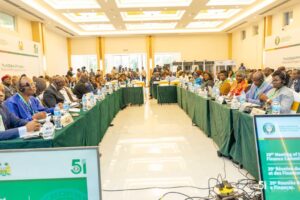
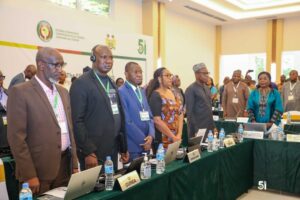
The Economic Community of West African States (ECOWAS) on Sunday commenced the 39th meeting of its Administration and Finance Committee (AFC) in Freetown, with senior officials beginning a comprehensive review of the regional bloc’s budget, financial management, administrative systems and institutional performance.
The three-day meeting, holding from July 12 to 14, has brought together representatives of the ECOWAS Commission, Community institutions and member states to assess reports on budget implementation, human resource management, finance and administration. The committee’s recommendations are expected to shape the operations and governance of ECOWAS institutions in the coming year.
The meeting comes shortly after ECOWAS celebrated its 50th anniversary, a milestone that has renewed calls for far-reaching institutional reforms to strengthen the organisation’s capacity to address security challenges, democratic governance, economic integration and humanitarian concerns across West Africa.
Opening the session, ECOWAS Vice President, Mrs. Damtien Tchintchibidja, described the Golden Jubilee as an opportunity not only to celebrate the bloc’s achievements but also to critically assess its shortcomings and reposition the organisation for greater effectiveness.
She stressed the need to continue strengthening ECOWAS institutions to ensure the regional body remains capable of delivering on its mandate of regional integration and sustainable development.
ECOWAS Commissioner for Internal Services, Dr. Habibu Yaya Bappah, commended the Administration and Finance Committee for its sustained oversight of the Community’s financial and administrative affairs, noting that its recommendations had significantly improved governance standards within the organisation.
According to him, the committee’s work has contributed to positioning ECOWAS among Africa’s foremost regional economic communities through enhanced financial accountability and institutional efficiency.
Declaring the meeting open, Chairman of the Administration and Finance Committee, Mr. Komba Momoh, reaffirmed Sierra Leone’s commitment to supporting ECOWAS and working closely with member states to promote peace, security, regional integration and sustainable development.
Momoh described the committee as a critical organ of the ECOWAS institutional framework, given its responsibility for scrutinising budgetary, financial and administrative matters, ensuring prudent management of Community resources and strengthening accountability across ECOWAS institutions.
The committee is expected to submit recommendations to ECOWAS decision-making organs aimed at improving operational efficiency, reinforcing financial discipline and ensuring more effective utilisation of the organisation’s resources.
Established in 1975 under the Treaty of Lagos, ECOWAS was created to promote economic integration among West African nations through the free movement of people, goods and services, policy harmonisation and regional development. Over the years, its mandate has expanded to include peacekeeping, democracy promotion, conflict prevention and humanitarian interventions.
The Administration and Finance Committee plays a pivotal role in supporting the regional bloc by reviewing budgets, monitoring expenditure, evaluating staffing and administrative policies, and promoting transparency and accountability across ECOWAS institutions.
This year’s meeting comes at a critical period for the regional organisation as it confronts terrorism and violent extremism in the Sahel, political transitions following military coups in parts of West Africa, and the withdrawal of Burkina Faso, Mali and Niger from the bloc.
Analysts say the outcome of the Freetown meeting could strengthen ECOWAS’ institutional resilience and enhance its ability to deliver effective governance and regional cooperation as it enters its next phase of integration and development.