The Economic Community of West African States (ECOWAS) has unveiled a comprehensive Digital Ecosystem for its Centre for Gender Development (CCDG), marking a significant step toward strengthening regional data management, coordination and policymaking on gender equality.
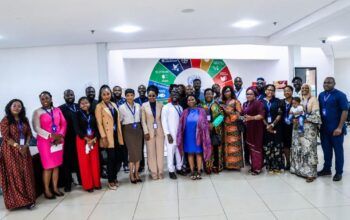
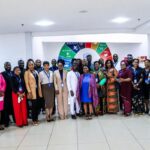
The launch took place at a five-day regional capacity-building workshop holding from 24 to 28 November 2025 in Saly, Senegal. The event, organised under the supervision of the ECOWAS Commissioner for Human Development and Social Affairs, brought together gender experts, national focal points, technical personnel from the ECOWAS Commission and representatives of partner organisations.
The new CCDG Digital Ecosystem features five interconnected platforms: the CCDG website, the ECOWAS Gender Equality Observatory (ECOGO), a virtual workspace, an AI-powered support system and a web security command centre. Officials explained that the system is designed to streamline real-time data collection, harmonise reporting across Member States and enhance regional collaboration on gender initiatives.
By the end of the workshop, the ecosystem is expected to be fully operational and institutionalised, enabling Member States and ECOWAS institutions to improve monitoring accuracy, support evidence-based decision-making and strengthen coordination of gender-related programmes.
Participants at the workshop include CCDG Gender Focal Points from all ECOWAS Member States, staff from ECOWAS institutions, national teams of the “50 Million African Women Speak” project, members of the Community of Practice on Gender and Climate Change, civil society groups, development partners and media representatives.
Facilitators highlighted the launch as both a technological milestone and a strategic investment in advancing gender governance across West Africa.
ECOWAS, founded in 1975 through the Treaty of Lagos, aims to promote economic integration and cooperation among West African countries. Its current members are Benin, Cabo Verde, Côte d’Ivoire, The Gambia, Ghana, Guinea, Guinea-Bissau, Liberia, Nigeria, Sierra Leone, Senegal and Togo. Burkina Faso, Mali and Niger formally exited the regional bloc on 29 January 2025.
The organisation’s work spans trade, transport, telecommunications, agriculture, energy, natural resources and social development. In 2007, the ECOWAS Secretariat was restructured into a Commission, now supported by a President, Vice President, Commissioners and an Auditor-General. The Community Levy—a 0.5% charge on imports from outside the region—remains its primary funding source.
Ongoing reforms continue to drive the ECOWAS Vision 2050 agenda, aimed at transitioning from an “ECOWAS of States” to an “ECOWAS of the People” to foster peace, prosperity and deeper regional integration.