Lawmakers from the Economic Community of West African States (ECOWAS) have warned that worsening climate change, shrinking water resources and declining agricultural land are increasingly threatening livelihoods and regional security.
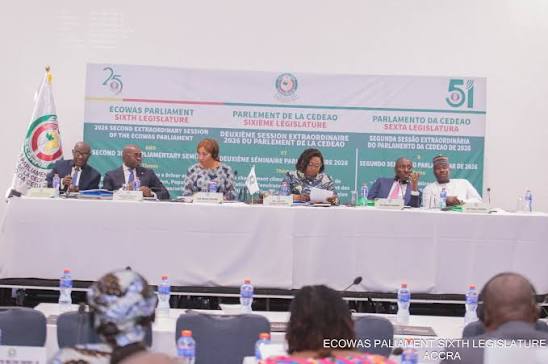
The warning was issued at the Second 2026 Parliamentary Seminar of the ECOWAS Parliament in Accra, Ghana, where parliamentarians examined the growing links between climate change, environmental degradation, food security, migration, displacement and conflict.
The lawmakers said changing weather patterns, land degradation and water scarcity were intensifying competition for natural resources, with growing implications for farmer-herder relations, community stability and poverty across West Africa.
Nigeria’s presentation to the seminar highlighted the severity of the challenge, linking population growth, agricultural expansion, climate variability, land degradation and changing migration patterns to increasing pressure on farming and pastoral communities.
It identified crop destruction, competition over land and water, encroachment on livestock routes, cattle theft and changing seasonal migration patterns among factors contributing to persistent farmer-herder tensions.
However, the presentation cautioned against reducing the problem solely to farmer-herder disputes, noting that communal tensions, banditry, organised crime, climate pressures and weaknesses in conflict-resolution mechanisms were also contributing to insecurity.
The humanitarian consequences are already significant.
Citing 2025 assessments by the International Organization for Migration, Nigeria’s presentation said more than 2.2 million people were internally displaced in the North-East, while more than 1.3 million others were displaced across the North-Central and North-West regions.
It noted that internal displacement in Nigeria has been driven by armed conflict, communal violence, farmer-herder clashes, banditry, terrorism, flooding and other disasters.
Land and Water Under Pressure
At the centre of the crisis is growing competition for increasingly pressured land and water resources.
Unpredictable rainfall, declining water availability, population growth and pressure on productive farmland are forcing farming and pastoral communities to adapt to rapidly changing environmental conditions.
The Nigerian presentation noted that land and water are critical to the survival of both farmers and pastoralists. As traditional grazing routes become inaccessible, agricultural land expands and water sources come under pressure, pastoralists are compelled to alter movement patterns while farmers face increasing pressure to protect cultivated areas.
The lawmakers warned that without effective dialogue, mediation and resource-management systems, environmental pressures could increasingly trigger violent disputes.
Togo’s experience was cited as an example. The country established its National Transhumance Committee in 1995 to regulate livestock movement, monitor grazing routes, address animal-health issues and manage disputes.
However, changing environmental and security conditions have prompted Togo to develop a new 2026–2030 plan addressing farmer-herder conflicts, land pressure, climate change, security threats, inadequate monitoring and weak enforcement.
Climate Stress Driving Displacement
The seminar also examined how environmental pressures can trigger a chain reaction involving food insecurity, livelihood losses, migration and displacement.
Cabo Verde’s presentation highlighted water scarcity and its implications for agriculture and livelihoods, demonstrating how climate-related pressures can compound existing socioeconomic vulnerabilities.
Nigeria said durable solutions for displaced persons must go beyond emergency relief to include safe and voluntary return, local integration or relocation, access to land and housing, restoration of property rights, livelihoods, education, healthcare, documentation and participation in community life.
The lawmakers stressed that displacement policies should therefore address the underlying conditions that force people from their homes while supporting affected communities to rebuild sustainable livelihoods.
Parliamentarians Urged to Act
The deliberations placed greater responsibility on lawmakers to strengthen legislation, budgets and oversight before environmental pressures develop into humanitarian and security emergencies.
Nigeria advocated evidence-based parliamentary oversight and stronger legislative frameworks, alongside platforms for dialogue involving displaced persons, farmers, pastoralists, women, young people and host communities.
The Gambia also called for climate resilience and food security to receive greater attention in legislative agendas, public budgets and oversight activities.
The lawmakers were urged to prioritise early-warning systems, conflict prevention, mediation, climate adaptation, land and water governance, livestock infrastructure and sustainable rural livelihoods.
Nigeria further stressed that military and other security operations alone could not address the underlying causes of resource-related conflicts, arguing that affected communities also require functional institutions, dialogue mechanisms and economic opportunities.
ECOWAS Needs Regional Response
The seminar noted that climate-induced instability increasingly transcends national boundaries.
Pastoralists move across borders in search of grazing land and water, while displaced populations may relocate across communities and national frontiers. Climate shocks and extreme weather events can also affect several countries simultaneously.
The Gambia’s Participatory Integrated Platform for Resilience and Food Security Phase II was cited as an example of a preventive approach focused on strengthening vulnerable communities.
The programme supports small-scale producers, herders and agro-pastoralists across 19 districts through climate-smart agriculture, irrigation, livestock support, agricultural inputs, post-harvest equipment and targeted assistance for women and young people.
It also incorporates sensitisation on farmer-herder conflicts, cattle routes and grazing areas.
The ECOWAS lawmakers said such interventions demonstrate the need to treat climate resilience as a broader development and security priority encompassing food production, livelihoods, poverty reduction, natural-resource management and social stability.
They also highlighted the roles of women and young people in strengthening community resilience.
The Accra deliberations underscored the need for West African countries to move beyond responding to climate-related emergencies after they occur and focus increasingly on preventing environmental pressures from developing into displacement and security crises.
This, they said, requires stronger early-warning systems, effective dispute-resolution mechanisms, sustainable land and water management, protection of livestock corridors, climate-resilient agriculture and greater investment in vulnerable communities.
The seminar therefore called for laws, budgets and parliamentary oversight to reflect the region’s changing environmental realities, as ECOWAS countries seek to prevent climate stress from escalating into wider cycles of livelihood loss, migration, conflict and insecurity