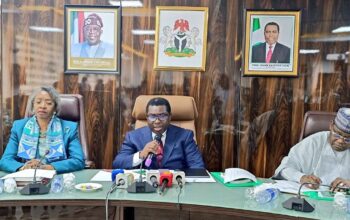
The Economic Community of West African States (ECOWAS) has revisited the implementation of the community levy, which has become a focal point at the ongoing 35th meeting of the Commission’s Committee on Administration and Finance.
Initially adopted in 2014, the community levy imposes a 0.5 percent charge on all imports into the region as an alternative to direct contributions from member states. However, challenges in implementing this protocol have persisted.
The committee, comprising representatives from 12 member states, is meeting in Abuja for five days to address the community levy and other reforms. Notably, Mali, Burkina Faso, and Niger Republic have indicated their intention to withdraw from the 15-member regional bloc.
The committee will also review the Commission’s organogram, which has been in use since 2018. This review will impact all ECOWAS institutions, including the community court, community parliament, and the commission, and will consider the recent reduction of committees from 15 to 7. Over the next five days, the committee members will consider a comprehensive report spanning 100 to 150 pages. The proposals will then be forwarded to the council of ministers for further review and adoption.
In her opening remarks, ECOWAS Commission’s Vice President, Damtien Tchintchibidja, urged member states to adhere to the community protocol, especially concerning the community levy. “I would like to make an urgent appeal to all member states so that they can comply as quickly as possible with the provisions of the protocol relating to the community levy,” she said. She emphasized that the remittance of the community levy is crucial for the effective functioning of ECOWAS institutions and the implementation of regional projects.
Tchintchibidja also highlighted the potential impact of the exit of Mali, Burkina Faso, and Niger Republic on the community levy. She remarked, “The announced withdrawal of our three member states appeals to us all in more than one way. We must put everything in place to safeguard our unity, our secular ties, our spirit of fraternity and solidarity, for an inclusive development.”
Stressing the significance of the meeting, Tchintchibidja explained, “This is a retreat that would also be a win-win for our institutions in terms of community levy. The community levy remains the main source of funds for ECOWAS programmes and activities.”
Ambassador Emmanuel Awe, Chairman of the Committee on Administration and Finance (CAF), underscored the importance of sustained efforts in implementing policies and programs that promote regional integration. “We owe our community the obligation to handle our mandate objectively and dispassionately,” Awe said. “I urge you to further sustain the efforts in implementing the policies, projects, and programmes that enhance and promote prudent management of community resources, as well as advance our regional integration objectives in line with ECOWAS Vision 2050.”