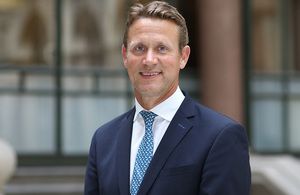
The European Union (EU) Ambassador to Nigeria and ECOWAS, Gautier Mignot, has reaffirmed the strategic importance of Africa–Europe relations, describing the partnership as “destined” and anchored on long-term impact, sustainability, and mutual respect.
Speaking at a reception held in Abuja to mark the conclusion of the 7th African Union–European Union Summit and the 25th anniversary of the AU–EU partnership, Mignot said the continents share a “community of destiny,” noting that their wellbeing and future prosperity are closely linked. The event was hosted by the EU Delegation to Nigeria and ECOWAS in collaboration with the Embassy of Angola.
Mignot, who co-hosted the reception alongside Angola’s Ambassador José Bamóquina Zau—whose country hosted the summit in Luanda—commended Angola for its hospitality and leadership. He said the success of the gathering was largely due to the commitment of the Angolan government and its people, and he lauded Ambassador Zau for fostering “a real sense of community” during the summit.
Nigeria was represented at the summit by Vice-President Kashim Shettima, who stood in for President Bola Ahmed Tinubu. Mignot said the strong attendance from both continents demonstrated the global significance of the AU–EU partnership, adding that the joint statement adopted in Luanda by nations representing about 40 percent of the world’s population reflected a shared resolve to build a more inclusive global order. He highlighted commitments to a fairer international financial system capable of addressing socio-economic challenges across Africa and Europe.
Reviewing the progress made over the past quarter-century, the ambassador said the AU–EU partnership has evolved into a results-driven platform focused on peace and security, economic transformation, green and digital transitions, education, and regional integration. He noted that the EU’s Global Gateway Investment Strategy continues to place Africa at the centre of its priorities, with more than half of its 264 flagship projects targeted at the continent and investment commitments of at least €150 billion.
Mignot also cited landmark initiatives aligned with the AU’s Agenda 2063, including the €1.2 billion Team Europe programme supporting the African Continental Free Trade Area, and the Africa–Europe Green Energy Initiative aimed at delivering 50 GW of renewable energy and providing electricity access to 100 million Africans by 2030.
Addressing misconceptions about the partnership, he stressed that the EU remains Africa’s largest trading partner, its biggest investor, the top provider of development and humanitarian assistance, and the leading contributor to the African Peace and Security Architecture. He added that youth mobility and women’s empowerment remain central pillars of cooperation.
In his remarks, Ambassador Zau said Luanda served as “a platform of hope and a symbol of Africa’s desire to strengthen continuous relations with Europe for mutual benefit.” He underscored the need for pragmatic engagement free from prejudice and bureaucracy, and called for deeper collaboration in peace and security, trade, investment, governance, education, health, climate action, and digital transformation.
Zau stressed that Africa cannot continue to suffer widespread poverty while supplying essential raw materials to the world. He called for a new development-focused relationship with European financial institutions to ease debt vulnerabilities and support sustainable growth. He added that the AU–EU strategic partnership will only remain strong if it aligns with Agenda 2063 and responds effectively to current geopolitical challenges.
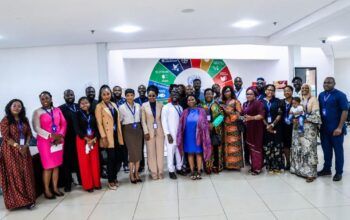
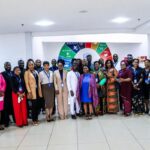
The reception was attended by diplomats, policymakers, and representatives of both African and European countries, underscoring the enduring significance of the Africa–Europe partnership as it enters its next phase.