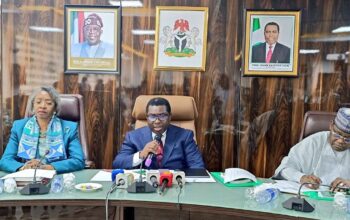
On the occasion of the global 16 Days of Activism Against Sexual and Gender-based Violence (SGBV), the European Union (EU), United Nations Development Programme (UNDP), and other stakeholders have called on the Federal Government of Nigeria to allocate adequate funding for the provision of safe spaces for survivors of Sexual and Gender-Based Violence (SGBV).
During a Parliamentary Summit in Abuja, organized by the EU-funded Rule of Law and Anti-Corruption (RoLAC Phase II) Programme of International IDEA in collaboration with the UNDP under the EU-UN Spotlight Initiative, EU Ambassador to Nigeria and ECOWAS, Samuela Isopi, emphasized the urgent need for budgetary allocations to implement the Violence Against Persons Prohibition (VAPP) Act of 2015.
Isopi highlighted the absence of budgetary provisions for the implementation of the VAPP law, expressing concern over the additional burden placed on mandated institutions and the heightened trauma experienced by survivors of SGBV. She called on the National Assembly to strengthen oversight to ensure effective implementation of the law.
Resident Representative of UNDP Nigeria, Simon Ridley, emphasized the crucial role of the legislature in ensuring proper funding for institutions addressing gender-based violence. Ridley reiterated the commitment of the international community to eradicating this menace.
Deputy Speaker of the House of Representatives, Rt. Hon. Benjamin Kalu, expressed deep concern over the rising statistics of violence against women and girls in Nigeria. He noted that more than 28,000 cases of SGBV were recorded in the last three years, with less than 450 convictions nationwide.
Kalu urged parliamentarians to utilize their legislative power to allocate funds, hold the executive branch accountable, and ensure the effective implementation of laws and policies addressing gender-based violence. He stressed the need for increased funding, oversight, and legislative action to create a future where women and girls live free from fear and violence.

The Head of Programme, Nigeria RoLAC II, International IDEA, Mr. Danladi Plang, outlined the summit’s objectives, including sensitizing parliamentarians to persistent issues limiting access to justice and support services for GBV survivors. Plang also highlighted the progress achieved in the GBV response sector and recommended actions for sustained progress.
Prof. Joy Ngozi Ezeilo, SAN, emphasized the importance of a significant budget to address the unmet justice needed for survivors. She underscored the economic sense of investing in the justice sector to ensure access to justice for all.
In a joint statement, Oluwatoyosi Giwa, Project Manager, Access to Justice, RoLAC Phase II Programme, and Onyinye Ndubuisi, Gender Human Rights Programme Lead, UNDP under the EU-UN Spotlight Initiative, disclosed that significant strides have been made in enhancing protection for survivors and strengthening institutional frameworks. However, challenges persist due to the gross underfunding of the SGBV response sector, resulting in low prosecution rates.
They also revealed that 14 states are yet to domesticate the Discrimination Against Persons with Disabilities (Prohibition) Act, including Delta, Katsina, Imo, and 11 others. The statement highlighted ongoing efforts to address these challenges and urged continued commitment to the effective implementation of the VAPP Act.