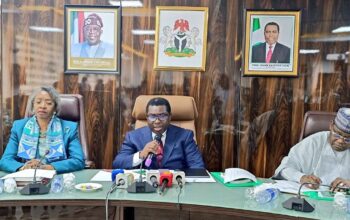
At the 2024 Africa Conference hosted by the School of Politics, Policy, and Governance (SPPG) in Abuja, former Nigerian Minister of Education, Obiageli Ezekwesili, alongside other prominent leaders, emphasized the urgent need for a comprehensive overhaul of Africa’s political landscape. The aim is to create an environment conducive to nurturing future leaders equipped with the necessary knowledge and mindset for effective governance.
The conference, themed “Good Governance in Africa: Leaders and Citizens Driving Systemic Change,” was convened to address the root causes of Africa’s governance challenges and to chart a course towards systemic change that fosters leadership development across the continent. Ezekwesili, who also serves as the Founder of SPPG, set the tone for the event by underscoring the interconnectedness of governance across Africa.
“When you govern, whether at the local, state, or national level, you govern not just for the immediate population but for Africa as a whole,” Ezekwesili remarked. “We want future leaders to have a mindset geared towards African solutions—solutions that are exponential in impact and interconnected across the continent.”
Drawing from academic research, Ezekwesili pointed to the absence of good governance as Africa’s fundamental development challenge. She emphasized that research provides clear evidence of poor governance as the continent’s primary malady, and it is the responsibility of its leaders to address it.
“The research I conducted highlighted the need to address this governance deficit by cultivating a new political mindset and culture. This is critical for the development of an entirely new generation of leaders who can steer Africa towards progress,” she added.
A Call for Inclusivity and Grassroots Engagement
Dr. Zanetor Agyeman-Rawlings, the keynote speaker and a Member of Parliament in Ghana, called for greater involvement of women and youth in politics and decision-making processes. According to her, the time has come for those who have something valuable to contribute to their countries to actively participate in grassroots politics.
She challenged the notion that grassroots engagement is limited to those who are less educated or less knowledgeable, noting that the grassroots are foundational to political leadership. “If you feel you are too big for grassroots politics, you will eventually find yourself governed by leaders chosen by others,” Agyeman-Rawlings warned. Her message was clear: meaningful political participation starts at the grassroots, where the decisions that shape the future of leadership are made.
Redesigning Africa’s Political Architecture
Alero Ayida-Otobo, Chief Executive Officer of the SPPG, emphasized the critical need for a new political architecture that brings forth leaders who are productive, value-driven, and innovative. Ayida-Otobo stressed that poor governance continues to be the primary barrier to development in Africa, and overcoming this challenge requires a radical shift in the way political leaders are developed and supported.
“The weight of this mandate is on each one of you,” Ayida-Otobo told the attendees, many of whom are aspiring or active political leaders. “Now that you have heard this call to action, you will be held accountable for delivering the future. Our goal is to build a platform that connects disruptive, value-driven leaders, giving them the support they need to make lasting change.”
Ayida-Otobo highlighted the sense of isolation often felt by reform-minded individuals in politics, noting that many such leaders feel as though they are alone in their efforts to disrupt the status quo. The conference sought to break down this isolation by creating a network of like-minded leaders who can collaborate to drive systemic change across the continent.
Charting a New Course for Africa’s Future
The 2024 Africa Conference brought together leaders from across the continent, including representatives from Ghana, Kenya, Senegal, Egypt, Tunisia, and Zimbabwe, among others. The gathering provided a platform for value-oriented politicians and leaders to exchange ideas and strategies for reshaping Africa’s political and governance structures.
As Africa continues to grapple with governance challenges, conferences like this one are vital for fostering dialogue and collaboration between leaders committed to reform. The consensus among participants was clear: the future of Africa’s political leadership depends on the development of a new generation of leaders equipped with the skills, mindset, and values necessary to lead with integrity and purpose.
The reshaping of Africa’s political landscape is not merely about changing policies—it is about transforming mindsets and cultivating a new culture of leadership. This will require a concerted effort to break down the barriers that have historically hindered progress and to build an environment where future leaders can thrive and contribute meaningfully to the continent’s development.
In conclusion, the call to reshape Africa’s political landscape is both urgent and necessary. The solutions lie in fostering good governance, ensuring inclusivity, and empowering future leaders with the right tools and mindset. The future of Africa depends on leaders who are committed to driving systemic change, and the time to act is now.