The discovery of a chemical precursor linked to fentanyl production in a clandestine drug laboratory deep inside a forest in Ogun State has raised fresh concerns over the evolving sophistication of Nigeria’s illicit drug trade.
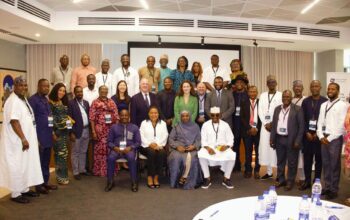
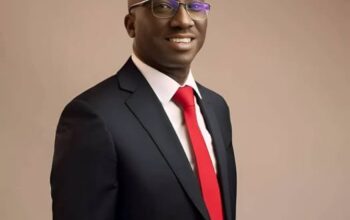
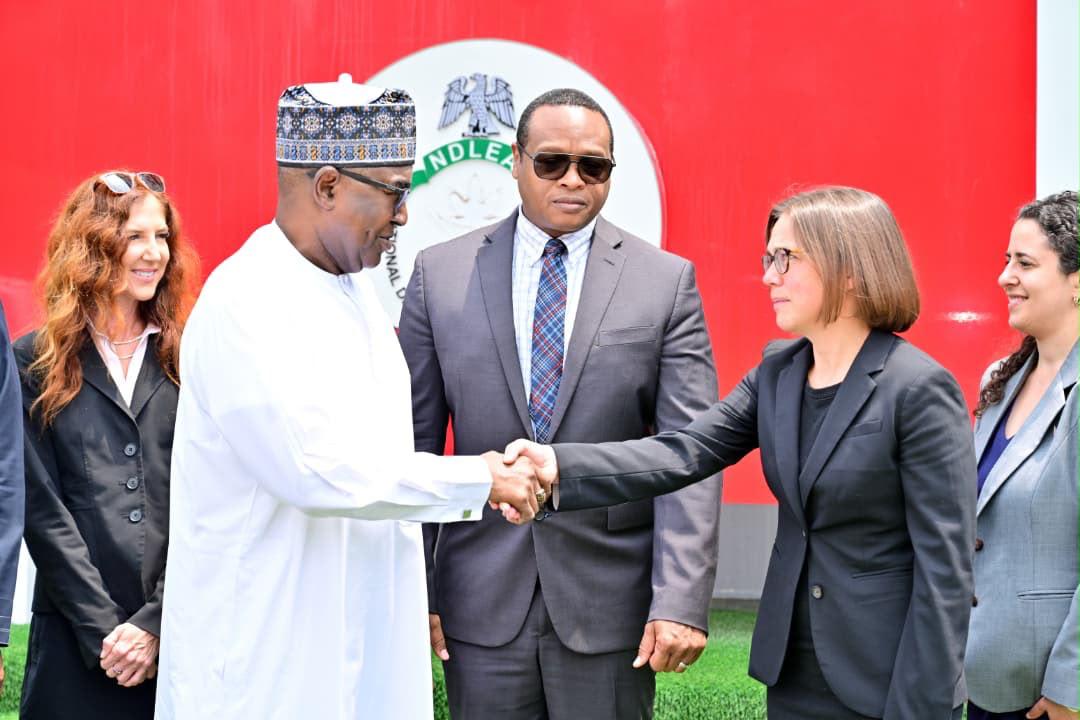
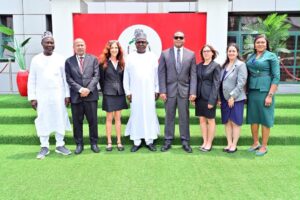
The National Drug Law Enforcement Agency (NDLEA) Chairman/Chief Executive Officer, Brig. Gen. Buba Marwa (retd.), disclosed this on Thursday in Abuja while receiving the Country Director of the United States International Narcotics and Law Enforcement Bureau (INL) in Nigeria, Mr. Derek Tolliver, who led a delegation from the US Government Accountability Office to the agency’s headquarters.
Marwa said forensic equipment provided through the Nigeria-US law enforcement partnership enabled NDLEA officers to identify one of the precursor chemicals recovered from the clandestine methamphetamine laboratory as a substance associated with fentanyl production.
He described the discovery as disturbing, noting that the chemical constituted only a small portion of the substances recovered from the laboratory and could have gone undetected without advanced forensic technology.
“We discovered one of the precursor chemicals was in fact for the production of fentanyl, which is bad news. Nobody wants to hear that word,” Marwa said.
The development has heightened concerns over the possible emergence of fentanyl-related production activities in Nigeria, amid growing international alarm over the highly potent synthetic opioid and its devastating consequences when misused.
Marwa said the discovery demonstrated that conventional enforcement methods alone were no longer sufficient to combat sophisticated drug trafficking networks and clandestine laboratories.
He stressed that modern forensic infrastructure was increasingly critical to identifying dangerous substances, tracing drug production processes and dismantling complex criminal operations.
“Without these modern tools, that would have gone unnoticed because it was just a small part of the precursor chemicals. That was really very important,” he said.
The NDLEA chairman credited the INL with playing a major role in strengthening the agency’s operational and forensic capabilities.
He recalled that when he assumed office in 2021, the agency had only one forensic laboratory in Lagos serving the entire country. With US support, the Lagos facility was modernised and equipped, while additional forensic laboratories were established in Abuja and Enugu to expand the agency’s capacity.
Marwa also recalled that INL-provided operational vehicles were among the earliest resources distributed to NDLEA commands under his leadership.
“Whatever successes that we have had in this Agency, the INL is part of it. No question about it,” he said.
Tolliver, who recently assumed office as INL Country Director in Nigeria, commended the NDLEA for what he described as significant operational achievements under Marwa’s leadership.
He said his visit was aimed at strengthening working relations with the agency and building on existing INL programmes supporting Nigeria’s counter-narcotics efforts.
“I want to say big congratulations on all the successes over the past months with your leadership and under your leadership. It is phenomenal how much this organisation has grown, the accolades that are now shown in the media,” Tolliver said.
He assured the NDLEA of his commitment to working with the agency and the US Embassy team in Abuja to advance shared counter-narcotics objectives.
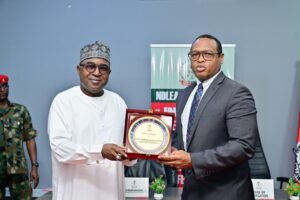
While appreciating existing US assistance, Marwa called for expanded support in logistics, specialised training, forensic technology and other operational areas.
He also acknowledged the contributions of other US agencies, including the Drug Enforcement Administration (DEA), US Africa Command (AFRICOM) and the Federal Bureau of Investigation (FBI), to Nigeria’s anti-drug operations.
The NDLEA has intensified its campaign against illicit drug trafficking, clandestine laboratories and the diversion of pharmaceutical and industrial chemicals for illegal drug production.
Marwa said the Ogun laboratory discovery underscored the urgent need for continued investment in forensic science, specialised training and modern operational equipment to prevent Nigeria from emerging as a production or transit hub for increasingly dangerous synthetic drugs.
The meeting between the NDLEA and the US delegation is expected to further strengthen bilateral cooperation as international drug trafficking networks become increasingly sophisticated and synthetic narcotics pose new challenges to law enforcement agencies.
For Nigeria’s anti-drug authorities, the Ogun discovery has reinforced a critical lesson: in the evolving drug war, the ability to scientifically identify what criminals are producing is becoming as important as the ability to seize what they are trafficking.