The Federal Government is considering the introduction of assessment tests for Nigerians who obtain degrees from foreign universities as part of measures to tackle certificate fraud and safeguard the integrity of the country’s education system.
The proposed tests, particularly targeting qualifications obtained from institutions in African countries, may become an additional requirement for the recognition of foreign degrees and mobilisation into the National Youth Service Corps (NYSC).
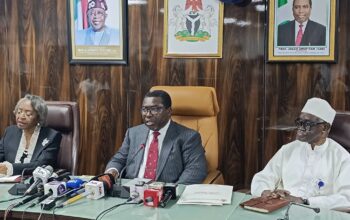
The proposal was made by the Director Overseeing the Office of the Permanent Secretary, Federal Ministry of Education, Dr Folake Olatunji-David, at the 37th Meeting of the National Standing Committee (NSC) on Evaluation of Foreign Qualifications in Abuja.
Olatunji-David said the increasing number of Nigerians pursuing higher education abroad had made it necessary to strengthen verification procedures to establish the authenticity of foreign qualifications.
She stressed that although Nigeria remained committed to promoting internationalisation of education, such efforts must not undermine acceptable academic standards.
According to her, every qualification submitted for official recognition must demonstrate genuine academic engagement and equip its holder with the requisite knowledge and skills.
She explained that assessment tests could help establish whether applicants genuinely attended the institutions that issued their certificates and acquired the qualifications they presented.
The Permanent Secretary’s representative commended the Minister of Education, Dr Maruf Tunji Alausa, and the Minister of State for Education for their commitment to repositioning the education sector. She also acknowledged the contributions of committee members towards strengthening the evaluation process and improving service delivery.
She disclosed that the Ministry had automated and digitalised the evaluation of foreign qualifications and authentication of Nigerian certificates since the beginning of the year, describing the initiative as a major step towards improving transparency, efficiency and service delivery.
She added that the introduction of direct remittance of fees into government accounts had also strengthened revenue generation.
The Ministry, she noted, had made progress in verifying the accreditation status of foreign institutions, issuing clearance letters for NYSC mobilisation, processing letters of no objection and authenticating certificates and statements of proficiency for Nigerians seeking employment or further education abroad.
Other issues scheduled for consideration by the committee include guidelines for issuing letters of no objection to proposed institutions seeking registration with the Corporate Affairs Commission (CAC).
The committee will also examine the compliance of foreign-curriculum schools operating in Nigeria with national education policies, including the preparation of their students for recognised public examinations such as WAEC, NECO and NABTEB, where applicable.
It will further review the recognition of foreign secondary-school qualifications, particularly United States and Canadian High School Diplomas and the French Baccalaureate, as entry qualifications into Nigerian tertiary institutions, subject to appropriate assessment and equivalence.
In addition, members are expected to consider effective mechanisms for monitoring Nigerians studying in African institutions through institutional visits and diplomatic channels, as well as the recognition of relevant foreign regulatory agencies as credible sources of information on accredited institutions.
Earlier, the Director of the Education Support Services Department, Mr Amudipe Gabriel Oluwole, described the evaluation of foreign qualifications as a critical responsibility of the Ministry, emphasising the importance of evidence-based planning, effective monitoring, transparency and accountability in line with global best practices.
Similarly, the Deputy Director of the department, Dr Aliyu Miringa, highlighted the importance of collective expertise in establishing reliable benchmarks and ensuring that decisions on foreign qualification equivalence conform to national and international standards.
The Ministry reaffirmed its commitment to strengthening regulatory and verification frameworks to ensure that only genuine qualifications obtained from duly recognised and accredited institutions receive official recognition.