The Federal Government has officially launched the Environmental Standards Certification Scheme (ESCS), a national framework aimed at strengthening environmental governance and enhancing professional capacity in line with global best practices.
Unveiled on Tuesday in Abuja, the initiative is part of the Sustainable Procurement, Environmental and Social Standards Enhancement (SPESSE) project, supported by the World Bank. It represents Nigeria’s first structured certification framework for environmental standards and is the first of its kind in sub-Saharan Africa.
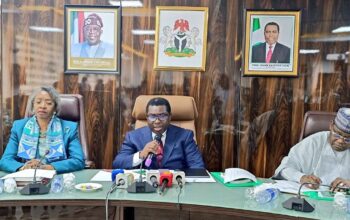
The Minister of Environment, Malam Balarabe Lawal, represented by the Ministry’s Permanent Secretary, Mahmud Kambari, said the scheme reflects the government’s strong commitment to advancing environmental sustainability and regulatory compliance.
“This milestone marks a new era in Nigeria’s environmental governance. The certification scheme will serve as a benchmark for building professional capacity across procurement, environmental, and social standards. It is a key tool in bridging the gap in regulatory compliance and fragmented practices across sectors,” Lawal stated.
He acknowledged that the project faced significant challenges, including delays caused by the COVID-19 pandemic and the complexity of developing a sustainable, digitally-enabled system. Nonetheless, the minister praised the efforts of the National Project Coordinating Office housed at the National Universities Commission, along with other implementing stakeholders, for ensuring the successful rollout of the scheme.
The ESCS is structured into four progressive competency levels—Foundation, Intermediate, Associate, and Specialist—offering a clear pathway for professional development. Its digital learning management platform, which is now operational, allows participants to undertake self-paced training, complete assessments, and receive certifications with full automation and transparency.
Lawal emphasized that the scheme extends beyond technical certification. “It is about reinforcing the institutional framework for environmental management, promoting continuous professional growth, and catalyzing national and regional capacity development.”
He also extended appreciation to the World Bank, the National Universities Commission, the Project Implementation Unit (PIU), and the Working Group on Environmental Standards for their collaboration and dedication. He further encouraged environmental practitioners, consultants, and academics to actively engage with the scheme and contribute to its long-term success.
The ESCS is expected to play a pivotal role in enhancing environmental compliance, building skilled human capital, and positioning Nigeria as a leader in sustainable environmental practices across the African continent.