The Federal Government is set to roll out 10,000 electric vehicles and tricycles across the North-East under a major green mobility initiative projected to create up to 100,000 jobs during the assembly process.
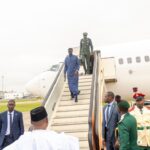
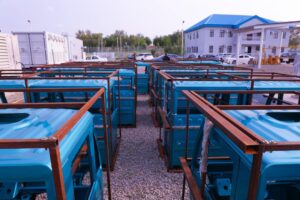
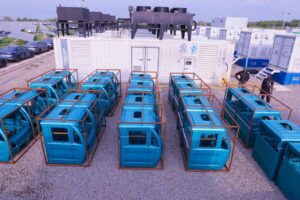
The Minister of Regional Development, Abubakar Momoh, disclosed this yesterday after inspecting the electric vehicle assembly plant managed by the North-East Development Commission (NEDC) in Maiduguri, Borno State, ahead of its planned inauguration by President Bola Ahmed Tinubu.
Momoh said the project had progressed from planning to production, with nearly all the targeted vehicles already delivered to the facility and assembly operations underway.
The fleet comprises electric buses, taxis and tricycles to be deployed across Adamawa, Bauchi, Borno, Gombe, Taraba and Yobe states, alongside charging infrastructure to support their operation.
The minister described the initiative as a major component of the administration’s efforts to combine regional infrastructure development, youth employment, cleaner transportation and economic recovery.
“Apart from the fact that it will help to improve commuting of people, and create more job opportunities for the youths,” Momoh said, noting that employment opportunities were already emerging from the assembly process.
He said the NEDC Director of Operations had informed him that the assembly of the 10,000 vehicles could generate employment for not less than 100,000 people before the project is completed.
Beyond direct assembly jobs, the programme is expected to stimulate employment in transportation, vehicle maintenance, servicing, charging infrastructure and other supporting industries.
The minister also highlighted the potential impact of the electric tricycles on the region’s largely agrarian economy, noting that some of the vehicles were designed to transport both passengers and agricultural produce.
He directed the NEDC to ensure that communities along newly rehabilitated rural roads are included in the vehicle deployment plan, stressing that improved transport links would enable farmers to move their produce more efficiently to urban markets.
Momoh said the combination of functional rural roads and affordable transportation could strengthen the connection between farming communities and major commercial centres.
The NEDC had announced the electric mobility programme in 2024 as part of its plans to modernise transportation in the North-East, reduce carbon emissions and support the region’s response to climate change.
The original plan provided for a mix of nine-seater solar-powered tricycles, four-seater taxis and 40-seater buses, with the project divided into two phases of 5,000 vehicles each. Charging stations and solar-powered installations were also planned along major routes across the six states.
The latest inspection suggests that the long-planned initiative has now entered the assembly and deployment phase.
For the North-East, the project comes against the backdrop of years of infrastructure deficits, disrupted economic activity and poor transportation connectivity, particularly in rural communities.
The NEDC’s decision to integrate electric mobility with rural road development could therefore give the programme a broader economic impact by improving access to markets, schools, healthcare and other essential services.
Momoh also inspected rural road projects, including the Ngwom/Kushebe/Gadamari corridor towards Gongulong, and expressed satisfaction with the progress recorded.
He said the roads would complement the e-vehicle programme by improving access to rural communities and facilitating the movement of agricultural commodities.
The minister further inspected the ongoing construction of the NEDC headquarters in Maiduguri, saying the project had recorded significant progress since his previous visit.

According to him, the basement section has been completed, while construction has advanced to another section of the building. He expressed confidence that the headquarters would be completed within 18 to 24 months.
The North-East initiative is part of Nigeria’s broader push towards cleaner transportation, local vehicle assembly and technology development as the country seeks to reduce dependence on fossil-fuel-powered mobility.
However, the long-term success of the project will depend on the reliability of charging infrastructure, availability of spare parts, maintenance capacity and technical expertise, as well as effective distribution of the vehicles to underserved rural communities.
If successfully implemented, the Maiduguri assembly project could evolve beyond a transport scheme into a regional economic ecosystem linking electric mobility with clean energy, manufacturing, youth employment, rural commerce and technical skills development.
With assembly already underway, the NEDC initiative represents a significant step towards translating Nigeria’s electric mobility ambitions into tangible industrial and economic activity in the North-East.