Key stakeholders from Nigeria’s private sector, civil society and development finance institutions have called for innovative, market-driven approaches to strengthen economic resilience and counter violent extremism in the country’s most fragile and conflict-affected states.
The call was the outcome of a high-level roundtable held in Abuja and convened by the Preventing and Countering Violent Extremism (PAVE) Network in partnership with the Global Community Engagement and Resilience Fund (GCERF).
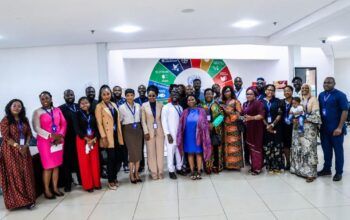
In a statement issued on Thursday by the National Coordinator of the Media Against Violent Extremism (MAVE) Network, Senator Iroegbu, the dialogue brought together leading figures including the Chairman of PAVE Network, Jaye Gaskia; National Coordinator of GCERF Nigeria, Yetunde Adegoke; Chief Executive Officer of the Nehemiah Foundation, Emmanuel Nehemiah; Director of Research at Green Legacy Nigeria, Umar Saleh Anka; CEO of Agroxchange Group, Adenale Adegoke; and Investment Coordinator at Robust International Commodities Limited, Ilyasu Ishak, among others.
Opening the session, Gaskia stressed that the engagement sought more than financial contributions from the private sector. He said the initiative was equally focused on mobilising technical expertise, ideas and strategic partnerships to support community-level interventions in conflict-affected areas.

A major highlight of the meeting was the unveiling of the Preventing and Countering Violent Extremism–Knowledge, Innovation and Resource Hub (PCVE-KIRH), a digital platform developed by the PAVE Network. According to Gaskia, the hub is designed to serve as a central repository of research and tools, while also functioning as a community of practice that connects practitioners, incubates solutions and scales successful interventions across Nigeria and the wider region.
Discussions centred on a proposed shift from traditional cooperative models to value-chain cooperatives that integrate entire production ecosystems, including producers, transporters, processors and distributors. The approach, participants agreed, would help build sustainable livelihoods while addressing social and emotional recovery needs in communities affected by conflict.
Adegoke of Agroxchange Group outlined how integrated agro-based models, including in-grower schemes and digital agriculture platforms for youth, could generate employment, increase incomes and promote environmentally sustainable practices. He noted that the objective was to balance social, economic and environmental capital in fragile settings.
Attention also focused on accessing development finance, particularly through the African Development Bank’s Fragility, Conflict and Violence (FCV) Support Facility. AfDB consultant Jumobi Fashola explained that the facility supports projects that link conflict resolution with economic development, subject to state government requests, project viability and strict due diligence processes.
Ishak of Robust International Commodities Limited observed that funding was often available, but difficult to access due to capacity gaps and risk concerns. He stressed the need for innovative project design and strong, bankable proposals to attract investor confidence.
Research insights were also shared by Green Legacy Nigeria on the proposed Kano–Maraki Rail Line Project, which aims to transform a 400-kilometre corridor into a productive green zone through agroforestry, environmental restoration and the reintegration of displaced populations.
GCERF Nigeria’s National Coordinator, Yetunde Adegoke, disclosed ongoing engagements with the AfDB to explore de-risking mechanisms for bottom-up, outgrower-based business models. She said the goal was to develop robust concept notes capable of attracting private sector participation and development finance.
The roundtable ended with a consensus on the need to strengthen institutional frameworks, align projects with state development plans, undertake thorough feasibility studies and build capacity for the development of bankable proposals. Participants also highlighted the importance of accounting for political economy considerations and long-term development strategies.
Stakeholders expressed confidence that, by integrating private sector innovation, development finance and community-centred value-chain cooperatives, Nigeria’s fragile states can be repositioned from centres of vulnerability into engines of inclusive growth and sustainable stability.