The Moving Minds Alliance (MMA), an international network focused on early childhood development in crisis settings, has called on the Federal Government to take decisive action to protect schools and ensure the safety of Nigerian students.
The appeal follows Monday’s abduction of at least 25 pupils and a teacher from a boarding school in Kebbi State—an incident the Alliance described as a tragic reminder of the escalating risks facing children in conflict-affected areas.
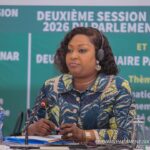
Speaking in Abuja on Wednesday during the First National Consultative Meeting on Early Childhood Development (ECD) in Crisis, MMA Interim Director, Katie Murphy, urged authorities to adopt stronger measures to safeguard schools nationwide. The two-day dialogue brought together government officials, development partners, civil society, and humanitarian organisations to strengthen support systems for young children affected by violence, displacement, and other emergencies.
Murphy stressed the urgency of securing sustainable domestic financing to protect Nigeria’s youngest children, noting that while the country receives significant global support for ECD in crisis settings, crucial areas such as early learning, psychosocial support, and responsive caregiving remain underfunded.
“This gap presents both a warning and an opportunity,” she said. “Without timely investment, the long-term wellbeing of children living through conflict and displacement is at risk. But with coordinated action, Nigeria can champion a bold national commitment that inspires global momentum.”
She added that the meeting aims to evaluate existing interventions, identify policy and financing solutions, and shape a unified advocacy roadmap “led by Nigeria, for Nigeria’s children.” The event also featured the launch of MMA’s 2025–2030 strategy, Reimagining Early Years Crisis Response.
Representing the Federal Ministry of Education, Director of Basic Education, Dr. Folake Olatunji-David, reaffirmed the government’s commitment to ensuring that every child receives adequate nutrition, healthcare, and education. She emphasised expanding partnerships with the private sector to address resource gaps in the education system.

The scale of Nigeria’s humanitarian challenge remains alarming. As of October 2025, the country hosts 3.6 million displaced people—including more than 3.57 million internally displaced persons and 142,557 refugees and asylum seekers. Over half of this population are children. National data also shows that 1.8 million children face severe acute malnutrition, while more than 18 million are out of school, many due to insecurity and displacement.
Experts warn that without strategic action, Nigeria risks missing key national development targets and the 2030 Sustainable Development Goals.
Although Nigeria ranked among the top global recipients of crisis-related ECD funding in 2023—receiving $27 million in humanitarian aid and $270 million in development support—financing remains uneven. With global aid projected to decline by 30 percent, the Organisation for Economic Co-operation and Development (OECD) estimates that Nigeria could lose up to $89 million in ECD assistance by 2027, underscoring the need for stronger domestic investment.
The consultative meeting, organised by MMA, brought together federal and state ministries, UN agencies including UNHCR, philanthropic organisations, NGOs, community-led groups from Borno, Cross River and Benue, as well as researchers and media. These states were selected due to their large refugee and IDP populations.
The organisers noted that following the meeting, a national ECD coalition will be activated to coordinate efforts through 2029, ahead of major global advocacy milestones such as the ECD Financing Summit in 2027.