The Health of Mother Earth Foundation (HOMEF) has renewed its campaign against the adoption of genetically modified organisms (GMOs) in Nigeria, warning that increasing reliance on genetically engineered seeds could threaten indigenous crop varieties, reduce biodiversity and undermine farmers’ control over food production.
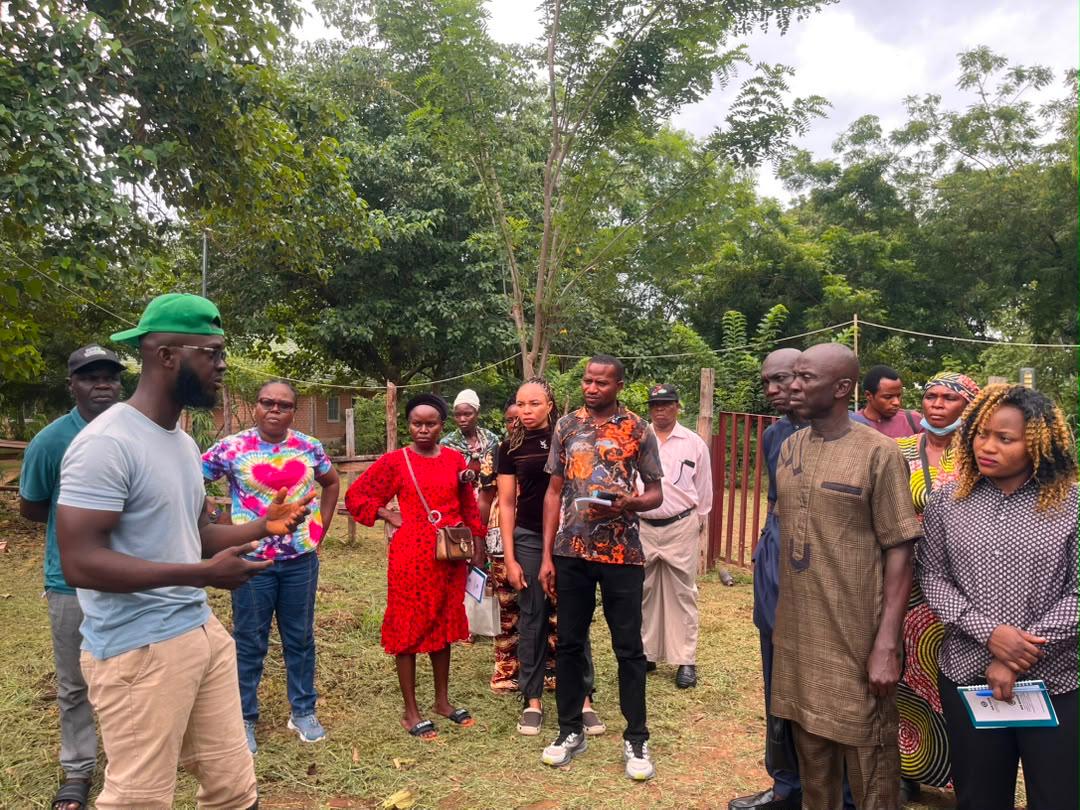
The organisation made the call on Thursday during a one-day agroecology training for farmers at the Be The Help Foundation Farm in Dama-Kusa Village, Kwali Area Council of the Federal Capital Territory (FCT), where participants were introduced to sustainable farming practices aimed at boosting productivity without genetically modified seeds or synthetic agricultural chemicals.
The training forms part of HOMEF’s ongoing advocacy for agroecology, an environmentally sustainable farming approach that promotes biodiversity conservation and safeguards farmers’ rights to preserve, exchange and replant indigenous seeds.
Speaking after the training, HOMEF’s Director of Programmes, Joyce Brown, said the initiative was designed to demonstrate that ecological farming systems could deliver sustainable agricultural productivity without dependence on genetically modified crops.
Brown warned that one of the greatest risks associated with GMOs is the potential contamination and eventual loss of Nigeria’s indigenous crop varieties through gene flow during pollination.
She noted that such a development could significantly diminish biodiversity and weaken the country’s agricultural heritage.
According to her, genetically modified crops do not address the underlying challenges confronting Nigeria’s agricultural sector, including inadequate extension services, climate change and insufficient government support for smallholder farmers.
Instead, she said farmers require improved access to sustainable farming knowledge, climate-resilient production systems and policies that strengthen local food production.
Brown also expressed concerns over what she described as weak regulatory oversight of genetically modified products, urging the Federal Government to provide clearer policy direction on biotechnology while increasing support for indigenous farmers.
She added that several countries have imposed restrictions on the cultivation or importation of certain genetically modified crops to safeguard biodiversity and local farming systems, urging Nigeria to adopt policies tailored to its own agricultural realities.
Also speaking, the Chief Executive Officer of the Be The Help Foundation, Samuel Kwasari, described agroecology as a practical pathway to sustainable agriculture, environmental restoration and long-term food security.
Kwasari, who identified himself as the foundation’s “Chief Farmer,” said the organisation operates a regenerative agriculture model centred on agroforestry, combining crop cultivation with tree planting to restore degraded landscapes while improving farmers’ livelihoods.
He explained that the farming system integrates soil restoration, water conservation, nutrient recycling and carbon sequestration through carefully selected tree species that also provide economic benefits such as timber, firewood and carbon credits.
According to him, agroecology combines scientific knowledge with traditional farming practices adapted to local ecological conditions, enabling farmers to work with nature while maintaining productive and resilient agricultural systems.
Kwasari drew a distinction between food sufficiency and food sovereignty, arguing that genuine food security extends beyond having enough food to ensuring that farmers retain the freedom to determine what they grow, how they cultivate it and what they consume.
He attributed Nigeria’s recurring food shortages largely to years of inadequate planning and insufficient support for local food producers, calling for policies that prioritise domestic food production before exports.
Kwasari said HOMEF’s opposition to GMOs is based on years of practical demonstrations showing that agroecology and agroforestry can sustainably improve agricultural productivity without compromising farmers’ control over their seeds.
He added that the foundation relies on integrated ecological pest management rather than chemical pesticides, maintaining biodiversity to naturally regulate pests while producing organic bio-fertilisers on-site to nourish crops.
The debate over genetically modified crops remains highly contested. While HOMEF and other environmental groups caution against their potential impact on biodiversity, seed sovereignty and farmers’ rights, proponents—including several scientific and regulatory bodies—maintain that approved GM crops can improve yields, enhance resistance to pests and climate stresses, and are safe when subjected to rigorous regulatory assessments. The issue continues to shape discussions around Nigeria’s food security, agricultural policy and environmental sustainability.