The Health of Mother Earth Foundation (HOMEF) has called for an independent investigation into the reported deaths of 37 young miners in Niger State, saying the incident raises wider questions about youth vulnerability, mining regulation and the environmental consequences of Nigeria’s extractive economy.
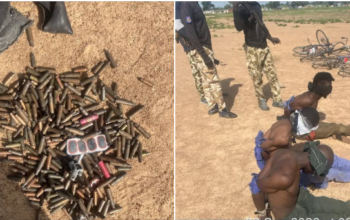
The environmental advocacy organisation said the victims, reportedly aged between 14 and 20, were said to have died while in the custody of the Nigeria Security and Civil Defence Corps (NSCDC) following security operations targeting suspected illegal mining activities in the Wushishi-Lukoto area of the state.
HOMEF stressed that the circumstances and causes of the reported deaths must be established through an independent investigation, including scrutiny of the treatment of those in custody and the events leading to their deaths.
In a statement, HOMEF Executive Director, Dr Nnimmo Bassey, said the incident should not be viewed solely through the lens of illegal mining and security enforcement, arguing that it reflected broader socioeconomic and environmental challenges associated with resource extraction.
“We must stop treating extraction as the pathway to development while ignoring the lives, lands and ecosystems sacrificed in the process,” Bassey said.
He warned against replacing Nigeria’s longstanding dependence on oil with increased reliance on mineral extraction without addressing the environmental degradation, displacement and livelihood disruption that can accompany resource exploitation.
Bassey cited the Niger Delta as a cautionary example, arguing that Nigeria could reproduce some of the environmental and social problems associated with oil extraction if the expansion of mining is not accompanied by effective environmental safeguards, community participation and livelihood protection.
“The deaths underscore the urgent need to address the poverty, livelihood insecurity and economic exclusion that push people into dangerous and informal mining, while confronting the environmental destruction associated with unregulated extraction,” he said.
HOMEF also cautioned that efforts to tackle illegal mining should not automatically result in the expansion of large-scale industrial mining operations without adequate environmental controls.
The organisation called for a development approach that protects ecosystems, restores degraded environments and provides sustainable livelihood opportunities for communities affected by mining.
It urged the Federal Government and Niger State Government to establish the circumstances surrounding the reported deaths and ensure accountability for any violations, negligence or other wrongdoing identified by investigators.
The group also called for measures to address the economic conditions exposing young people to hazardous mining activities, including poverty, unemployment and the erosion of sustainable livelihood opportunities.
On environmental governance, HOMEF demanded stronger monitoring and enforcement in mining communities, environmental restoration programmes and mechanisms to hold mining operators and polluters accountable for ecological damage.
It further advocated restrictions on destructive mining activities affecting forests, farmlands, water bodies and other ecologically sensitive areas.
The organisation said communities whose lands are targeted for mineral extraction should have meaningful participation in decisions affecting their territories and livelihoods.
It also called for greater investment in sustainable, non-extractive economic activities that can strengthen local economies and reduce dependence on hazardous mining.
The reported deaths have renewed attention on the challenges of regulating informal mining while protecting vulnerable workers and communities. HOMEF maintained that enforcement alone would not resolve the problem unless authorities also addressed the economic conditions driving people, particularly young Nigerians, into the sector.
The organisation said environmental protection, decent livelihoods and accountability should form integral parts of Nigeria’s strategy for managing its mineral resources.
It argued that economic development should not be measured solely by the volume or value of resources extracted where communities are exposed to risks involving lives, land, water and livelihoods.
HOMEF therefore called for a departure from what it described as an “extract, exploit and abandon” approach in favour of ecological protection, environmental restoration and sustainable livelihoods.
It maintained that tackling illegal mining without addressing the wider social and environmental consequences of extractive activities would leave the underlying crisis unresolved.