The Health of Mother Earth Foundation (HOMEF) has urged the Federal Government to ensure that its new mineral investment framework with the United States does not replicate the environmental and social consequences associated with decades of oil extraction in the Niger Delta.
The environmental rights organisation said the agreement, while offering opportunities to attract investment and diversify Nigeria’s economy, must be accompanied by strong environmental, social and community safeguards to prevent mining communities from bearing the costs of mineral exploitation.
Nigeria and the United States signed the framework on September 23 in New York on the sidelines of the 81st United Nations General Assembly. It was signed by the Minister of Solid Minerals Development, Dele Alake, and US Deputy Secretary of State, Christopher Landau.
The framework covers cooperation in geological data and exploration, mineral development and processing, infrastructure and technical capacity, and is designed to facilitate American investment in Nigeria’s estimated $700 billion mineral resources.
The Federal Government has said the initiative is intended to move Nigeria beyond the export of raw minerals by promoting local processing, skills development, job creation and greater opportunities for Nigerian businesses.
Alake said the government wanted to ensure that Nigeria retained more value from its mineral resources rather than remaining a supplier of raw materials. He also stressed that implementation, rather than the signing itself, would determine the success of the framework.
“Now comes the harder and more important work: moving from agreement to implementation. A signature is a promise, results are the proof,” the minister said.
HOMEF Executive Director, Dr Nnimmo Bassey, however, urged the government to learn from the experience of the Niger Delta before accelerating the exploitation of critical minerals.
“We must not reproduce that environmental genocide by replacing oil with minerals while sacrificing lives, lands, and ecosystems,” Bassey said.
The organisation argued that increased global demand for minerals such as lithium, cobalt, nickel and copper could place additional pressure on land, water resources, agriculture and rural livelihoods if extraction is not properly regulated.
HOMEF said the central issue was not whether Nigeria should develop its mineral resources, but how mining would be conducted, who would bear the environmental and social costs and how much economic value would remain within host communities and the country.
The group expressed concern that pressure to meet global demand for critical minerals could lead authorities and investors to prioritise rapid extraction and project approvals over comprehensive environmental assessments, meaningful community consultation and effective regulatory enforcement.
It warned that mining communities should not be left with degraded land, polluted water and disrupted livelihoods after the commercial value of their resources has been extracted.
Bassey drew parallels with the Niger Delta, where oil production has generated longstanding disputes over environmental degradation, pollution, livelihoods and compensation, arguing that Nigeria should learn from those experiences before expanding another extractive industry.
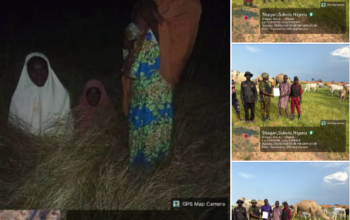
HOMEF also cited the recent deaths of 37 suspected artisanal miners in Niger State as an illustration of the vulnerabilities facing people operating in the informal mining economy.
Bassey said the incident highlighted the need to address the poverty and livelihood pressures that push Nigerians into hazardous artisanal mining, rather than relying primarily on punitive measures.
The organisation has consequently demanded greater transparency around the Nigeria-US framework, calling on the Federal Government to make the full agreement available to the public.
It wants Nigerians, host communities and civil society organisations to have access to information on the environmental, labour, fiscal and community obligations contained in the framework, as well as mechanisms for monitoring compliance.
The demand comes as the Federal Government increasingly positions critical minerals as a pillar of its economic diversification strategy.
According to the government, the Nigeria-US framework is intended to strengthen the country’s mineral value chain through exploration, processing, infrastructure and technical capacity while attracting investment.
HOMEF, however, called for particular scrutiny of provisions relating to environmental protection, community rights, labour standards, revenue distribution and local value addition.
It also urged the government to ensure that environmental and social impact assessments remain rigorous and that community development obligations are effectively implemented rather than treated merely as regulatory requirements.
The organisation said host communities, civil society groups and other stakeholders should be given meaningful opportunities to participate in decisions affecting mining activities on their land.
Nigeria’s renewed focus on critical minerals comes amid increasing international competition for resources considered important to batteries, clean-energy technologies, advanced manufacturing and other strategic industries.
The US agreement therefore forms part of a broader effort by both countries to strengthen mineral supply chains and investment cooperation. The Nigerian government has simultaneously been seeking to formalise mining activities and attract capital into exploration, processing and value addition.
For HOMEF, the economic opportunity must be matched by enforceable safeguards capable of protecting ecosystems and communities.
The organisation said Nigeria’s mineral wealth should contribute to sustainable national development and improved livelihoods rather than create a situation in which foreign demand and investment generate profits while host communities are left with environmental damage and social disruption.
As the framework moves from signing to implementation, the major test will be whether the government can translate its commitment to local value addition into enforceable environmental protections, meaningful community benefits, decent employment and measurable economic gains.
HOMEF is therefore urging the Federal Government to establish and disclose those safeguards before the country’s critical-minerals development gathers further momentum.