The federal government has been urged to develop a policy framework to regulate and manage the activities of scavengers in the country. Despite their often negative reputation, scavengers play a crucial role in the economy and waste management, contributing significantly to resource conservation and job creation.
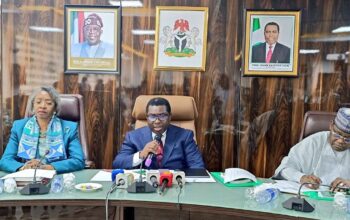
During a stakeholder workshop organized by the Institute for Peace and Conflict Resolution (IPCR) in collaboration with the INCLUDE knowledge platform from the Netherlands, the importance of formalizing the scavenger economy for sustainable development was highlighted. The event, titled “Formalizing the Scavenger Economy for Sustainable Development in Nigeria,” featured key speakers advocating for the regulation of scavengers to curb criminal activities and enhance their potential.
Dr. Joseph Ochogwu, Director General of IPCR, emphasized the critical role of scavengers in waste management and the ecosystem. “Scavengers are the frontline people in waste management. They help collect waste daily, yet they suffer from stigmatization and are often viewed as security threats or thieves,” he remarked. Dr. Ochogwu lamented that despite the suboptimal conditions scavengers operate under, their work has a substantial impact on Nigeria’s economy by conserving resources, creating jobs, and alleviating waste disposal issues.
He noted the correlation between poor waste management, extreme poverty, and the growing number of scavengers. Dr. Ochogwu called for prioritizing the needs of scavengers, especially in light of Nigeria’s current economic challenges and the drive to diversify the economy. He expressed gratitude to partners from the Netherlands for funding research in Abuja and Lagos, which revealed the dire conditions faced by scavengers at major dump sites.
Dr. Ochogwu stressed the need for policy intervention to support this marginalized group, including ensuring access to healthcare, financial services, and other basic amenities. He advocated for issuing National Identity cards to scavengers to facilitate their access to banking and other facilities.
Also speaking at the workshop, Dr. Izuoma Adindu, Associate Research Professor of Law at the Nigerian Institute of Advanced Legal Studies, highlighted the global shift towards circular economy principles, which emphasize reuse and recycling. He noted that other countries, particularly in the Asia-Pacific region, have enacted laws to integrate marginalized groups like scavengers into the circular economy. He pointed out that while Nigeria has a Climate Change Act, it does not adequately address the role of scavengers, who are crucial to climate mitigation efforts.
The workshop underscored the importance of policy development to support scavengers, recognizing their essential role in the economy and environmental sustainability.